
Best Board Games for Exactly 7 Players
Seven players is a notoriously awkward count. Most games top out at 6 and most party games feel thin at 7. Here are the ones that actually work.
- Best OverallSushi Go Party!(2-8 players)
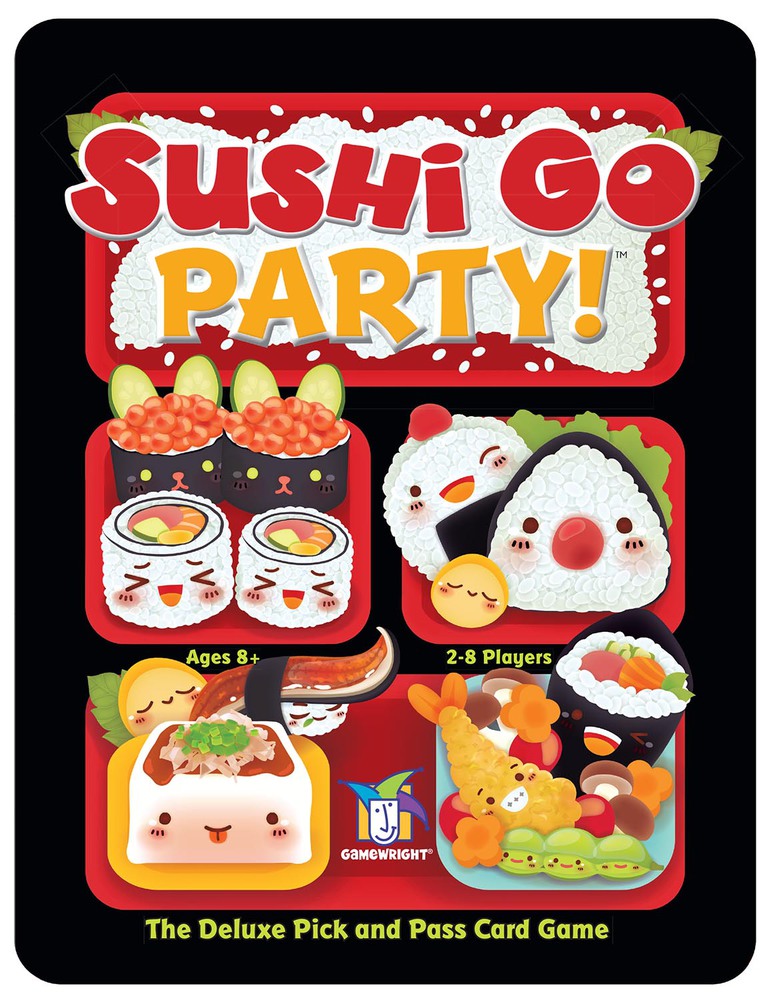
A card-drafting game where you're building the best meal from a conveyor belt of sushi. Pick a card, pass the rest, repeat. After three rounds, whoever assembled the most satisfying menu wins. The "Party" version adds a modular menu — before each game, you choose which dishes are in the deck from around 20 options. Edamame plays differently from Tofu plays differently from Eel. This means you can customise the game's complexity: all simple dishes for a family table, or a trickier combo for experienced players. Each dish scores differently. Nigiri is straightforward points. Tempura scores as pairs. Sashimi scores as triples. Dumplings scale up the more you collect. Wasabi triples your next Nigiri. The scoring rules are on the cards, so you don't need to memorise anything. Games run 20-25 minutes. The simultaneous drafting means player count barely affects the length. It handles 2-8 players, though 2-3 feels a bit thin because you see most of the cards through the draft. It's the best entry point to card drafting. Younger kids can play it, older players still find the menu combinations interesting, and the art is charming enough that people enjoy just looking at the cards. The tin box travels well too.
- Best for StrategyThe Resistance: Avalon(5-10 players)
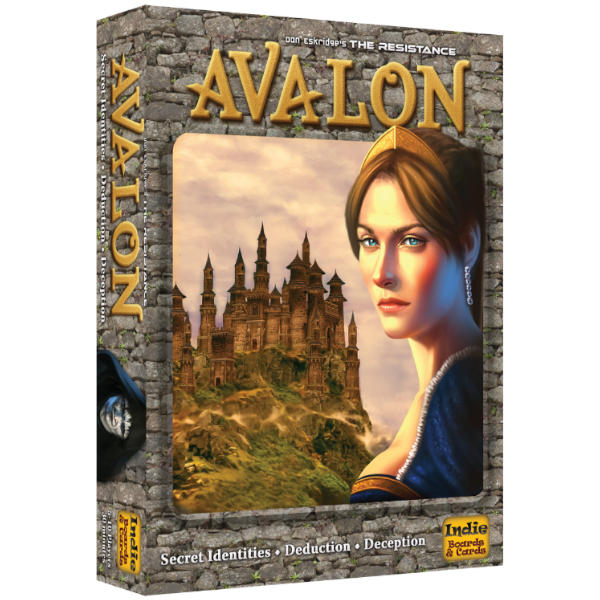
Hidden-role deduction set in Arthurian legend. At the start, everyone secretly finds out if they're loyal to Arthur or a Minion of Mordred. Then you play five missions. Each round, a team leader proposes a group to go on the mission. Everyone votes to approve or reject the team. If approved, the team secretly plays success or fail cards. The loyal players always play success. The Minions can play fail to sabotage missions. Three successful missions and the good side wins. Three failed missions and evil wins. The meat of the game is the team selection and the voting. Who proposed whom, who approved what team, who was on the mission that failed — every decision is information, and the table is constantly arguing about it. Avalon adds special roles on top of the base Resistance: Merlin knows who the evil players are but has to be subtle about sharing that information. Because if the good team wins, the Minions get one final shot — they can assassinate Merlin and steal the victory. Percival knows who Merlin is and tries to protect them. Morgana pretends to be Merlin to confuse Percival. This extra layer makes Avalon feel much sharper than the basic Resistance. The endgame assassination attempt means the good team can't just follow Merlin's lead blindly — doing so paints a target. Plays 5-10. The 5-player game is tight and logical. The 7-8 player game is louder and more chaotic. Both are good. Rounds take 30 minutes and almost always result in someone demanding a rematch.
- Great for BeginnersDeception: Murder in Hong Kong(4-12 players)
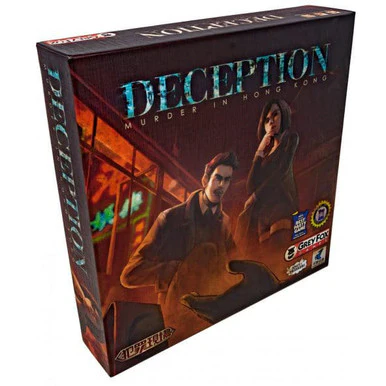
One player is the forensic scientist. They know who the murderer is and what weapon and evidence they used — but they can't speak. Instead, they place tokens on abstract clue boards (things like "cause of death" or "location") and hope the room figures it out. Everyone else is an investigator, talking through the clues, accusing each other, and trying to piece together the truth. Except one of them is secretly the murderer, trying to deflect attention. Rounds run about 20 minutes. The scientist places a clue, the table erupts in debate, then you vote. If you catch the murderer, the investigators win. If not, the murderer escapes. It works from 4 to 12 players, though 6-8 is the sweet spot where there's enough noise to hide in but not so many people that you lose track. The structure is what makes it better than most social deduction games. The scientist isn't just sitting there — they're actively trying to communicate. And the murderer isn't just denying things — they need to actively push suspicion onto someone else. It gives everyone a job, which keeps the table engaged.
Best Board Games for Exactly 7 Players
Seven players is a notoriously awkward count. The mainstream sweet spot for most board games is 4 to 6. Go above that and you're suddenly in territory where publishers don't bother, and the games that do claim to support 7 often do it badly.
The good news: a handful of games are actually better at 7 than at any other count.
What goes wrong at 7 players
The problems are predictable. Turn-order games drag because you're waiting through six other people's turns before you get to act again. Team games don't divide evenly (3v4 works, but not all games handle it). And games with individual turns over a board often become impossible to track because so much changes between your turns.
The games that work at 7 sidestep all of this. They use simultaneous play, team structures that handle odd numbers, or social mechanics where the conversation is the game.
7 Wonders
Seven Wonders was basically designed for 7 players. The maximum player count isn't a stretch. The game was built around 7 because that's how many wonders of the ancient world there are.
Everyone drafts a card simultaneously, plays it, and passes the hand. A 7-player game takes the same 35 minutes as a 3-player game. The military scoring only compares you to your direct neighbours, not everyone at the table, so adding more players doesn't complicate the interaction. It just makes the drafting deeper because each hand is smaller.
The gold standard for 7-player strategy. Same play time no matter how many people sit down.
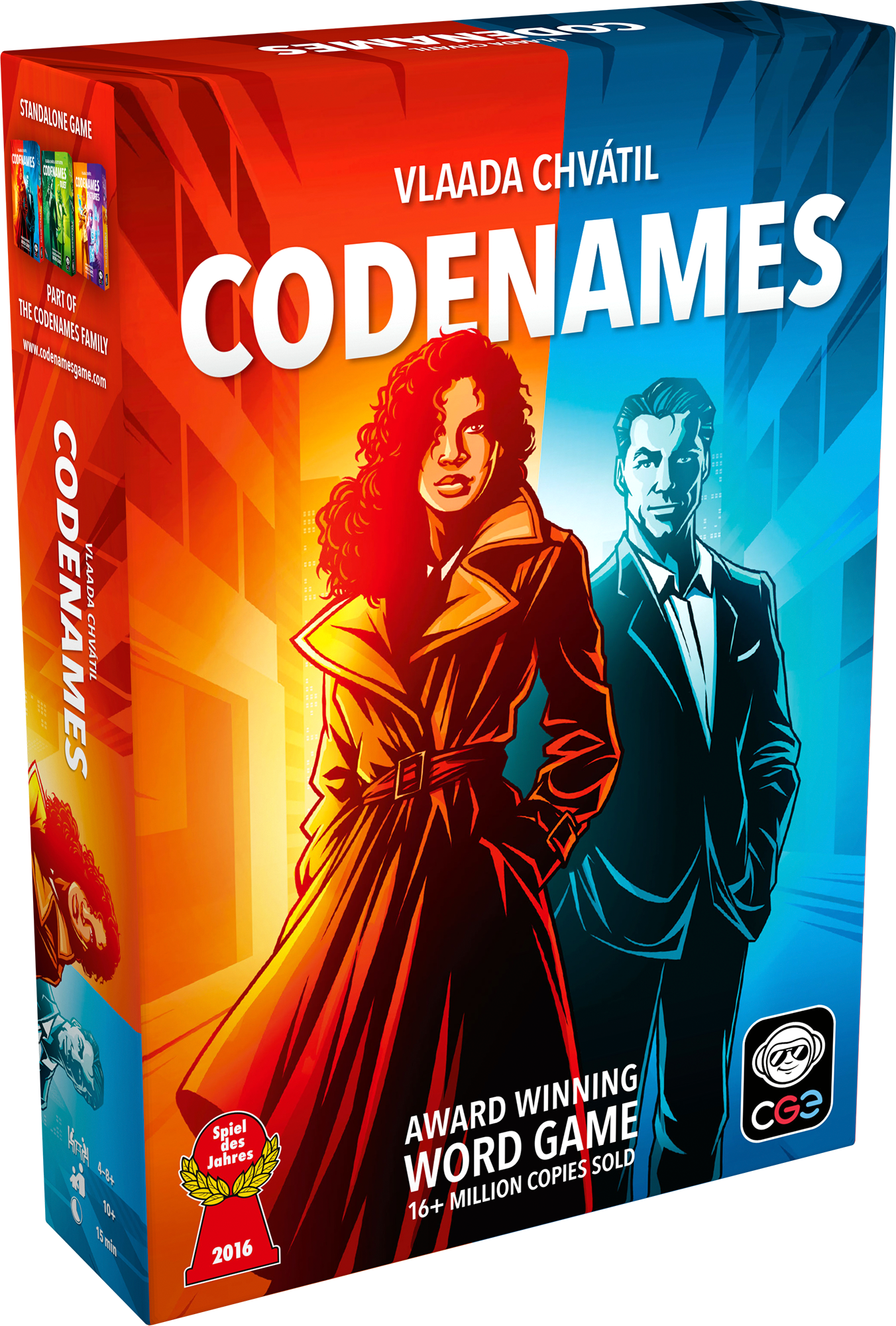
Codenames
Codenames works well at 7 because you split into two teams and the odd person out joins whichever side they want. Both teams play every round. Nobody sits out.
The spymaster sits in silence while their team debates. The discussion is always happening. Seven people means bigger teams and more people contributing to each guess, which makes the debates louder and funnier.
Clean team split at 7. Both teams play every round with no waiting.
Wavelength
Wavelength is probably the most natural 7-player game because the player count is almost irrelevant. One team gives a clue. The other team debates. Then you switch.
With 7 players you can do 4v3 or 3v4 and it doesn't matter at all. The game is just people arguing about where "Submarine" sits on the "Luxury to Practical" scale. More people means more opinions, which makes the game more fun.
No upper limit issues. More players just means more arguments, which is the point.
The Resistance: Avalon
Avalon is one of the few games that specifically calls out 7 as a great player count. The role distribution at 7 is 5 good vs 2 evil, which creates a tight paranoid dynamic.
With 7, the evil team is outnumbered but missions require only 2 or 3 people, giving them plenty of opportunities to sabotage. The voting table (how many players are needed for missions) is specifically calibrated for 7 in the rulebook. It's not an afterthought.
One of the best counts for this game. Role distribution is specifically designed for 7.
Deception: Murder in Hong Kong
Deception plays 4 to 12 players and the 7-player game is excellent. One player is the forensic scientist, one is the murderer, and the remaining five are investigators.
Five investigators means there are enough people to generate real suspicion and debate without the group becoming too large to follow. The forensic scientist has five people to guide without the clues becoming too obvious, and the murderer has enough cover to hide in a group of five.
Sushi Go Party!
The Party version of Sushi Go scales to 8 players and includes a modular menu that lets you adjust complexity. At 7, the drafting is interesting because hands start at 7 cards and pass around almost the full table before the round ends.
It's lighter than 7 Wonders, plays in 20 minutes, and the food theme makes it immediately approachable for groups that include non-gamers.
20-minute simultaneous drafting that works cleanly at 7.
Tips for hosting 7 players
Turn-order games will drag. Avoid anything with complex individual turns that takes 5 minutes per player.
Real-time or simultaneous play is your best tool. Any game where everyone acts at once handles 7 people without downtime.
Team games that handle odd numbers well are: Wavelength (flexible splits), Codenames (flexible splits), and Avalon (purpose-built role distribution). Avoid games that need exact even splits.
Reviewed by TableTop Trends Editorial Team
Board Game Specialists & Group Dynamics Researchers
Tested and evaluated across real group game nights. We specialize in group playability, player count scaling, rule clarity, and downtime reduction for gatherings of 2 to 12+ players.
Not sure which one to pick?
Answer a few quick questions and get a direct recommendation for your group.
Find the right gameLooking for Board Games & Game Night Recommendations?
Explore our group game finder, strategy guides, and game reviews.
🎲 Games in this guide


Explore Curated Collections
Keep Browsing — Related Guides
Hand-picked recommendations for your next game night setup.
Best Board Games for Large Groups
Large groups need different games from regular game nights. Here's what actually works when you have 6 or more people and why most popular games quietly fail at this count.
Best Board Games for 10 Players
Most games break at 10. These are the ones built for it — or clever enough to handle it without slowing down.
Best Board Games for 9 Players
Nine players is an awkward count that most games don't support. Here are the ones that actually handle it without falling apart.
Best Board Games for 8 Players
Eight players is the breakdown point for most board games. Here are the top games designed specifically for 8 people without turn-wait misery.
Need a personalized recommendation for your exact group?
Skip browsing and let our Game Finder select the 9.5/10 match for your player count and vibe.
🎯 Use 30-Second Game Finder