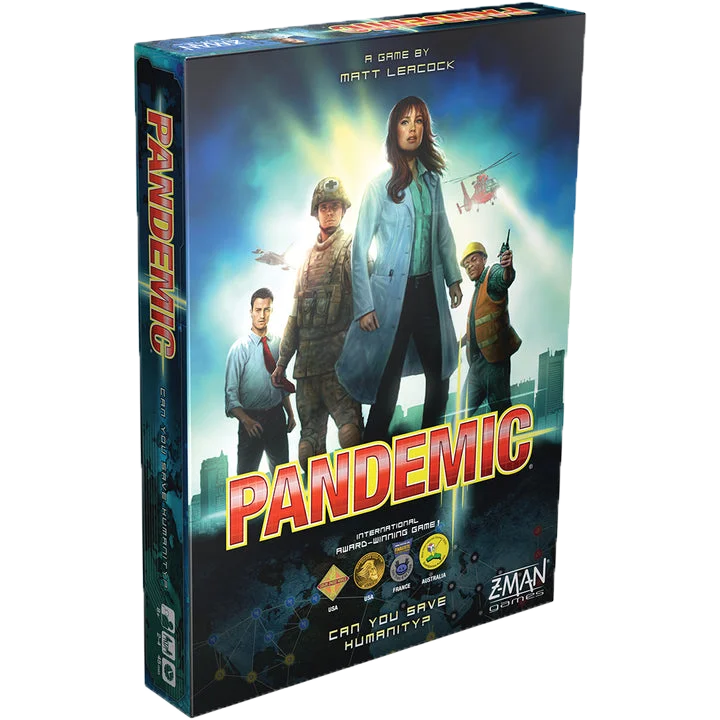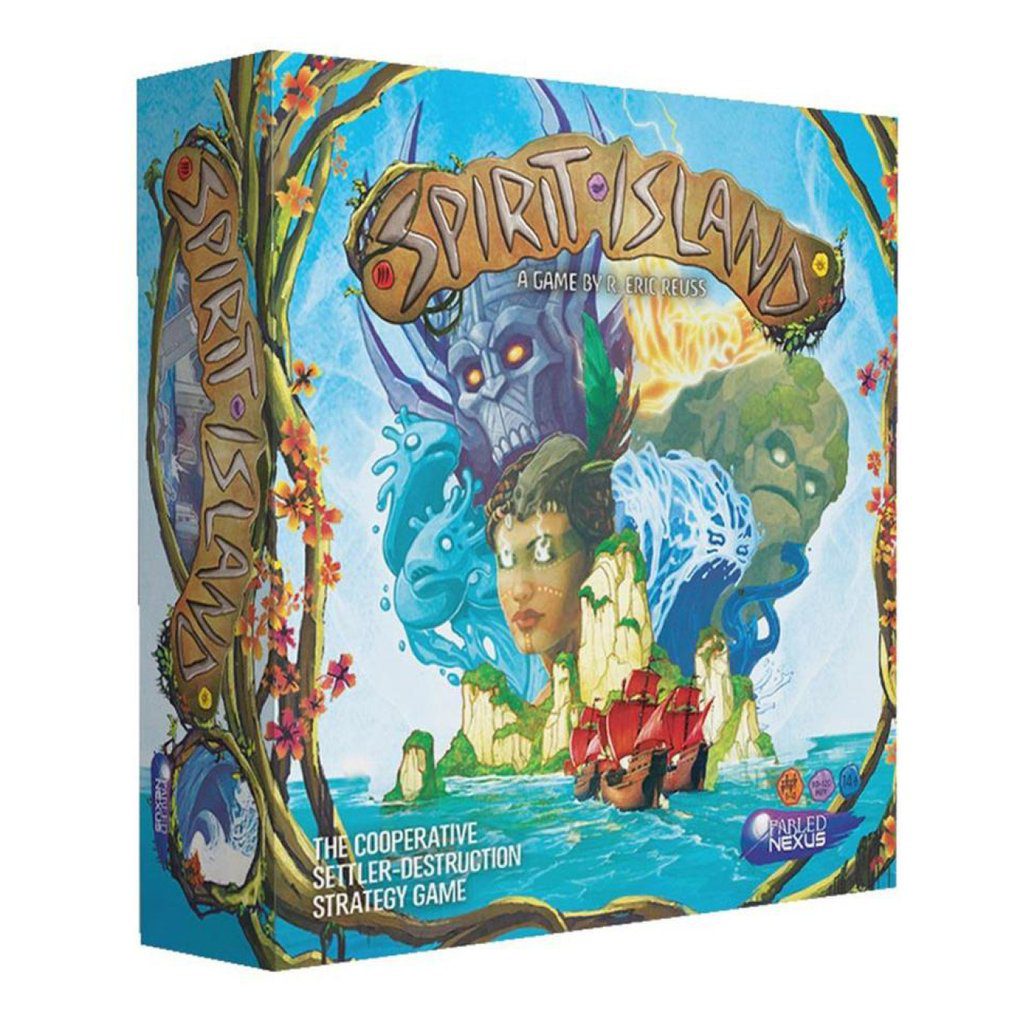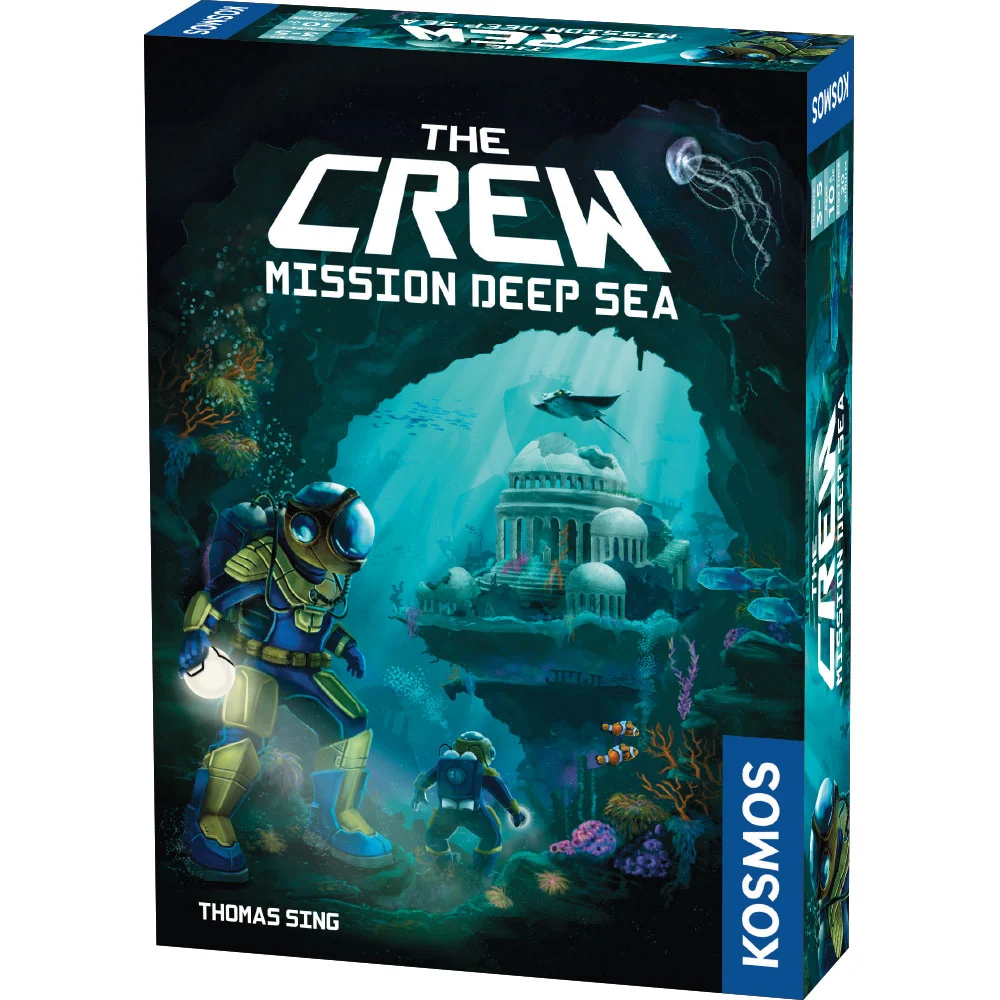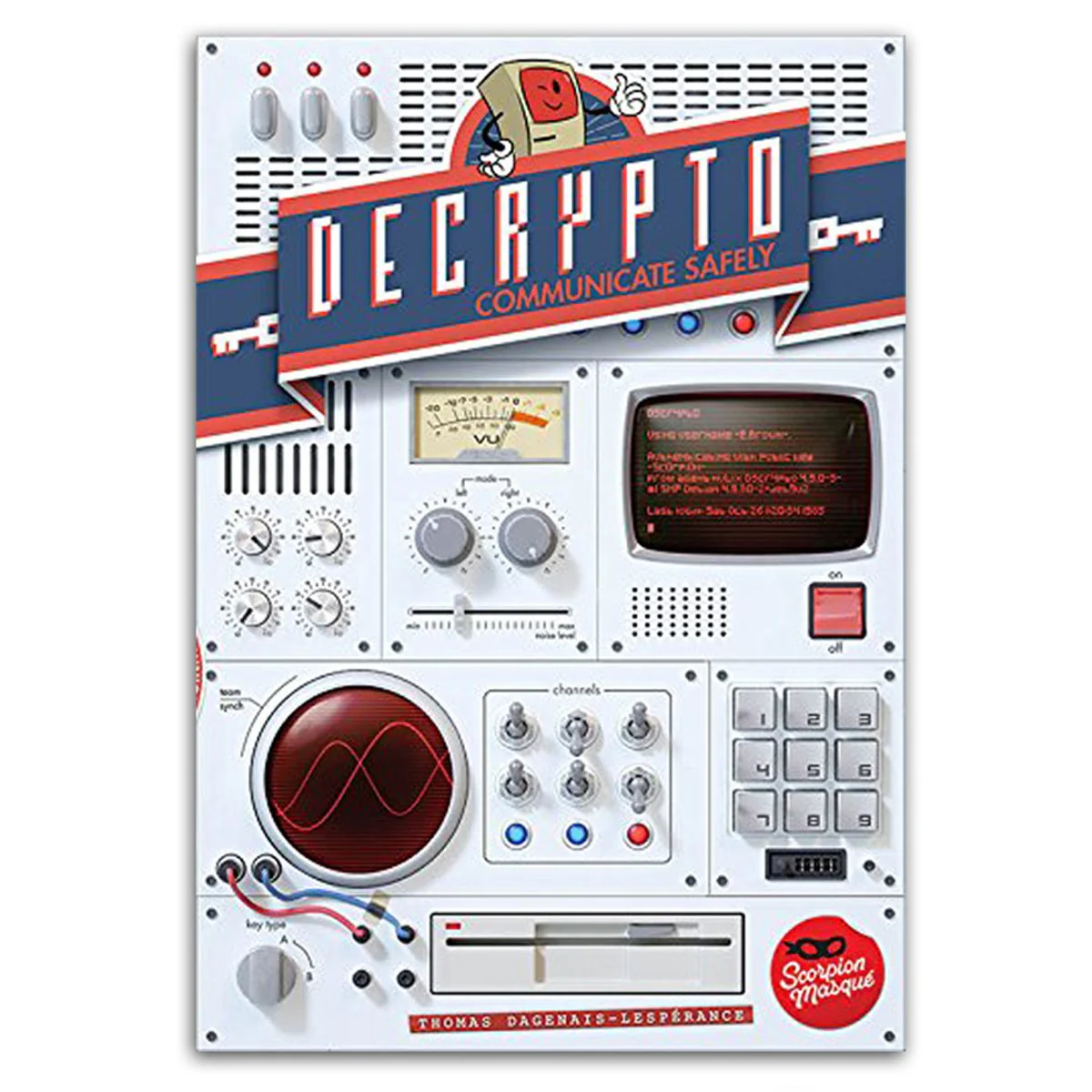
Repos Production • 2021
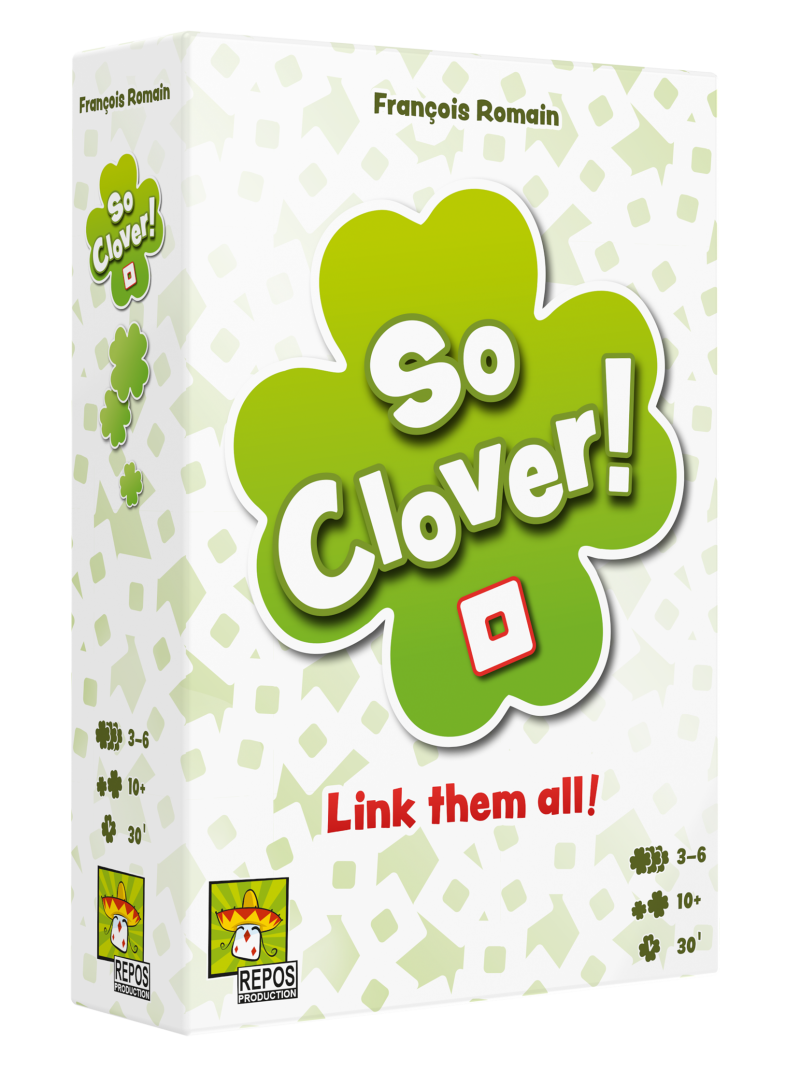
Each player gets a plastic clover-shaped board with four keyword cards slotted in. Your job is to come up with clue words that connect each pair of adjacent keywords. So if "Mountain" and "Snow" are next to each other, you might write "Avalanche" between them. Then your clover gets disassembled. The group sees your four keywords and your four clues, but the keywords are shuffled. They need to figure out which keywords were adjacent to each other — using your clues as the only guide. It feels more like a puzzle than a traditional game. There's a nice quiet period while everyone writes their clues, then an engaged group discussion while you try to reconstruct someone's thinking. "She wrote 'Midnight' — does that connect 'Moon' to 'Dark' or 'Clock' to 'Dark'?" It's cooperative, so nobody gets eliminated or punished. If the group can't figure out your clover, you just shrug and explain your logic. The scoring exists but most groups ignore it and just enjoy the "aha" moments. Best at 4-6 players. It works with 3 but you burn through the reconstructions quickly. The clover boards are sturdy and well-designed — the physical components feel better than they needed to for a word game.
Board Game Specialists & Group Dynamics Researchers
Tested and evaluated across real group game nights. We specialize in group playability, player count scaling, rule clarity, and downtime reduction for gatherings of 2 to 12+ players.
Explore our group game finder, strategy guides, and game reviews.
Answer a few quick questions and get a direct recommendation.
Find the right gameGames with similar group dynamics, time commitment, and player counts.
Party games fall apart when the rules explanation takes longer than the first round. These don't. You can teach any of them in under two minutes, and most groups are laughing before the first round is over.
Work game nights are tricky. Half the group thinks they hate board games. Someone's too competitive. Someone's too shy. You need games that don't put anyone on the spot, don't require a 10-minute rules explanation, and let people ease in at their own pace.
First time playing with this group? Half the people don't know each other? You need games that create conversation without forcing it, where being wrong is funny instead of embarrassing, and where nobody feels like they're being tested.
Cramped wooden tables, sticky surfaces, and loud noise destroy most board games. These spill-resistant, fast-teaching titles thrive in high-energy pub settings.
If your group has played Codenames enough times that the word grid feels familiar, here are the games that scratch the same itch with a different twist.