
Short Board Games for Big Groups (Under 30 Minutes)
Fast, high-energy games for 6 to 12+ players that wrap up in under 30 minutes. Perfect for starting the night or playing while dinner is cooking.
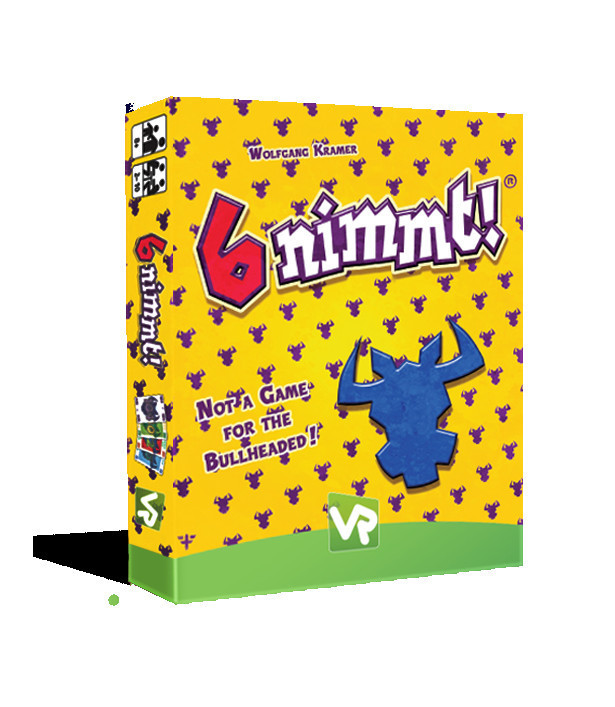
- Best Overall6 nimmt!(2-10 players)
Everyone simultaneously picks a card from their hand and reveals it. Then, in ascending order, each card gets placed at the end of one of four rows on the table. Cards must go in the row where the last card is closest to (but lower than) the played card. If your card becomes the sixth in a row, you take the first five cards (and their penalty points). If your card is lower than every row's last card, you take the row of your choice. The penalty comes from bull heads printed on each card — most cards have 1, but some have 2, 3, 5, or even 7. Low total bull heads wins. The strategy is about reading the rows and predicting what others will play. With 4 players, you can often calculate the safe options. With 10 players, it's closer to chaos — multiple people play similar numbers and rows fill up unpredictably. It's been in print since 1994. The rules fit on a single card. A game takes 20-30 minutes. The components are just 104 numbered cards. It costs almost nothing and fits in a pocket. Plays 2-10. The sweet spot is 5-6 where there's enough unpredictability to be exciting but enough control to reward smart play. At 8-10, it becomes a loud, reactive experience where groaning at bad reveals is half the fun.
- Best for StrategyWelcome To...(1-100 players)
Three cards are flipped each turn. Every card shows a number and an action. All players simultaneously choose one of the three combinations and write it on their personal suburb map — a set of three streets where you're placing houses in ascending order. The numbers go onto houses. The actions let you build pools, parks, fences (to zone estates), or duplicate numbers. You're trying to fill streets, build specific estate configurations, and hit city plan bonus goals before other players do. Because everyone works from the same three cards, the game plays in exactly the same time whether there are 2 players or 50. There are no turns. No waiting. Everyone picks, writes, and moves on. The decisions are interesting without being stressful. You're balancing short-term opportunities against long-term street layout. Put a 7 too early on a street and you've blocked half the future options. But if nobody else has scored that city plan yet, maybe it's worth the risk. No direct interaction. You can't affect anyone else's board. Some groups see this as a feature — there's no blocking, no "take that", just parallel puzzle-solving. Others might find it too solitary. It works best in groups where people are comfortable chatting while playing. It's a "flip and write" game with a 1950s American suburb theme. The aesthetic is clean and retro. Dry-erase sheets mean infinite replays. There are also expansion packs that swap the theme (Vegas, Easter Island) and add new mechanics.
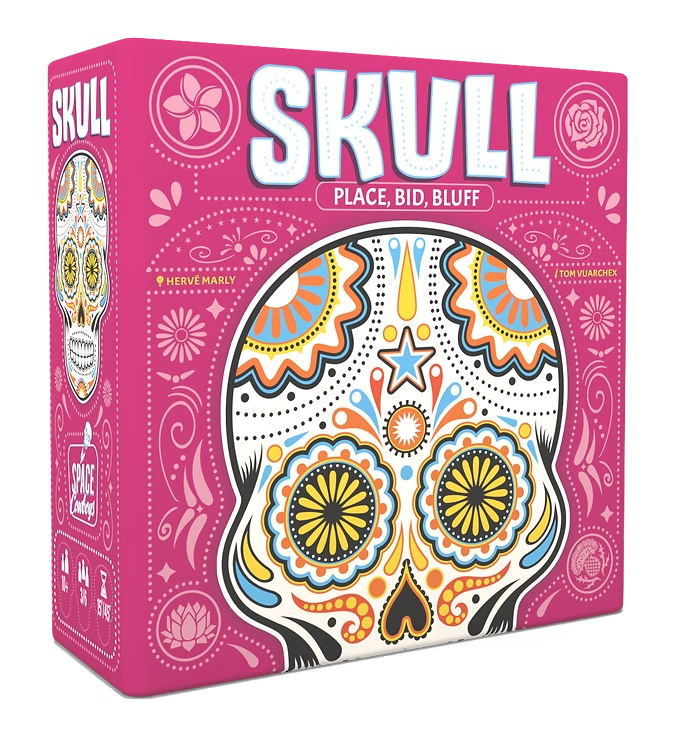
- Great for BeginnersSkull(3-6 players)
Each player has four coasters — three roses and one skull. On your turn, you place a coaster face-down, or you bid: "I can flip X coasters without hitting a skull." If you bid, others can bid higher or pass. The highest bidder has to flip that many coasters, starting with their own stack first. Flip a skull and you lose a coaster permanently. Successfully flip your bid and you earn a point. Two points wins the game. That's it. The whole game. No special powers, no card text, no exceptions. The game is entirely about reading people. Did they place their skull or a rose? Are they bidding to win or to make you crash? Are they baiting you into a high bid so you hit their skull? It's one of the purest bluffing games ever made. The game takes 30 seconds to teach and 15-20 minutes to play. It works at 3-6 players and is equally good at every count. The production is just printed coasters. You can technically play it with beer mats and a marker. Some people buy the boxed version for the art, which is nice, but the game itself is so clean that the components almost don't matter.
Short Board Games for Big Groups (Under 30 Minutes)
When you have 8 or 10 people at your house, pulling out a game that takes two hours can intimidate casual guests.
Short games (under 30 minutes) serve three vital hosting functions:
- Icebreakers: Wording games warm the room up without high pressure.
- Waiting Games: Playable in 15 minutes while waiting for pizza or stragglers to arrive.
- Night Closers: Great for when people are tired but want "just one more round."
Here are the absolute best short board games for big groups.
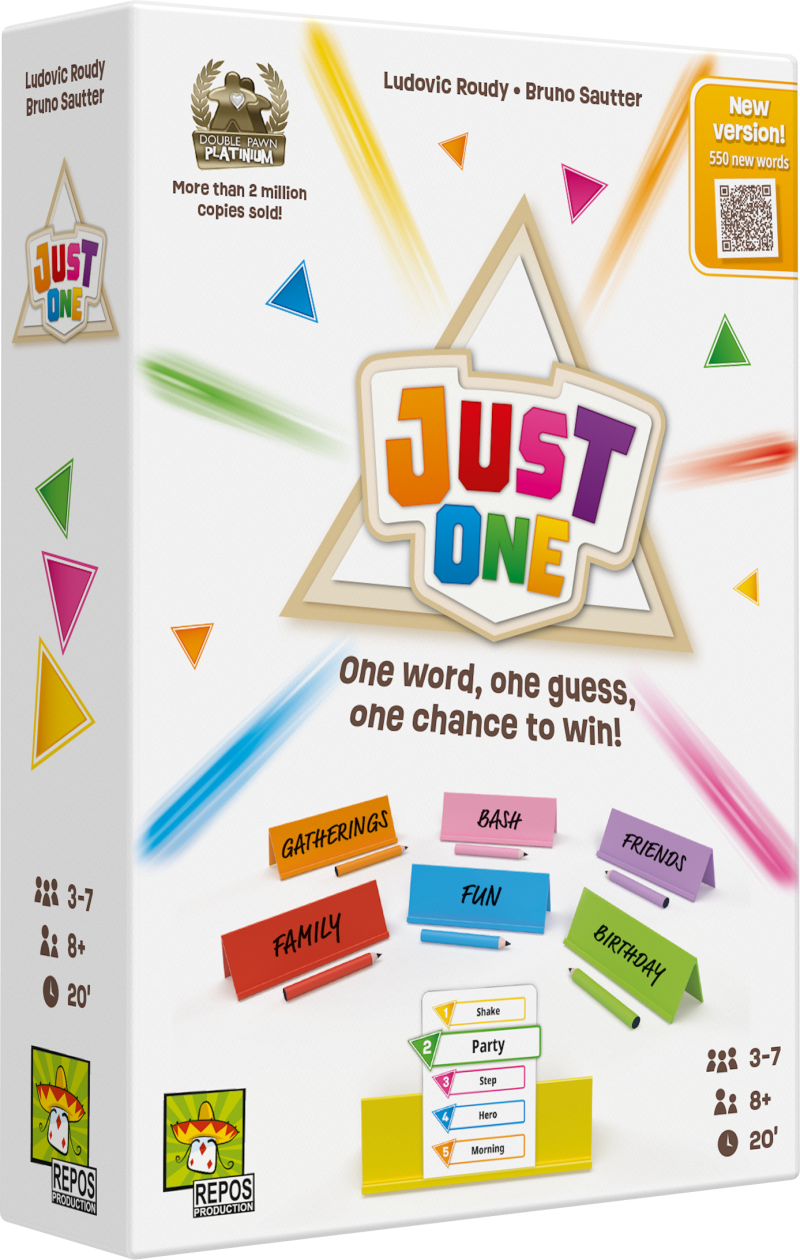
1. Just One
- Play Time: 15–20 minutes
- Player Count: 3–7 players (scales easily to 8+)
- Rules Explanation: 30 seconds
The guesser closes their eyes. Everyone writes a single clue. Duplicate clues get erased. It is fast, ridiculously satisfying, and zero downtime.
2. The Chameleon
- Play Time: 3–5 minutes per round
- Player Count: 5–8 players
- Rules Explanation: 60 seconds
Each round takes 3 minutes. Everyone says one word to prove they know the secret topic without giving it away to the secret Chameleon. You'll easily play 6 rounds in 20 minutes.
3. Skull
- Play Time: 15–20 minutes
- Player Count: 3–6 players
- Rules Explanation: 30 seconds
Pure coaster bluffing. Place roses or skulls face down, then bid on how many you can flip without hitting a skull. Simple, dramatic, and fits on any coffee table.
4. 6 nimmt!
- Play Time: 20–25 minutes
- Player Count: 2–10 players
- Rules Explanation: 2 minutes
Simultaneous card reveals where players try to avoid placing the 6th card in any row. Chaos scales with player count, making it loud and hilarious for large groups.
5. Werewords
- Play Time: 4 minutes per round
- Player Count: 4–10 players
- Rules Explanation: 2 minutes
20 Questions meets secret roles. The app counts down 4 minutes while the group asks yes/no questions to find the secret word while the hidden Werewolf tries to steer you wrong.
Reviewed by TableTop Trends Editorial Team
Board Game Specialists & Group Dynamics Researchers
Tested and evaluated across real group game nights. We specialize in group playability, player count scaling, rule clarity, and downtime reduction for gatherings of 2 to 12+ players.
Not sure which one to pick?
Answer a few quick questions and get a direct recommendation for your group.
Find the right gameLooking for Board Games & Game Night Recommendations?
Explore our group game finder, strategy guides, and game reviews.
🎲 Games in this guide

Featured in Curated Collections
Best Board Games for 6–8 Players
Most board games quietly fall apart above 4 players. Turns drag, half the table checks out, and someone ends up on their phone. These are the ones that actually hold up at 6, 7, and 8 — games where more people means more energy, not more waiting.
Party Board Games for Large Groups
Party games fall apart when the rules explanation takes longer than the first round. These don't. You can teach any of them in under two minutes, and most groups are laughing before the first round is over.
Keep Browsing — Related Guides
Hand-picked recommendations for your next game night setup.
Board Games to Play While Waiting (Quick Filler Games)
Waiting for dinner, between heavier games, or just looking to fill 15 minutes with a big group. These games are designed for exactly this situation.
Best Board Games for 12+ Players (Double-Digit Groups)
When a dozen or more people show up for game night, standard turn orders collapse into chaos. Here's how to host double-digit groups without splitting the room.
Best Christmas Board Games for the Whole Family
Christmas game nights include grandparents, kids, competitive uncles, and people who think board games are boring. These are the games that survive that combination.
Board Games Similar to Catan for Large Groups
Catan caps at 4 players (6 with the extension). If your group has outgrown it or wants something that works at larger counts, here's what delivers a similar experience.
Need a personalized recommendation for your exact group?
Skip browsing and let our Game Finder select the 9.5/10 match for your player count and vibe.
🎯 Use 30-Second Game Finder