
Best Board Games for 10 Players
Most games break at 10. These are the ones built for it — or clever enough to handle it without slowing down.
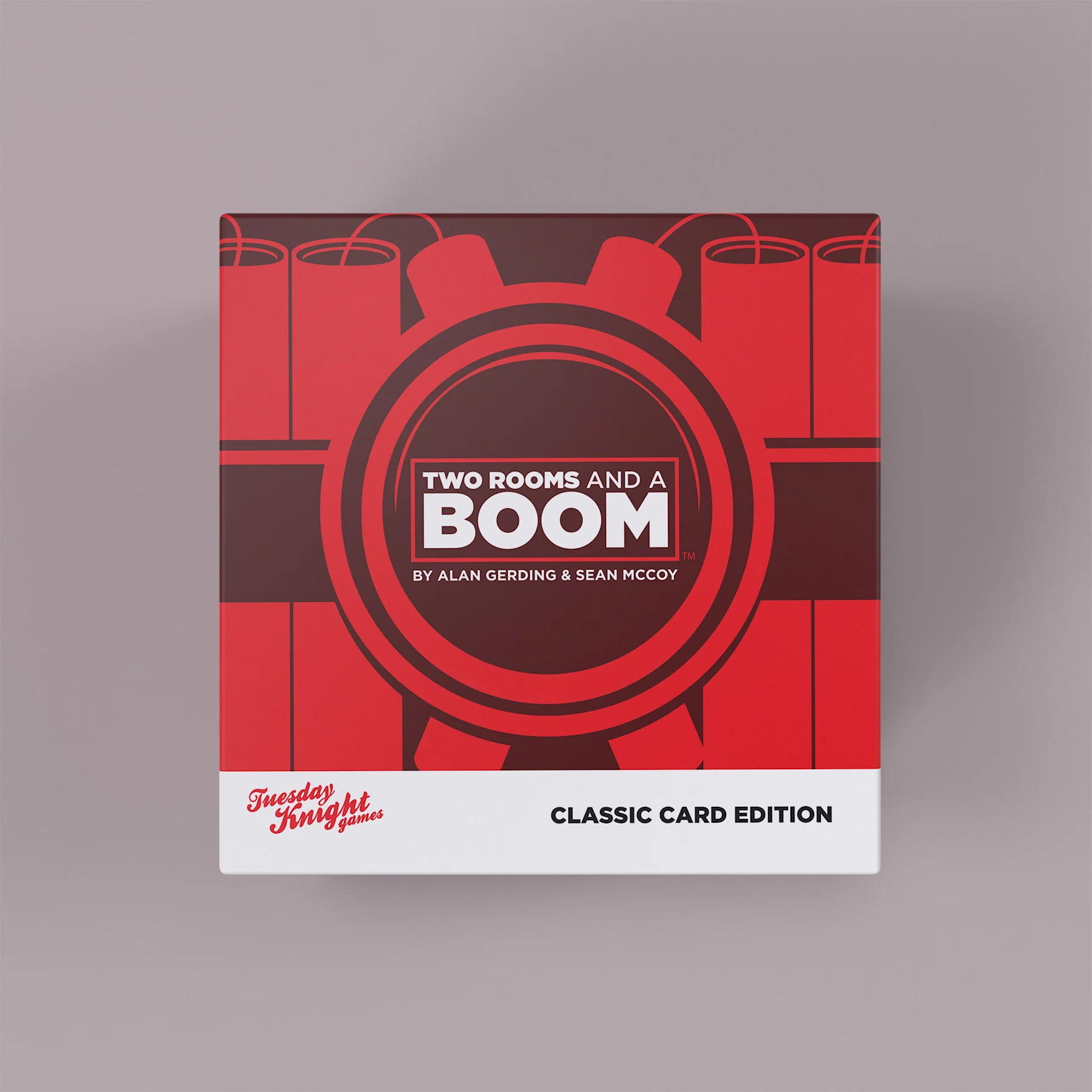
- Best OverallTwo Rooms and a Boom(6-30 players)
Split the group into two physical rooms (or two sides of a large room). Team Blue has a hidden President. Team Red has a hidden Bomber. If the Bomber and President are in the same room when the timer runs out, Red wins. If they're in different rooms, Blue wins. Each timed round (the game lasts three rounds, getting shorter each time), the leaders of each room select "hostages" to trade to the other room. This is the whole game: negotiation, bluffing, and hostage selection. Should you reveal your role to the room leader? Can you trust the leader? Is the person the other room sent over actually defecting, or are they a plant? Extra role cards add abilities — the Spy can swap teams, the Gambler picks a side and wins with them, the Doctor can protect people, the Engineer can defuse the bomb. With more players, more role cards get added, which creates increasingly chaotic and strategic games. It's a social game in the truest sense. You're walking around, having private conversations, forming alliances, and trying to deduce who's on which team. There's no board, no cards on a table — just people talking in rooms. Plays 6-30. Below 10, it's tense and personal. Above 15, it becomes a large-scale social experiment where misinformation spreads like wildfire. The game is strictly timed at 15 minutes total. You always know when it ends. Setup is the biggest barrier. You need two rooms, a moderator, and time to distribute and explain roles. It's best at events, conventions, or house parties rather than casual game nights.
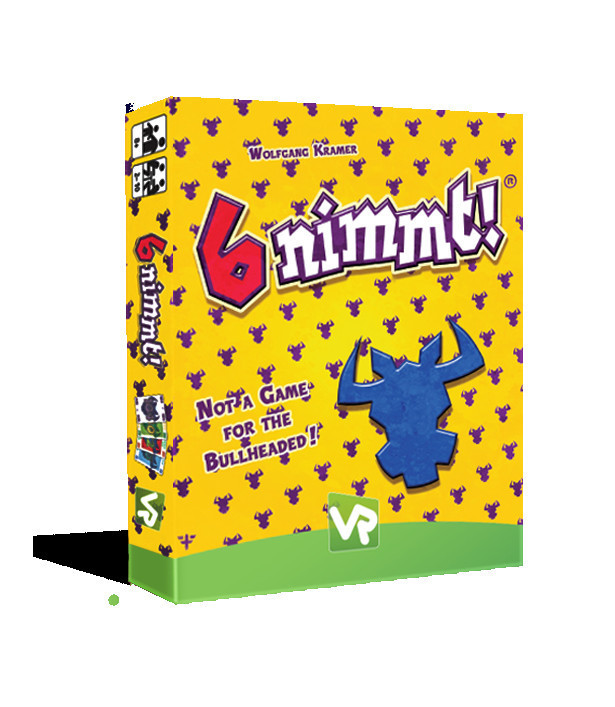
- Best for Strategy6 nimmt!(2-10 players)
Everyone simultaneously picks a card from their hand and reveals it. Then, in ascending order, each card gets placed at the end of one of four rows on the table. Cards must go in the row where the last card is closest to (but lower than) the played card. If your card becomes the sixth in a row, you take the first five cards (and their penalty points). If your card is lower than every row's last card, you take the row of your choice. The penalty comes from bull heads printed on each card — most cards have 1, but some have 2, 3, 5, or even 7. Low total bull heads wins. The strategy is about reading the rows and predicting what others will play. With 4 players, you can often calculate the safe options. With 10 players, it's closer to chaos — multiple people play similar numbers and rows fill up unpredictably. It's been in print since 1994. The rules fit on a single card. A game takes 20-30 minutes. The components are just 104 numbered cards. It costs almost nothing and fits in a pocket. Plays 2-10. The sweet spot is 5-6 where there's enough unpredictability to be exciting but enough control to reward smart play. At 8-10, it becomes a loud, reactive experience where groaning at bad reveals is half the fun.
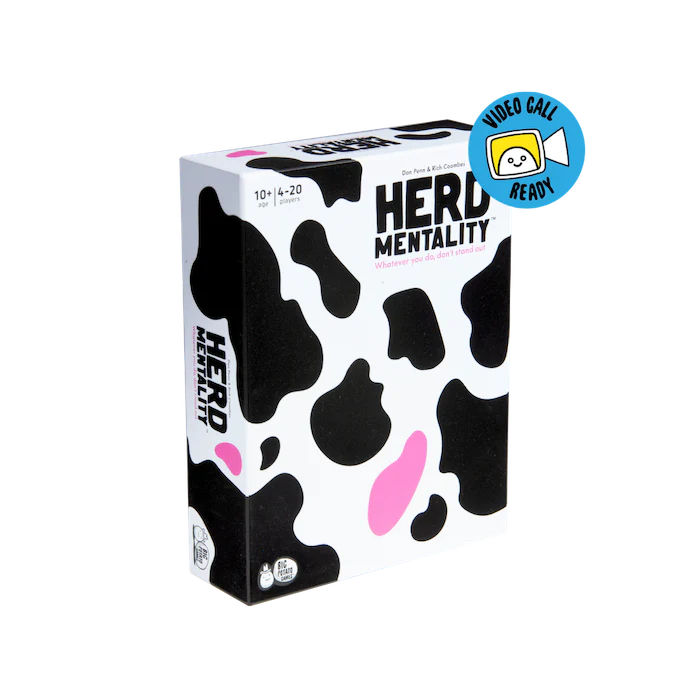
- Great for BeginnersHerd Mentality(4-20 players)
A question card is read out — something like "Name a fruit" or "Name something you'd find in a teenager's bedroom". Everyone secretly writes their answer. Then all answers are revealed simultaneously. If your answer matches the majority, you score. If you wrote something unique, you don't score. If you wrote the only unique answer, you get the Pink Cow — a rubber cow token that blocks you from scoring until someone else takes it from you. That's the whole game. You're trying to think like the group thinks. Not the cleverest answer. Not the funniest answer. The most average, predictable, boring answer. Which sounds simple until you realise that everyone else is also trying to be average, and second-guessing what "average" means gets messy fast. "Name a fruit." You think Apple. But does everyone think Apple? Or is everyone thinking that everyone will think Apple, so they'll write Banana instead? By the time you've spiralled through three layers of meta-thinking, you write Orange and hope for the best. The Pink Cow is the perfect punishment mechanic. It's physical, visible, and silly. The person holding it is always trying to get rid of it. The threat of getting it keeps people playing conservatively. Plays 4-20 with no real upper limit. The game takes 20 minutes and can stop at any point. Question quality varies — some cards produce boring unanimous answers, others split the group in unexpected ways. You can also make up your own questions, which older groups often prefer.
Best Board Games for 10 Players
Most board games break at 10 players. Turn-order games become painful. Anything with individual decisions stretches game time beyond what people's attention spans will tolerate. Even games that technically support 10 in the rulebook often just become slow versions of themselves.
The games that work at 10 do it through one of three mechanisms: simultaneous play (no turns at all), social mechanics (the conversation is the game), or physical movement (the crowd becomes the game). Here are the best options.
Two Rooms and a Boom
Two Rooms and a Boom was designed for 10 to 30 players, making it one of the few games that doesn't just tolerate large counts — it requires them. At 10, you have a full game with meaningful roles and genuine tension.
The group splits into two physical rooms. Team Blue has a hidden President. Team Red has a hidden Bomber. Each timed round, the leader of each room negotiates hostage trades. If the Bomber and President are in the same room when the timer runs out, Red wins.
At 10, the roles are simple and the negotiation is fast. It plays in 15 minutes. You always know when it ends.
Designed for 10 to 30 players. Gets better with more people. 15-minute timer.
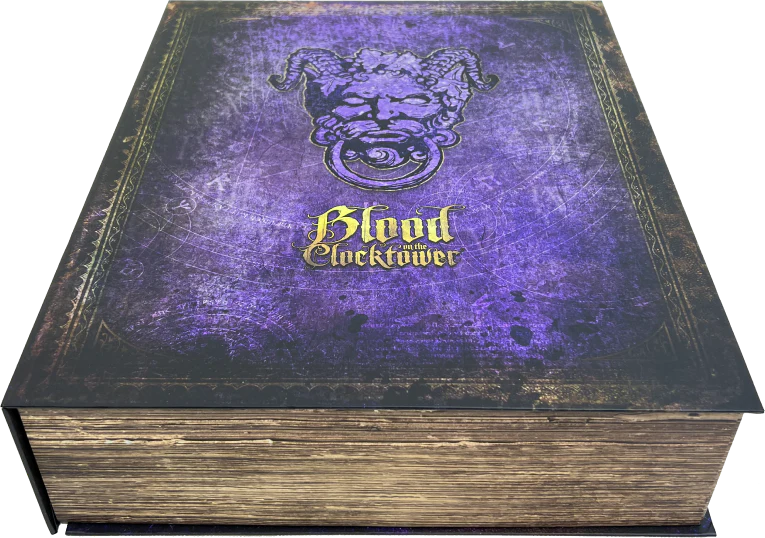
Blood on the Clocktower
Blood on the Clocktower lists 10 to 20 players as its ideal range. At 10, the Storyteller is managing 7 or 8 Townsfolk, 1 or 2 Outsiders, 1 Minion, and the Demon. The logic puzzle is genuinely difficult without being impossible.
Dead players still participate fully — they can talk, argue, and use their one remaining vote. Nobody sits out for an hour watching other people play. This single rule change is why the game works at 10 when Werewolf doesn't.
Expect 90 minutes for a full game. It's a commitment, but nothing else at this player count creates the same intensity.
Welcome To...
Welcome To scales infinitely. Everyone plays from the same three cards, filling in their own suburb map simultaneously. At 10, the game takes exactly as long as it does at 4. There are no turns. No waiting.
It's quiet compared to the social games above, which makes it useful as a counterpoint. After a loud game of Two Rooms and a Boom, Welcome To is a good wind-down option before people start leaving.
Scales to 100+. Same experience at 10 as at 4.
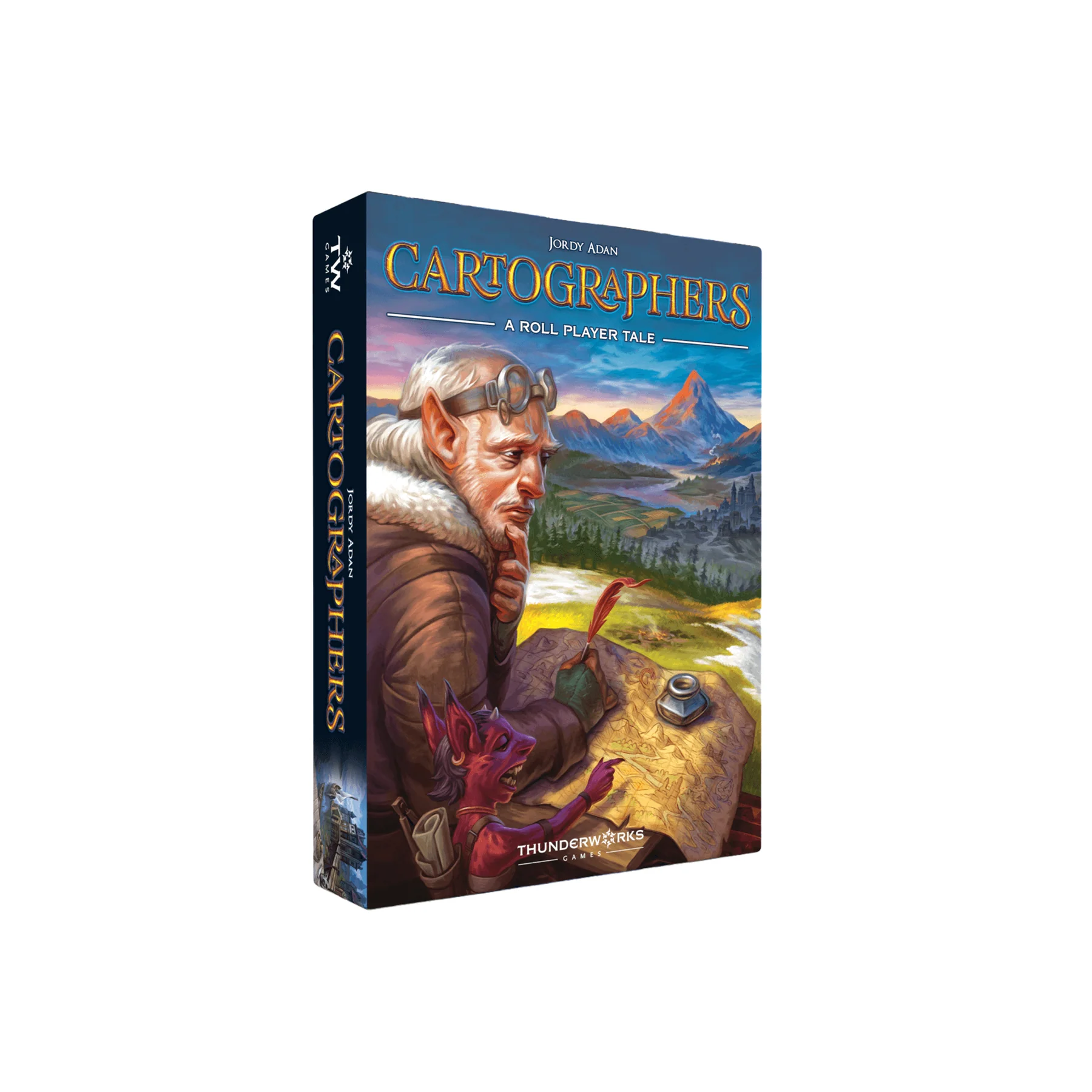
Cartographers
Cartographers works the same way as Welcome To but adds an interaction layer through Ambush cards. When one is drawn, you pass your map to the next player who draws a monster on it. At 10, you're passing around a circle of 10 people, which makes monster placements feel more communal and more dramatic.
Infinite scaling plus monster interaction. Passing maps around 10 people adds to the drama.
6 Nimmt!
6 Nimmt! supports up to 10 players and is one of the few games where adding people actually improves the experience. Everyone simultaneously plays a card, and cards fill four rows in ascending order. If your card becomes the sixth in a row, you take the penalty points.
With 10 players, the rows fill up faster and more unpredictably. There are more cards being played simultaneously, which means more chaos and more dramatic reveals. A full game takes 20 to 30 minutes.
Designed for up to 10. Gets more chaotic and more fun with more players.
Herd Mentality
A question gets read. Everyone writes their most predictable answer. Reveal simultaneously. If you're the odd one out, you get the Pink Cow and can't score until someone else takes it.
With 10 players, reading the room becomes genuinely difficult. The group dynamic shifts in ways you can't predict. Someone writes "Apple" for "Name a fruit" and 6 people also write "Apple" but 4 people wrote "Banana" and nobody's sure who reads the room better. That uncertainty is what makes it funny.
No upper limit. Ten players makes the herd harder to read.
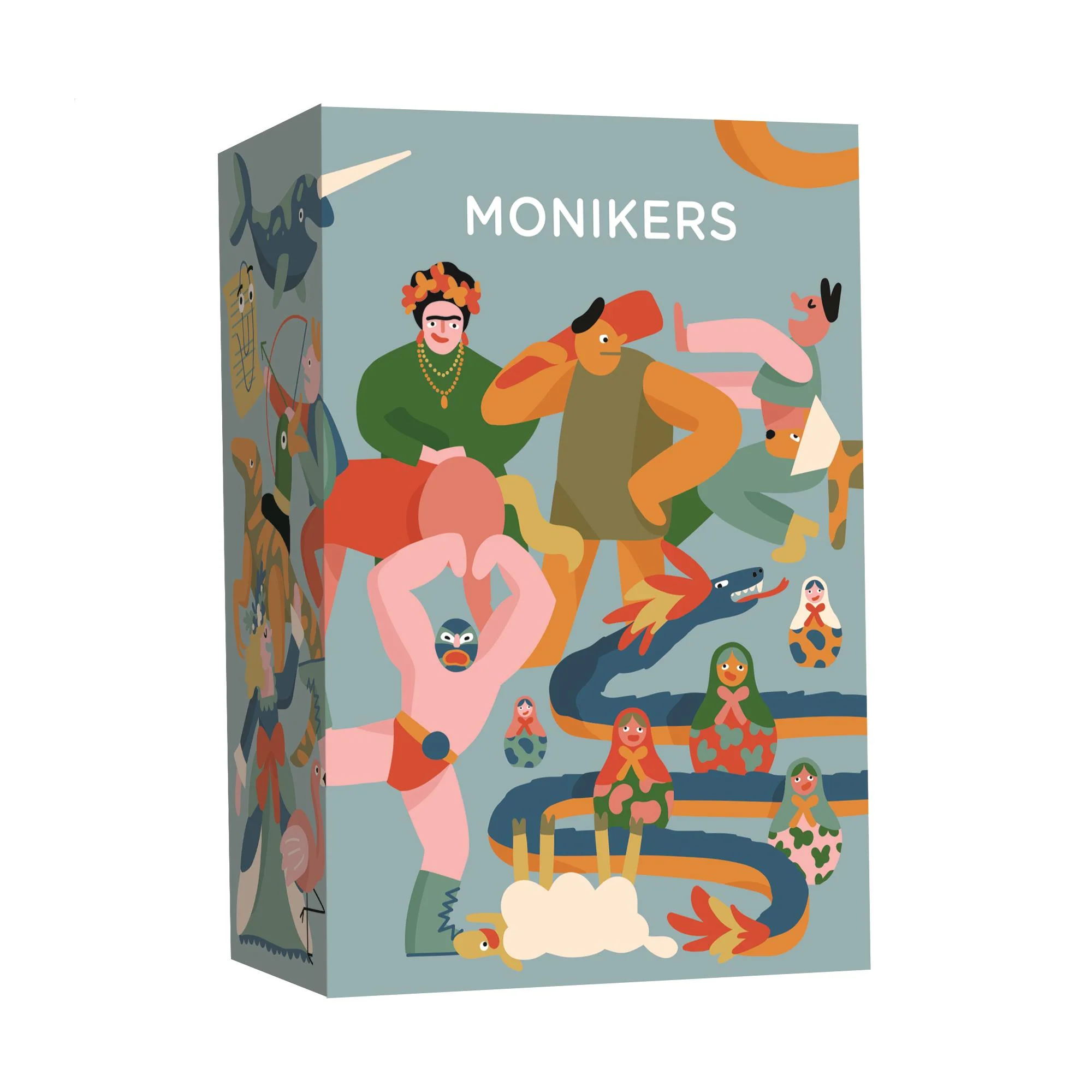
Monikers
Monikers handles any group size in teams. At 10, run two teams of 5. The charades round with 5 people trying to guess simultaneously gets loud. The in-jokes from round one make round three pay off even harder with a bigger team.
Any team structure. Two teams of 5 works perfectly.
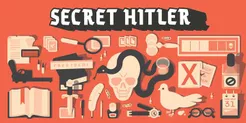
Secret Hitler
Secret Hitler supports up to 10 players and lists it as the maximum for a reason — at 10, the Fascist team has enough players (4 Fascists plus Hitler) to hide effectively without being impossible to find. The policy deck and executive powers create hard data points that experienced players can use to expose lies.
At 10, every round of government formation has real stakes, and the political tension around the table gets properly paranoid.
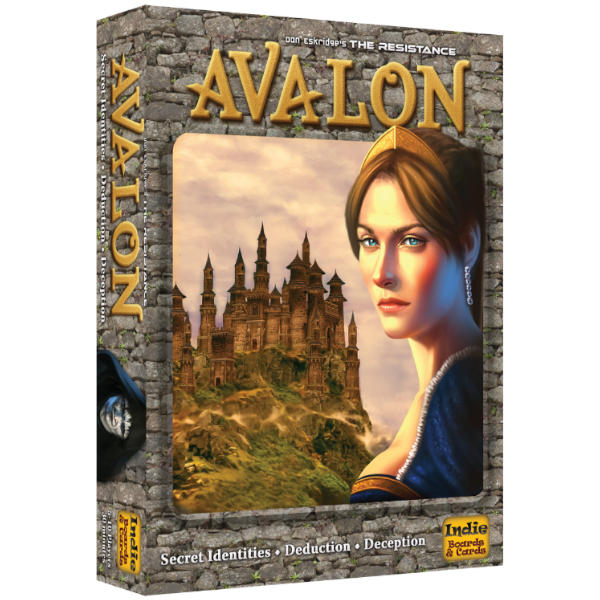
The Resistance: Avalon
Avalon supports exactly 10 players as its maximum. At this count, there are 4 Minions plus Mordred opposing 6 loyal players. Mission sizes are calibrated for 10 in the rulebook.
The voting phase with 10 people arguing about proposed mission teams is chaotic in the right way. With that many opinions and that many potential liars, every vote feels like a genuine decision.
Maximum supported count is 10. Role distribution is specifically calibrated for this count.
Practical advice for 10 players
Don't try to play a game that caps at 8 with 10 people. It won't work.
Build a collection that has at least one game from each category: something that plays in 15 to 20 minutes (Two Rooms, 6 Nimmt!, Herd Mentality), something that plays for 30 to 45 minutes (Monikers, Welcome To, Avalon), and something that plays for 90 minutes if the group wants a commitment (Blood on the Clocktower).
That gives you something for every energy level in the room.
If this helped, you might also want to read our guides on best board games for large groups, best games for 8 players, best games for 9 players.
Reviewed by TableTop Trends Editorial Team
Board Game Specialists & Group Dynamics Researchers
Tested and evaluated across real group game nights. We specialize in group playability, player count scaling, rule clarity, and downtime reduction for gatherings of 2 to 12+ players.
Not sure which one to pick?
Answer a few quick questions and get a direct recommendation for your group.
Find the right gameLooking for Board Games & Game Night Recommendations?
Explore our group game finder, strategy guides, and game reviews.
🎲 Games in this guide

Explore Curated Collections
Keep Browsing — Related Guides
Hand-picked recommendations for your next game night setup.
Best Board Games for 9 Players
Nine players is an awkward count that most games don't support. Here are the ones that actually handle it without falling apart.
Best Board Games for 8 Players
Eight players is the breakdown point for most board games. Here are the top games designed specifically for 8 people without turn-wait misery.
Best Board Games for Exactly 7 Players
Seven players is a notoriously awkward count. Most games top out at 6 and most party games feel thin at 7. Here are the ones that actually work.
10 Great Party Board Games for 6–8 Players
You have seven people sitting around your table. Three of them love strategy, four think board games take four hours. Here are ten games that keep everyone engaged without rulebook headaches.
Need a personalized recommendation for your exact group?
Skip browsing and let our Game Finder select the 9.5/10 match for your player count and vibe.
🎯 Use 30-Second Game Finder