
Best Board Games for 8 Players
Eight players is the breakdown point for most board games. Here are the top games designed specifically for 8 people without turn-wait misery.
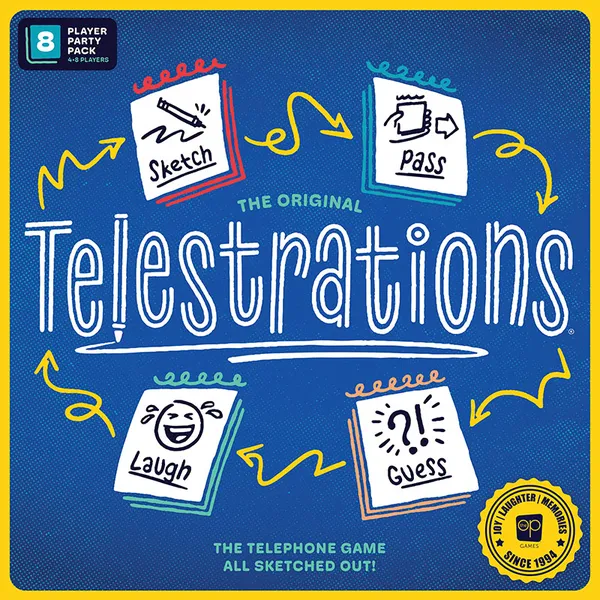
- Best OverallTelestrations(4-8 players)
Think of the game Telephone, but with drawing. Each player starts with a word or phrase. You sketch it in a flip book, pass it on, and the next person guesses what you drew. Then the next person draws that guess. And so on around the table. By the time your book comes back to you, the original word has usually been mangled beyond recognition. "Birthday Cake" became "Hat" became "Sombrero" became "Mexico" became... a stick figure next to a cactus. Then everyone flips through and laughs at where it went wrong. There's no real scoring. The game is the reveal. You're not trying to draw well — you're just trying to be understood. Bad artists actually make the game funnier because their drawings are the ones that derail the chain. It works with 4-8 players (the bigger box does 12). The sweet spot is 6-8, where chains are long enough for proper drift. Each round takes about 5-10 minutes, and most groups play 2-3 rounds before moving on to something else. It's one of the few games that genuinely works with any age and any experience level. Kids, grandparents, people who hate board games — everyone can participate and everyone laughs.
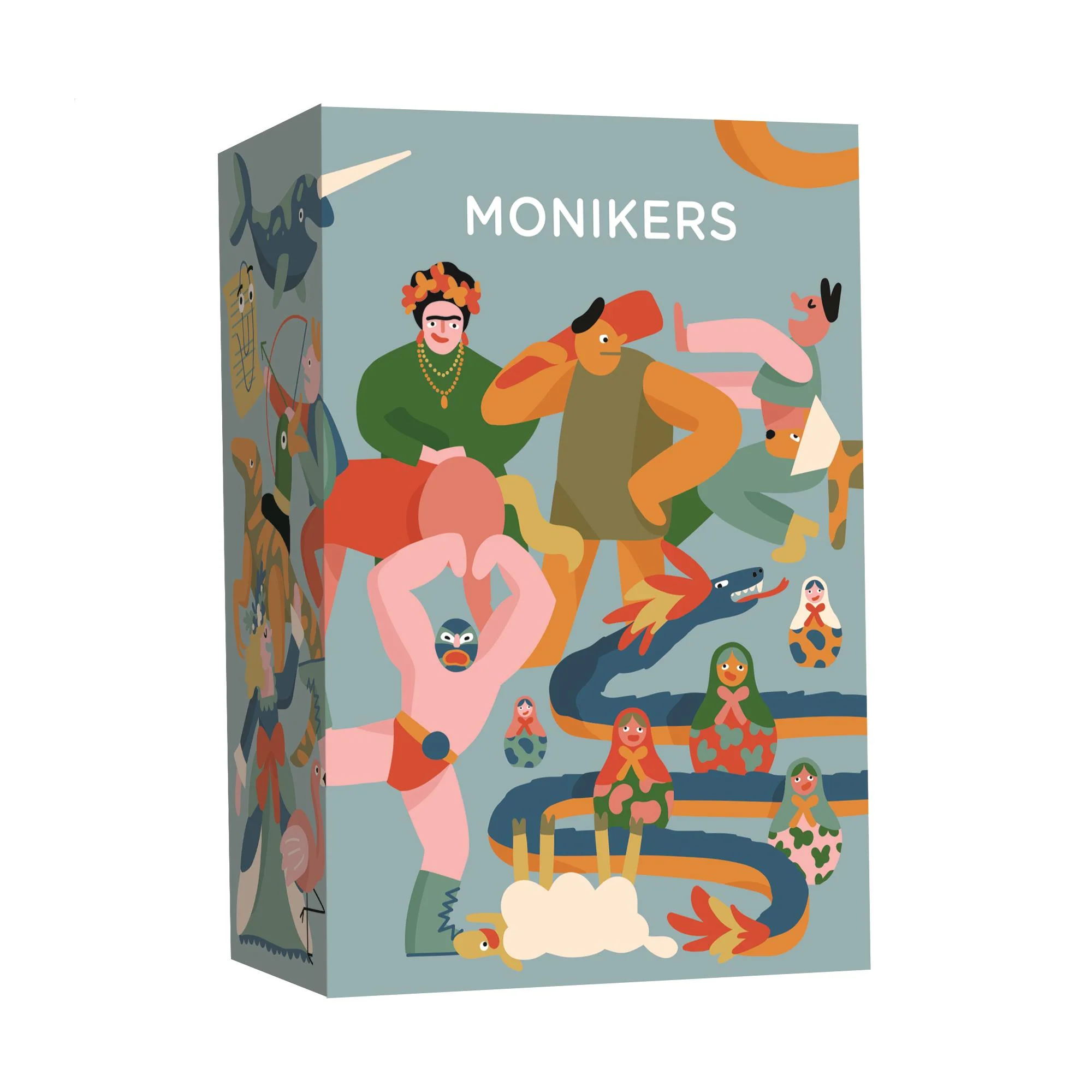
- Best for StrategyMonikers(4-16 players)
A party game played over three rounds with the same set of name cards. In round one, you can say anything you want to get your team to guess the name (like Taboo without restrictions). In round two, you can only say one word. In round three, you can only act it out silently. The key mechanic: you use the same cards all three rounds. So by round three, your team has heard every name at least once. The game shifts from "describe a thing you might not know" to "act out a shared inside joke that only exists because of the last 15 minutes". Round three is where the game peaks. Someone mimes three seconds of something incomprehensible, and their team yells the answer instantly because of a joke from round one. The table is in hysterics. It works because the group has built a private vocabulary over the course of the game. Before playing, everyone drafts the card pool. Each player gets dealt cards and keeps the ones they like, discarding the rest. This means nobody gets stuck with a name they've never heard of — which is a small design choice that fixes a major problem with similar games. Plays 4-16+ in teams. The more people, the louder it gets. There's no upper limit if you're happy splitting into larger teams. It works well as an evening centrepiece — games run 30-45 minutes and usually get an immediate "again".
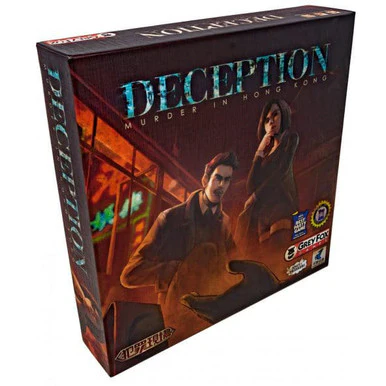
- Great for BeginnersDeception: Murder in Hong Kong(4-12 players)
One player is the forensic scientist. They know who the murderer is and what weapon and evidence they used — but they can't speak. Instead, they place tokens on abstract clue boards (things like "cause of death" or "location") and hope the room figures it out. Everyone else is an investigator, talking through the clues, accusing each other, and trying to piece together the truth. Except one of them is secretly the murderer, trying to deflect attention. Rounds run about 20 minutes. The scientist places a clue, the table erupts in debate, then you vote. If you catch the murderer, the investigators win. If not, the murderer escapes. It works from 4 to 12 players, though 6-8 is the sweet spot where there's enough noise to hide in but not so many people that you lose track. The structure is what makes it better than most social deduction games. The scientist isn't just sitting there — they're actively trying to communicate. And the murderer isn't just denying things — they need to actively push suspicion onto someone else. It gives everyone a job, which keeps the table engaged.
Best Board Games for 8 Players
Eight people at game night is a milestone. It's too big for almost every traditional board game on your shelf, but just small enough that you want everyone playing together at one table instead of splitting the room into two 4-player games.
When buying for 8 players, look for three design approaches:
- Simultaneous drafting: Everyone picks cards at the same time (7 Wonders, Sushi Go Party).
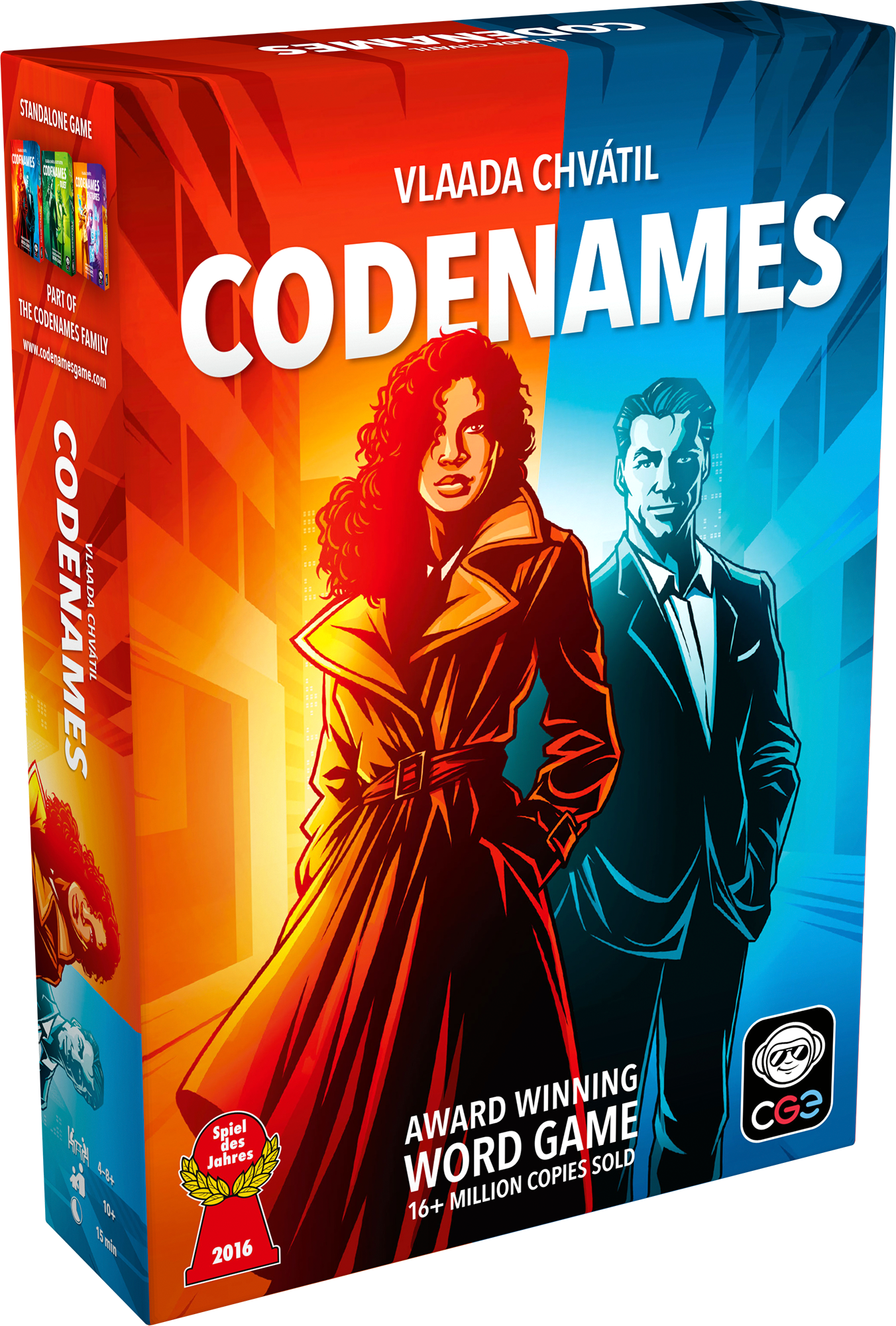
- Team vs Team games: Teams collaborate on simultaneous turns (Captain Sonar, Codenames).
- Roll & Write mechanics: One dice roll applies to all 8 player sheets simultaneously (Welcome To, Long Shot).
Here are the best board games for exactly 8 players.
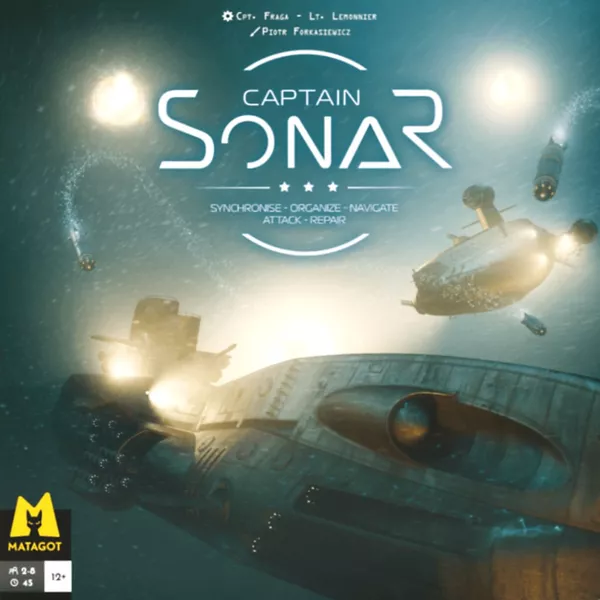
1. Captain Sonar
- Best at: Exactly 8 players (4v4)
- Vibe: Real-time submarine warfare
Eight players split into two 4-person submarine crews across a tall divider screen. Roles are strictly defined: Captain, Radio Operator, First Mate, and Engineer. It requires constant shouting, tracking enemy sonar paths, and managing reactor damage. At 8 players, it is one of the single best experiences in modern board gaming.
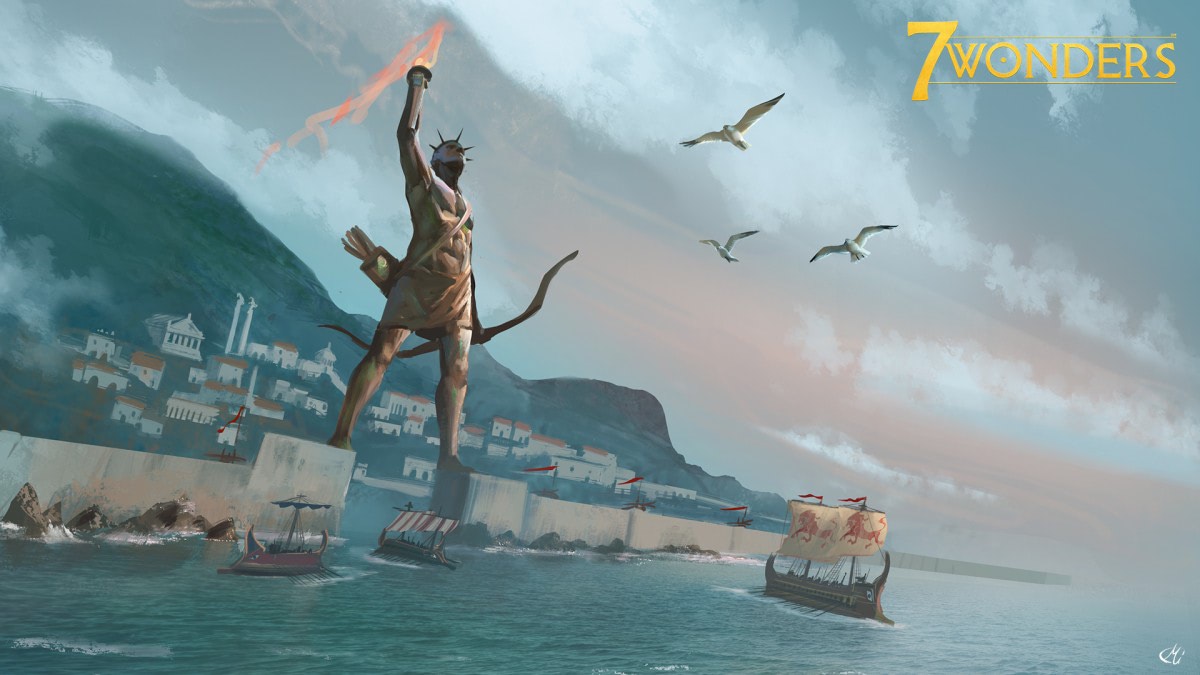
2. 7 Wonders
- Best at: 3–7 players (8 with Cities expansion)
- Vibe: Simultaneous civilization drafting
Card drafting means all 8 players act simultaneously. A full 8-player game takes the same 30 to 40 minutes as a 4-player game. Zero waiting between turns.
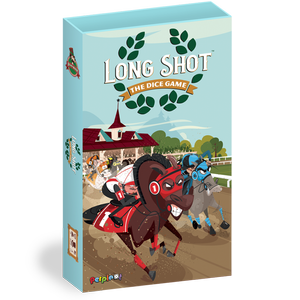
3. Long Shot: The Dice Game
- Best at: 1–8 players
- Vibe: Dice rolling horse racing with betting
Roll two dice, move horses, buy cards, and mark dry-erase sheets. Because every dice roll moves horses that everyone has bet on, all 8 players are screaming at every single roll.
4. Welcome To...
- Best at: 1–100 players
- Vibe: Suburb building flip-and-write
Flip three cards from the deck. All 8 players simultaneously select a number and action to build their 1950s neighborhood. Because actions happen in parallel, player count literally does not change game length.
5. Just One
- Best at: 3–8 players
- Vibe: Cooperative duplicate-cancelling word game
One guesser, seven clue-givers. Duplicate clues get erased before the guesser opens their eyes. Fast, fun, and non-gamers love it.
Reviewed by TableTop Trends Editorial Team
Board Game Specialists & Group Dynamics Researchers
Tested and evaluated across real group game nights. We specialize in group playability, player count scaling, rule clarity, and downtime reduction for gatherings of 2 to 12+ players.
Not sure which one to pick?
Answer a few quick questions and get a direct recommendation for your group.
Find the right gameLooking for Board Games & Game Night Recommendations?
Explore our group game finder, strategy guides, and game reviews.
🎲 Games in this guide
Explore Curated Collections
Keep Browsing — Related Guides
Hand-picked recommendations for your next game night setup.
Best Board Games for Large Groups
Large groups need different games from regular game nights. Here's what actually works when you have 6 or more people and why most popular games quietly fail at this count.
Best Board Games for 10 Players
Most games break at 10. These are the ones built for it — or clever enough to handle it without slowing down.
Best Board Games for 9 Players
Nine players is an awkward count that most games don't support. Here are the ones that actually handle it without falling apart.
Best Board Games for Exactly 7 Players
Seven players is a notoriously awkward count. Most games top out at 6 and most party games feel thin at 7. Here are the ones that actually work.
Need a personalized recommendation for your exact group?
Skip browsing and let our Game Finder select the 9.5/10 match for your player count and vibe.
🎯 Use 30-Second Game Finder