Goat Wolf & Cabbage • 2016
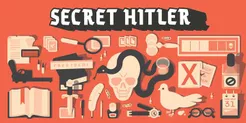
Players are secretly assigned as Liberals or Fascists. The Fascists know each other. The Liberals don't know who anyone is. One Fascist is secretly Hitler. Each round, a President is nominated and they pick a Chancellor. Everyone votes on the government. If it passes, the President draws three policy tiles, discards one, and passes two to the Chancellor, who enacts one. Policies go on either the Liberal or Fascist track. Liberals win by passing five Liberal policies. Fascists win by passing six Fascist policies or by electing Hitler as Chancellor after three Fascist policies are already on the board. The policy deck has more Fascist tiles than Liberal ones, so even legitimate governments sometimes have to pass Fascist policies. This is where the game gets interesting. When a Fascist policy is enacted, the President and Chancellor both claim they had no choice. "I drew three Fascist tiles." "Did you? Or did you discard the Liberal one?" The table erupts. As the Fascist track fills up, the President gains executive powers — investigating, executing, or peek at tiles. These powers create hard information that smart players can use to corner liars. It's mechanically tighter than most social deduction games. The policy deck creates a shared data trail that the table can analyse. This means experienced players have more tools than just gut feelings. Plays 5-10. Sweet spot is 7-8 where the Fascist team is big enough to coordinate but small enough to be hard to find. Games run 30-45 minutes. The theme is attention-grabbing and intentionally provocative — check that your group's comfortable with it first.
Board Game Specialists & Group Dynamics Researchers
Tested and evaluated across real group game nights. We specialize in group playability, player count scaling, rule clarity, and downtime reduction for gatherings of 2 to 12+ players.
Explore our group game finder, strategy guides, and game reviews.
Answer a few quick questions and get a direct recommendation.
Find the right gameGames with similar group dynamics, time commitment, and player counts.
Most games break at 10. These are the ones built for it — or clever enough to handle it without slowing down.
Ditch Mafia and Werewolf. These modern social deduction games keep dead players involved, prevent shouting matches, and scale up to 15+ players without falling apart.