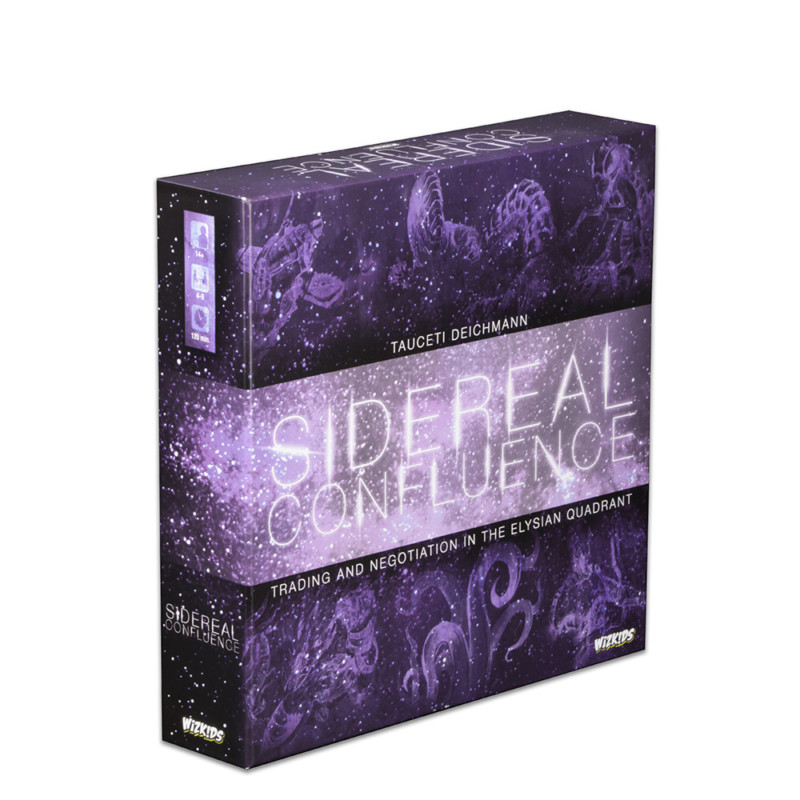
WizKids • 2017
Each player controls one of nine alien races, each with a completely different economy. Your race has converter cards that turn input resources into output resources — but you probably can't produce the inputs you need. So you trade. Trading happens simultaneously and in real time. There are no turns during the trade phase. Everyone is negotiating at once. "I'll give you three white cubes for two green." "I need a colony ship — who has one?" "I'll swap you my small converter for your large one and throw in two cubes." Deals can be anything. Any resource, any promise. After trading, everyone simultaneously runs their converters, produces new resources, and scores points. Then a new set of technologies becomes available through a shared bidding system. Repeat for six rounds. The asymmetry is deep. The Kt'Zr'Kt'Rtl (yes, that's a name) have a biological economy that literally grows. The Faderan have intellectual technologies that create resources from nothing but need other races' outputs. The Yengii are good at pure trading but produce little on their own. Each race needs different things from different races. This is a heavy game. The teach takes 30-40 minutes. First-time players will be confused for the first two rounds. But the trading is so inherently social — it's literally just making deals with people — that most groups find the energy even through the learning curve. Plays 4-9. The 9-player game is the full experience — every race at the table, maximum trade options, maximum noise. Games run about 2 hours. It's one of the very few heavy strategy games that actually gets better with more players.
Board Game Specialists & Group Dynamics Researchers
Tested and evaluated across real group game nights. We specialize in group playability, player count scaling, rule clarity, and downtime reduction for gatherings of 2 to 12+ players.
Explore our group game finder, strategy guides, and game reviews.
Answer a few quick questions and get a direct recommendation.
Find the right gameGames with similar group dynamics, time commitment, and player counts.
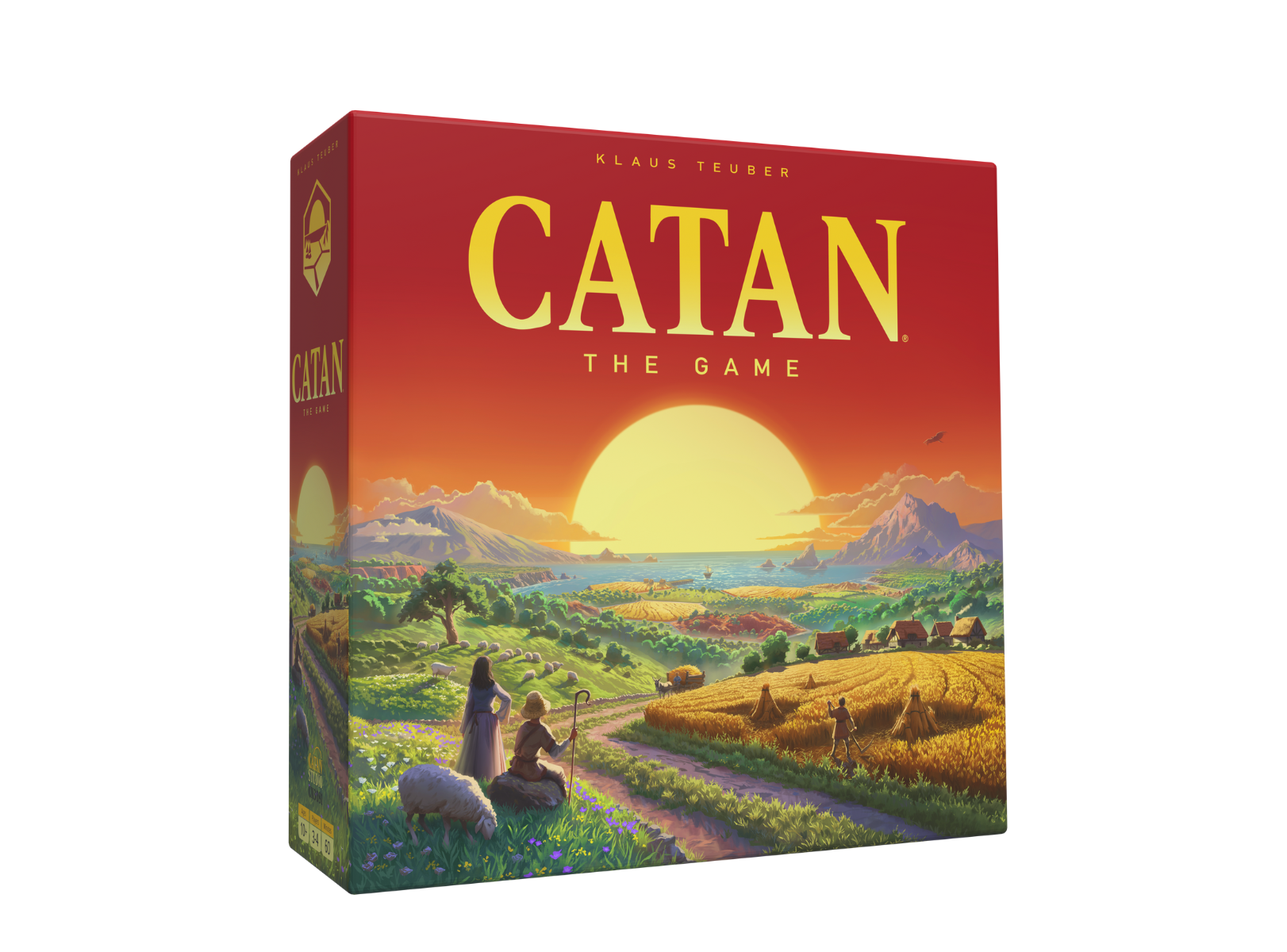
Catan caps at 4 players (6 with the extension). If your group has outgrown it or wants something that works at larger counts, here's what delivers a similar experience.
Large groups need different games from regular game nights. Here's what actually works when you have 6 or more people and why most popular games quietly fail at this count.
Nine players is an awkward count that most games don't support. Here are the ones that actually handle it without falling apart.
Party games are great, but sometimes a group wants actual depth. Here are the strategy games that don't fall apart above four players.