
Best Social Deduction Games for Big Groups
Ditch Mafia and Werewolf. These modern social deduction games keep dead players involved, prevent shouting matches, and scale up to 15+ players without falling apart.
- Best OverallTwo Rooms and a Boom(6-30 players)
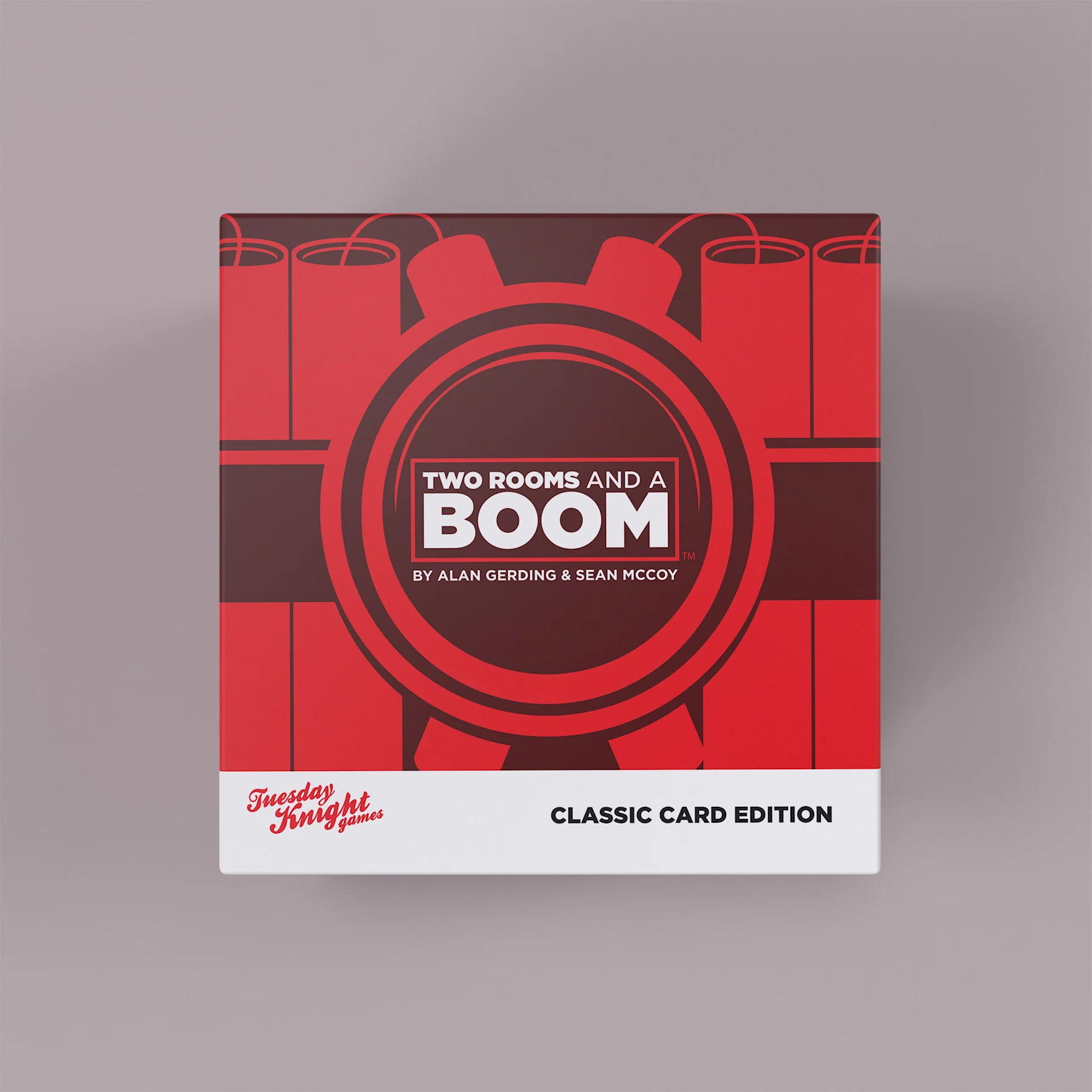
Split the group into two physical rooms (or two sides of a large room). Team Blue has a hidden President. Team Red has a hidden Bomber. If the Bomber and President are in the same room when the timer runs out, Red wins. If they're in different rooms, Blue wins. Each timed round (the game lasts three rounds, getting shorter each time), the leaders of each room select "hostages" to trade to the other room. This is the whole game: negotiation, bluffing, and hostage selection. Should you reveal your role to the room leader? Can you trust the leader? Is the person the other room sent over actually defecting, or are they a plant? Extra role cards add abilities — the Spy can swap teams, the Gambler picks a side and wins with them, the Doctor can protect people, the Engineer can defuse the bomb. With more players, more role cards get added, which creates increasingly chaotic and strategic games. It's a social game in the truest sense. You're walking around, having private conversations, forming alliances, and trying to deduce who's on which team. There's no board, no cards on a table — just people talking in rooms. Plays 6-30. Below 10, it's tense and personal. Above 15, it becomes a large-scale social experiment where misinformation spreads like wildfire. The game is strictly timed at 15 minutes total. You always know when it ends. Setup is the biggest barrier. You need two rooms, a moderator, and time to distribute and explain roles. It's best at events, conventions, or house parties rather than casual game nights.
- Best for StrategySecret Hitler(5-10 players)
Players are secretly assigned as Liberals or Fascists. The Fascists know each other. The Liberals don't know who anyone is. One Fascist is secretly Hitler. Each round, a President is nominated and they pick a Chancellor. Everyone votes on the government. If it passes, the President draws three policy tiles, discards one, and passes two to the Chancellor, who enacts one. Policies go on either the Liberal or Fascist track. Liberals win by passing five Liberal policies. Fascists win by passing six Fascist policies or by electing Hitler as Chancellor after three Fascist policies are already on the board. The policy deck has more Fascist tiles than Liberal ones, so even legitimate governments sometimes have to pass Fascist policies. This is where the game gets interesting. When a Fascist policy is enacted, the President and Chancellor both claim they had no choice. "I drew three Fascist tiles." "Did you? Or did you discard the Liberal one?" The table erupts. As the Fascist track fills up, the President gains executive powers — investigating, executing, or peek at tiles. These powers create hard information that smart players can use to corner liars. It's mechanically tighter than most social deduction games. The policy deck creates a shared data trail that the table can analyse. This means experienced players have more tools than just gut feelings. Plays 5-10. Sweet spot is 7-8 where the Fascist team is big enough to coordinate but small enough to be hard to find. Games run 30-45 minutes. The theme is attention-grabbing and intentionally provocative — check that your group's comfortable with it first.
- Great for BeginnersThe Resistance: Avalon(5-10 players)
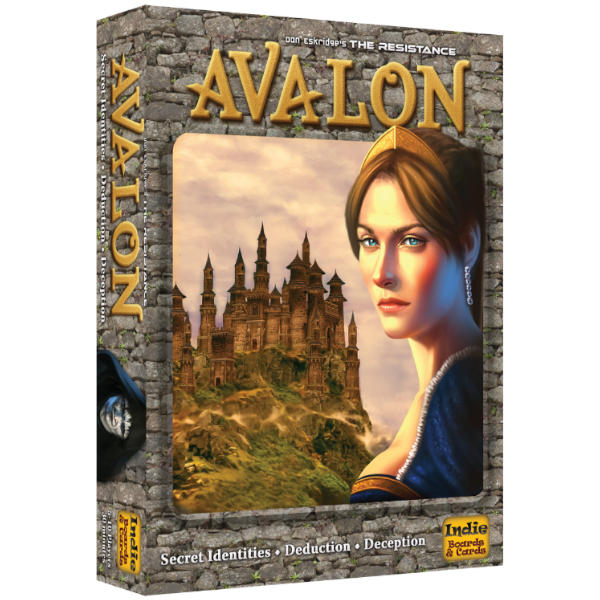
Hidden-role deduction set in Arthurian legend. At the start, everyone secretly finds out if they're loyal to Arthur or a Minion of Mordred. Then you play five missions. Each round, a team leader proposes a group to go on the mission. Everyone votes to approve or reject the team. If approved, the team secretly plays success or fail cards. The loyal players always play success. The Minions can play fail to sabotage missions. Three successful missions and the good side wins. Three failed missions and evil wins. The meat of the game is the team selection and the voting. Who proposed whom, who approved what team, who was on the mission that failed — every decision is information, and the table is constantly arguing about it. Avalon adds special roles on top of the base Resistance: Merlin knows who the evil players are but has to be subtle about sharing that information. Because if the good team wins, the Minions get one final shot — they can assassinate Merlin and steal the victory. Percival knows who Merlin is and tries to protect them. Morgana pretends to be Merlin to confuse Percival. This extra layer makes Avalon feel much sharper than the basic Resistance. The endgame assassination attempt means the good team can't just follow Merlin's lead blindly — doing so paints a target. Plays 5-10. The 5-player game is tight and logical. The 7-8 player game is louder and more chaotic. Both are good. Rounds take 30 minutes and almost always result in someone demanding a rematch.
Best Social Deduction Games for Big Groups
If your memory of social deduction games is getting eliminated in minute two of Werewolf and sitting in silence on the couch for an hour, good news: modern game design has fixed the genre.
The best modern deduction games eliminate early player knockouts, provide concrete clues so quiet players can participate, and keep group energy high without devolving into mindless shouting matches.
Here are the absolute best social deduction games for groups of 6 to 15+ players.
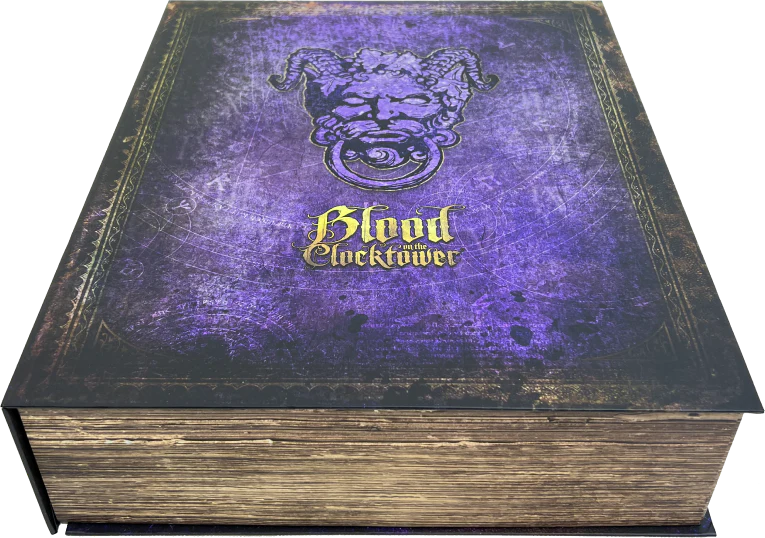
1. Blood on the Clocktower
If there is a holy grail of large-group social deduction, this is it. Designed for 5 to 20 players, Blood on the Clocktower fixes every flaw in traditional Werewolf.
- Dead players keep playing: When you die, you don't leave the room. You keep talking, sharing info, and even get one final ghost vote late in the game.
- The Storyteller manages pacing: A human Storyteller runs the game, feeding private information to characters and adjusting elements to keep matches close.
- Every character is unique: Townsfolk have specific abilities (like checking neighbors or sensing poisoned info), making every role important.
Expect 60 to 90 minutes of pure paranoia, wild theories, and brilliant endgame reveals.
2. Deception: Murder in Hong Kong
For groups of 6 to 12 players who want something faster, Deception is unbeatable.
One player is the silent Forensic Scientist giving hints via wooden markers on scene tiles (such as Cause of Death: Suffocation or Location: Kitchen). One investigator is secretly the murderer trying to blend in.
Because every player has four evidence cards and four weapon cards lying face-up in front of them, the debate revolves around actual evidence on the table rather than personal accusations. Rounds take 15 minutes, and no one gets eliminated.
3. Secret Hitler
A tense political deduction game for 5 to 10 players. Players are secretly divided into Liberals and Fascists.
Each round, a President and Chancellor are elected to pass policy tiles drawn from a random deck. Because the deck has more Fascist policies than Liberal ones, governments often get forced to pass bad policies—leading to intense arguments over whether the Chancellor was lying or just dealt bad hand cards.
It is fast, tight, and highly strategic. Just ensure your group is comfortable with the historical theme before bringing it to the table.
4. The Resistance: Avalon
Avalon sets 5 to 10 players in Arthurian legend. Good players try to complete three quest missions, while evil Minions of Mordred try to secretly fail them.
The core gameplay centers around team selection voting. Watching who proposes which team and who approves or rejects the vote creates a clear trail of data. The special Merlin role adds a brilliant layer: Merlin knows who evil is, but if evil figures out who Merlin is at the end of the game, evil steals the victory anyway.
5. Two Rooms and a Boom
Got 10 to 30 people at a party? Two Rooms and a Boom uses physical space as a mechanic.
Split the group into two separate rooms. Team Blue has a hidden President; Team Red has a hidden Bomber. Over three timed rounds, room leaders trade "hostages" between the rooms. If the Bomber ends up in the same room as the President when the final timer goes off, Red wins. If they are separated, Blue wins.
It takes 15 minutes, requires no table, and turns any house party into a sprawling espionage thriller.
Reviewed by TableTop Trends Editorial Team
Board Game Specialists & Group Dynamics Researchers
Tested and evaluated across real group game nights. We specialize in group playability, player count scaling, rule clarity, and downtime reduction for gatherings of 2 to 12+ players.
Not sure which one to pick?
Answer a few quick questions and get a direct recommendation for your group.
Find the right gameLooking for Board Games & Game Night Recommendations?
Explore our group game finder, strategy guides, and game reviews.
🎲 Games in this guide

Keep Browsing — Related Guides
Hand-picked recommendations for your next game night setup.
Best Board Games for 12+ Players (Double-Digit Groups)
When a dozen or more people show up for game night, standard turn orders collapse into chaos. Here's how to host double-digit groups without splitting the room.
Best Christmas Board Games for the Whole Family
Christmas game nights include grandparents, kids, competitive uncles, and people who think board games are boring. These are the games that survive that combination.
Board Games Similar to Catan for Large Groups
Catan caps at 4 players (6 with the extension). If your group has outgrown it or wants something that works at larger counts, here's what delivers a similar experience.
Best Board Games for Large Groups
Large groups need different games from regular game nights. Here's what actually works when you have 6 or more people and why most popular games quietly fail at this count.
Need a personalized recommendation for your exact group?
Skip browsing and let our Game Finder select the 9.5/10 match for your player count and vibe.
🎯 Use 30-Second Game Finder