
Board Games for Family Reunions and Large Family Gatherings
A family reunion game night needs to work across three generations, zero shared gaming experience, and wildly different tolerances for competition. Here's what survives the room.
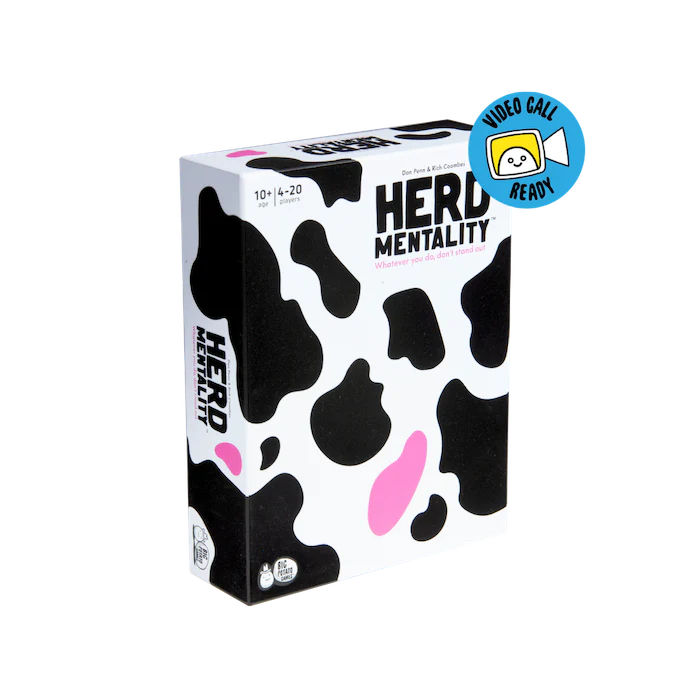
- Best OverallHerd Mentality(4-20 players)
A question card is read out — something like "Name a fruit" or "Name something you'd find in a teenager's bedroom". Everyone secretly writes their answer. Then all answers are revealed simultaneously. If your answer matches the majority, you score. If you wrote something unique, you don't score. If you wrote the only unique answer, you get the Pink Cow — a rubber cow token that blocks you from scoring until someone else takes it from you. That's the whole game. You're trying to think like the group thinks. Not the cleverest answer. Not the funniest answer. The most average, predictable, boring answer. Which sounds simple until you realise that everyone else is also trying to be average, and second-guessing what "average" means gets messy fast. "Name a fruit." You think Apple. But does everyone think Apple? Or is everyone thinking that everyone will think Apple, so they'll write Banana instead? By the time you've spiralled through three layers of meta-thinking, you write Orange and hope for the best. The Pink Cow is the perfect punishment mechanic. It's physical, visible, and silly. The person holding it is always trying to get rid of it. The threat of getting it keeps people playing conservatively. Plays 4-20 with no real upper limit. The game takes 20 minutes and can stop at any point. Question quality varies — some cards produce boring unanimous answers, others split the group in unexpected ways. You can also make up your own questions, which older groups often prefer.
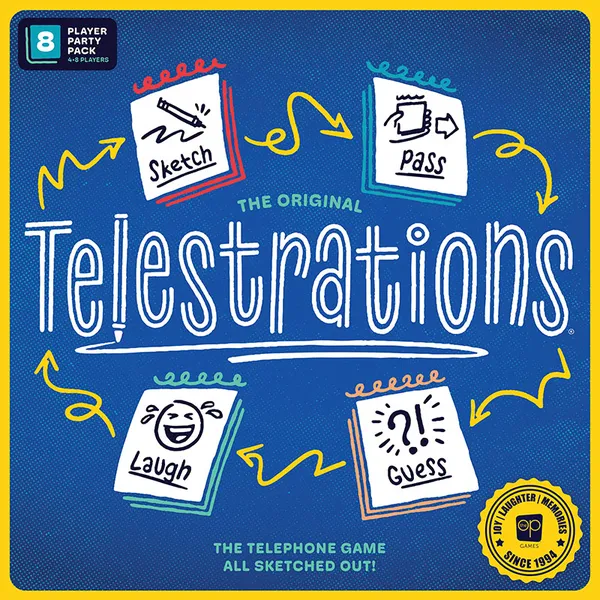
- Best for StrategyTelestrations(4-8 players)
Think of the game Telephone, but with drawing. Each player starts with a word or phrase. You sketch it in a flip book, pass it on, and the next person guesses what you drew. Then the next person draws that guess. And so on around the table. By the time your book comes back to you, the original word has usually been mangled beyond recognition. "Birthday Cake" became "Hat" became "Sombrero" became "Mexico" became... a stick figure next to a cactus. Then everyone flips through and laughs at where it went wrong. There's no real scoring. The game is the reveal. You're not trying to draw well — you're just trying to be understood. Bad artists actually make the game funnier because their drawings are the ones that derail the chain. It works with 4-8 players (the bigger box does 12). The sweet spot is 6-8, where chains are long enough for proper drift. Each round takes about 5-10 minutes, and most groups play 2-3 rounds before moving on to something else. It's one of the few games that genuinely works with any age and any experience level. Kids, grandparents, people who hate board games — everyone can participate and everyone laughs.
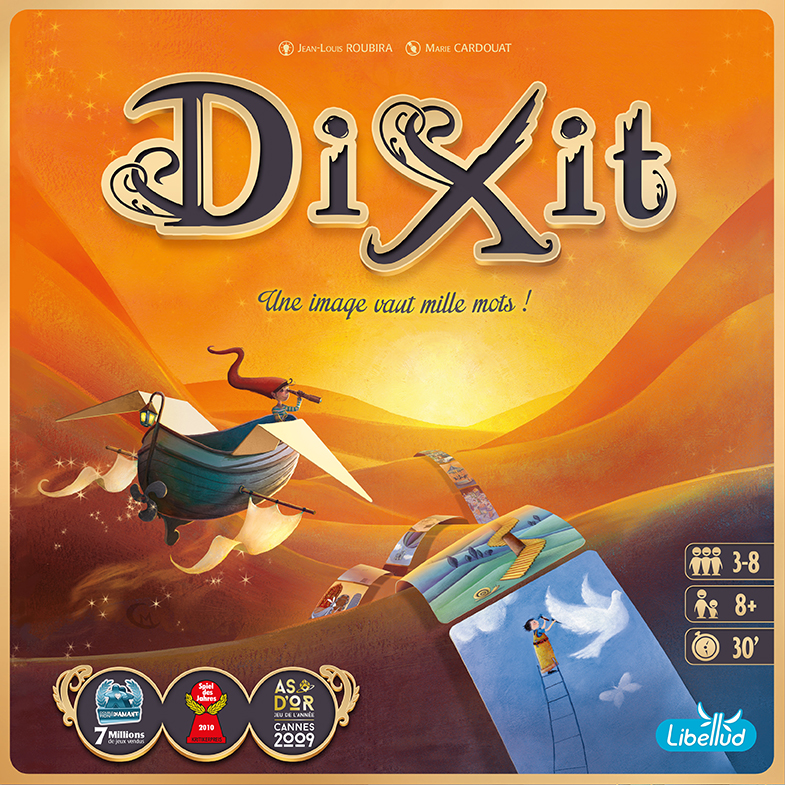
- Great for BeginnersDixit(3-6 players)
Each player holds a hand of surreal, beautifully illustrated cards — dreamlike images that could mean just about anything. On your turn, you pick a card, say a clue (a word, phrase, sound, song lyric, anything), and place it face down. Everyone else picks a card from their own hand that could also fit your clue, and adds it face down. All cards are shuffled and revealed. Then everyone votes on which one they think is yours. The scoring is the clever part: if everyone guesses correctly, you were too obvious and you score nothing. If nobody guesses correctly, you were too obscure and you also score nothing. You need to land somewhere in between — cryptic enough that some people miss it, clear enough that some people get it. This creates an interesting dynamic where you're calibrating your clue to the people at the table. Your best friend might catch an obscure reference that a stranger wouldn't. The game rewards knowing your audience. The art does most of the heavy lifting. The cards are from illustrator Marie Cardouat and they're genuinely gorgeous — mysterious, symbolic, and open to interpretation. People often pause just to appreciate them. Plays 3-6, best at 5-6 where the vote spread is most interesting. At 3, it's too easy to narrow down. Games last about 30 minutes. Several expansions add more card sets if the originals get overly familiar.
Board Games for Family Reunions and Large Family Gatherings
A family reunion game night is harder than a regular game night. You have kids, you have grandparents, you have competitive uncles, and you have cousins who haven't seen each other in three years. Half the table wants to win. Half the table wants to chat. Nobody has the same rules tolerance.
You can't bring anything that takes 10 minutes to explain. You can't bring anything with complex iconography. And you definitely can't bring anything where one person makes all the decisions and everyone else watches.
Here's what works.
Telestrations
Telestrations is the single best family game for large gatherings. It's Telephone but with drawing. You draw a word, pass the book, the next person guesses what you drew, then draws their guess, and so on.
Kids are immediately as capable as adults. Bad drawing makes the game funnier. There are no decisions to agonise over. When the book comes back around and you see your "wedding cake" turned into a "volcano" by round four, the whole table erupts.
The Party version handles up to 12 players. You don't even need to finish a proper game. Just the reveal at the end of one round is worth getting the box out.
Works for every age from 8 upward. The worse you draw, the better the game.
Wavelength
Wavelength generates conversation between people who don't normally have much to say to each other. One person gives a clue. The whole table debates where it sits on a spectrum.
The great thing about Wavelength at a family gathering: it's not competitive in a way that upsets anyone. If grandma's team gets fewer points, it's because "Coffee" means something different to her generation than yours, and that's actually interesting to discuss. The game creates stories.
Gets people who don't normally talk to each other debating the same question together.
Herd Mentality
You want to write the same answer as everyone else. "Name something at a birthday party." If you write "cake" and six other people write "cake", you score.
It works across ages because older players assume they know what the average person thinks, and younger players assume the same thing, and they're both often wrong. Kids can win this game against adults because they write the obvious answer without overthinking.
The pink cow token is physical and silly. When the youngest person at the table ends up holding it, the whole table tries to help them get rid of it. It creates team moments without a team structure.
Kids can beat adults. Works across generations without anyone feeling disadvantaged.
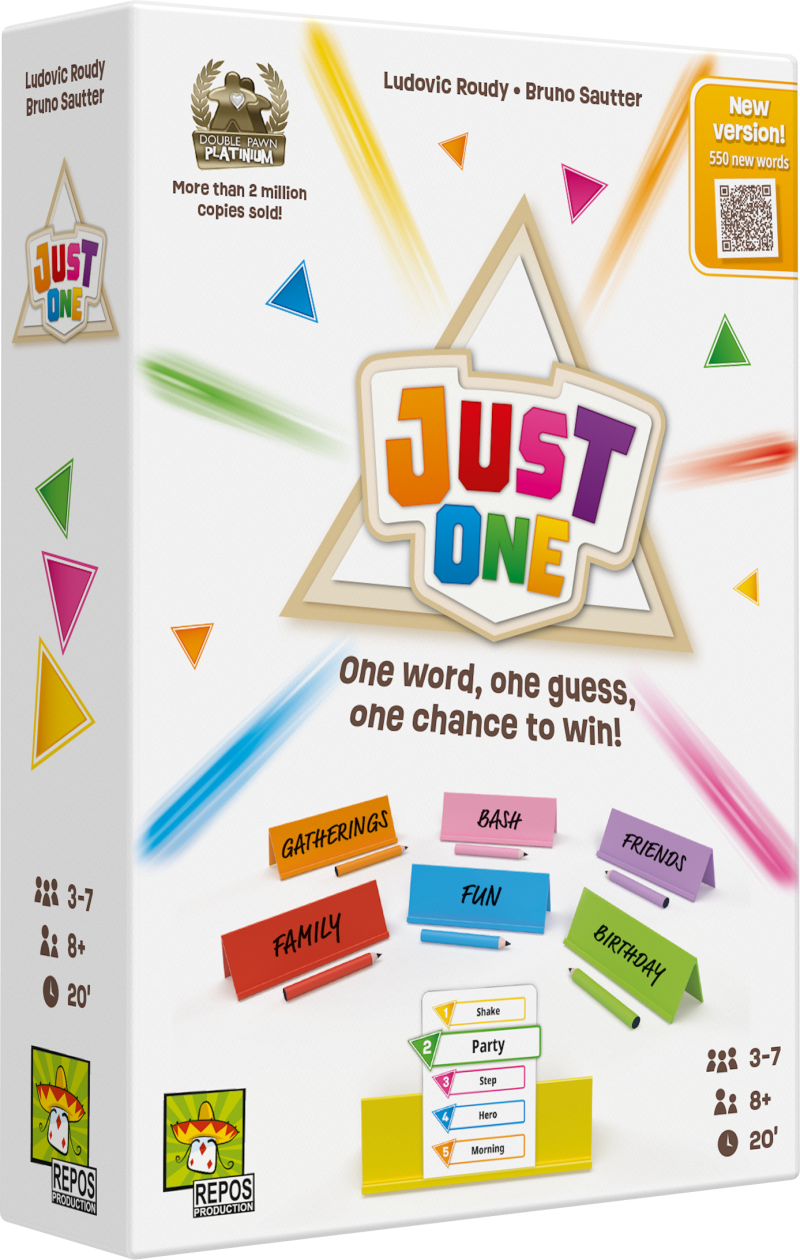
Just One
Just One is cooperative, which removes the competition entirely. Everyone is on the same team helping one guesser. There are no losers in the traditional sense. You just count how many words the group got right.
Kids as young as 8 or 9 can contribute without feeling lost. Older family members enjoy the word association aspect. And because the rounds are fast, people who want to watch can step out for a hand without feeling like they're missing much.
Cooperative, fast, and works for a huge age range. No losers.
Dixit
Dixit is the best option if you have family members who engage better through creativity than through words or competition. The cards are beautiful illustrated images. You give a clue, everyone picks a card that could match, and the table votes.
There's something powerful about watching a 70-year-old say "This card reminds me of the house we grew up in" and having the whole table stop to ask about it. Dixit generates those moments because the cards are evocative enough to trigger real memories and associations.
It works at 3 to 8. Not a large-group game by default, but the conversations it starts carry over into the rest of the evening.
Not for huge groups, but generates the best cross-generational conversations of any game here.
Camel Up
If the family wants something with a physical board, tokens, and a proper "game night" feel, Camel Up delivers that without the complexity.
You bet on a camel race. Camels stack on top of each other and carry other camels when they move. There is a cardboard pyramid that shakes and pops out a die. Kids love the pyramid. Adults enjoy the betting puzzle. It works at up to 8.
The key is that everyone cares about every dice roll because everyone has bets on different camels. There's no downtime. You're invested in every turn.
Physical board and pieces, accessible theme. Everyone is invested in every dice roll.
Practical tips for family game nights
Start with Telestrations. It's fast, needs no explanation, and guarantees laughs in the first five minutes. Once the room is warm, you can move to something slightly more structured.
Avoid competitive games where experienced players dominate. If the competitive uncle wins every round and announces it, the mood dies.
Keep sessions to one hour maximum. Families have a lot going on at reunions. Don't let a game go past the point where people want to stop.
Have a non-game activity available. Some family members will just watch and chat, and that's fine. A good game creates enough background energy that the whole room is engaged, even the people not holding cards.
Reviewed by TableTop Trends Editorial Team
Board Game Specialists & Group Dynamics Researchers
Tested and evaluated across real group game nights. We specialize in group playability, player count scaling, rule clarity, and downtime reduction for gatherings of 2 to 12+ players.
Not sure which one to pick?
Answer a few quick questions and get a direct recommendation for your group.
Find the right gameLooking for Board Games & Game Night Recommendations?
Explore our group game finder, strategy guides, and game reviews.
🎲 Games in this guide


Explore Curated Collections
Keep Browsing — Related Guides
Hand-picked recommendations for your next game night setup.
Best Christmas Board Games for the Whole Family
Christmas game nights include grandparents, kids, competitive uncles, and people who think board games are boring. These are the games that survive that combination.
10 Best Gateway Board Games to Build Your Collection
Looking to step into modern tabletop gaming? These 10 essential gateway games offer smooth learning curves, deep replayability, and instant fun.
Best Board Games for 12+ Players (Double-Digit Groups)
When a dozen or more people show up for game night, standard turn orders collapse into chaos. Here's how to host double-digit groups without splitting the room.
Board Games Similar to Catan for Large Groups
Catan caps at 4 players (6 with the extension). If your group has outgrown it or wants something that works at larger counts, here's what delivers a similar experience.
Need a personalized recommendation for your exact group?
Skip browsing and let our Game Finder select the 9.5/10 match for your player count and vibe.
🎯 Use 30-Second Game Finder