
Board Games Similar to Catan for Large Groups
Catan caps at 4 players (6 with the extension). If your group has outgrown it or wants something that works at larger counts, here's what delivers a similar experience.
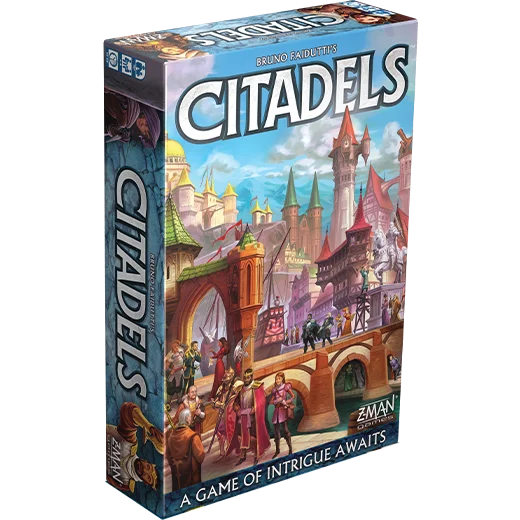
- Best OverallCitadels(2-8 players)
Each round, a set of character cards is passed around the table and each player secretly picks one. Characters have abilities: the Assassin kills a character (not a player — the player who picked that character loses their turn). The Thief steals gold from a character. The Magician swaps cards. The King goes first next round. After everyone has picked, characters are called in order. When yours is called, you take your turn: collect gold or draw cards, then optionally build a district card. Districts cost gold and contribute to your city. First player to build 8 districts triggers the endgame. The game lives in the draft. You're reading what characters other people are likely to pick and choosing accordingly. "Maria needs gold, so she'll probably take the Merchant. I should Assassinate the Merchant." But maybe Maria anticipated that and took the Architect instead. With 2-4 players, it's a tight, information-rich puzzle. With 6-8, the draft is longer and more chaotic — you can't predict as well, so it swings more. The expanded character set (included in the 2016 revised edition) adds 9 alternate characters that can swap in, which keeps the game fresh. Districts come in five colours, and there are bonus points for having all five represented in your city. Some purple districts have unique powers — the Observatory, the Laboratory, the Smithy — that give ongoing advantages. Games run 30-60 minutes depending on player count. It's one of the few strategy games that genuinely works at 7-8 players, though it slows down noticeably above 6. The box is small, the price is low, and there's more depth here than the simple components suggest.
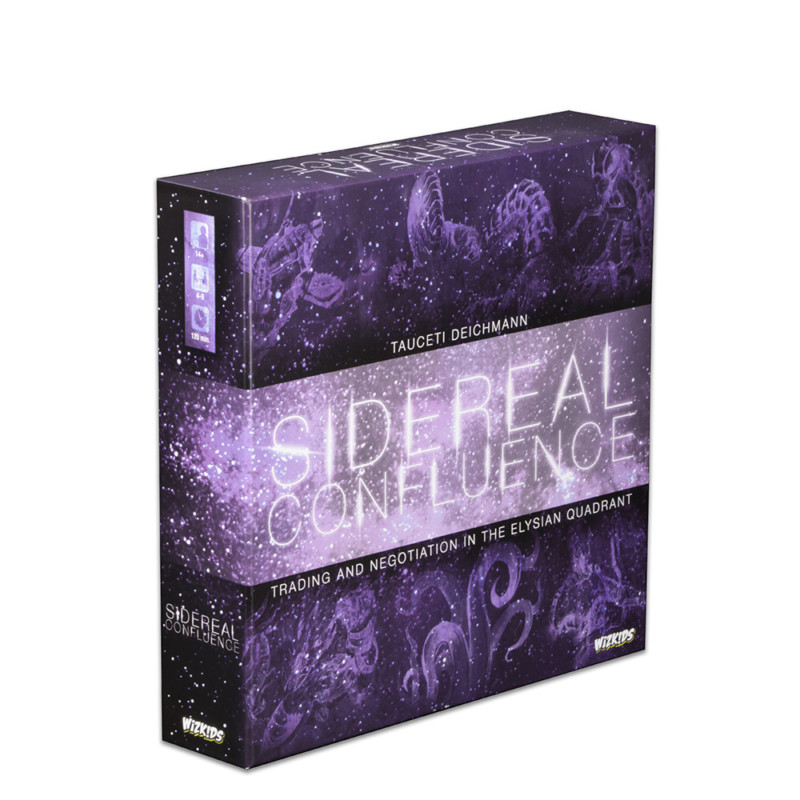
- Best for StrategySidereal Confluence(4-9 players)
Each player controls one of nine alien races, each with a completely different economy. Your race has converter cards that turn input resources into output resources — but you probably can't produce the inputs you need. So you trade. Trading happens simultaneously and in real time. There are no turns during the trade phase. Everyone is negotiating at once. "I'll give you three white cubes for two green." "I need a colony ship — who has one?" "I'll swap you my small converter for your large one and throw in two cubes." Deals can be anything. Any resource, any promise. After trading, everyone simultaneously runs their converters, produces new resources, and scores points. Then a new set of technologies becomes available through a shared bidding system. Repeat for six rounds. The asymmetry is deep. The Kt'Zr'Kt'Rtl (yes, that's a name) have a biological economy that literally grows. The Faderan have intellectual technologies that create resources from nothing but need other races' outputs. The Yengii are good at pure trading but produce little on their own. Each race needs different things from different races. This is a heavy game. The teach takes 30-40 minutes. First-time players will be confused for the first two rounds. But the trading is so inherently social — it's literally just making deals with people — that most groups find the energy even through the learning curve. Plays 4-9. The 9-player game is the full experience — every race at the table, maximum trade options, maximum noise. Games run about 2 hours. It's one of the very few heavy strategy games that actually gets better with more players.
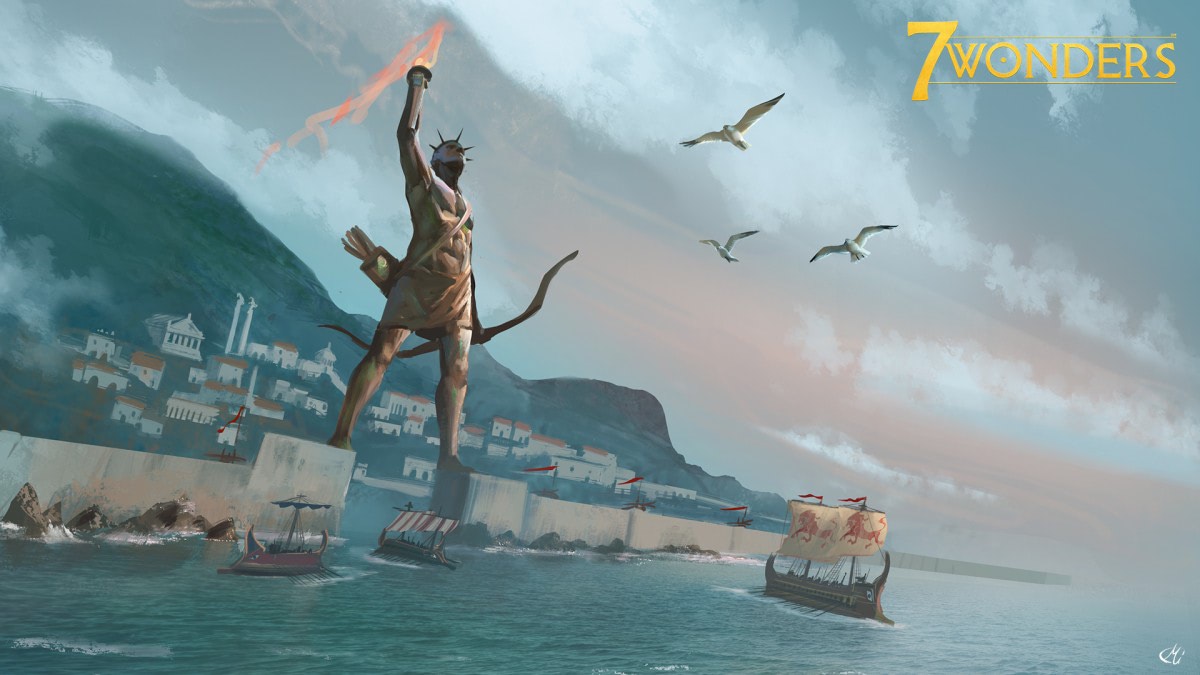
- Great for Beginners7 Wonders(3-7 players)
A card-drafting civilisation game where everyone picks cards simultaneously. You're dealt a hand, pick one card to play, and pass the rest to your neighbour. Then you all reveal at the same time. Repeat until the hand is empty. Do this three times (three "ages") and count up your points. Cards are resources, military, sciences, guilds, and civic buildings. Resources let you build better cards later. Military compares you to your direct neighbours — you only fight the person to your left and right, not the whole table. Science scoring is a set-collection puzzle that rewards specialisation. The reason 7 Wonders has lasted since 2010 is the timing. A 7-player game takes the same 30-35 minutes as a 3-player game, because everyone plays at the same time. There's no waiting. No downtime. No turns that drag because someone's calculating. Each player also has a unique Wonder board with a staged construction track that gives bonuses as you build it. These are asymmetric enough to nudge strategy without overwhelming new players. It's the go-to "proper" strategy game for groups that are too large for most strategy games. The rules take about 10 minutes to teach, the iconography makes sense after one age, and the tactical depth is enough to reward experienced players without punishing newcomers.
Board Games Similar to Catan for Large Groups
Catan works well for what it is: a trading and building game for 3 to 4 players (6 with the extension). But if you have 6, 7, or 8 people coming over, Catan either requires the extension, splits people into groups, or becomes a long waiting game.
The games below scratch the Catan itch — trading, building, resource management, social negotiation — but handle larger player counts without the downtime that kills Catan above 4 players.
What people actually like about Catan
Before picking an alternative, it helps to understand what Catan is delivering:
- Trading resources with other players (the social negotiation)
- Building and developing your position over time
- The luck of dice rolls balanced by strategic placement
- A game you can teach in 15 minutes
Not every alternative hits all of these. Some are heavier. Some focus more on one element. Here's what works best depending on what you want to keep.
Sidereal Confluence (for the trading)
If the trading is what you love about Catan — the negotiation, the deals, the "I'll give you two ore for three wheat" social dynamic — Sidereal Confluence is the natural destination.
Each player controls an alien race with a completely different economy. You can't get what you need from your own resources, so you trade. The trading phase is real time and simultaneous. Nine players stand around the table making deals at once. Every resource type can be traded. Deals can be anything — resources now, resources next turn, favours.
It's heavier than Catan and takes longer to teach. But the trading phase creates the same kind of negotiation energy that Catan's trading phase does, at a larger scale and with more complexity.
Works for 4 to 9 players.
The trading-focused Catan alternative. All negotiation, deep economies, up to 9 players.
7 Wonders (for the building strategy)
If the resource management and building progression of Catan is what appeals — collecting resources to build increasingly valuable structures — 7 Wonders delivers that in 35 minutes with no downtime.
You draft cards representing resources, buildings, and military. Three ages of cards represent the development arc. The simultaneous play means a 7-player game takes exactly as long as a 3-player game.
It's less social than Catan (there's no negotiation, player interaction is through drafting and limited military conflicts with neighbours), but it gives the same civilisation-building satisfaction in a fraction of the time.
Works for 3 to 7 players.
The building-focused Catan alternative. Simultaneous play, 35 minutes, 7 players.
Citadels (for the strategic depth)
Citadels is a city-building card game where each round you draft a character role from a rotating deck. Characters give you powers and resources. You use resources to build district cards into your city. First player to 8 districts triggers the endgame.
The role drafting is more strategic than Catan's resource acquisition, but the city-building arc and the way your position develops over time hits a similar satisfaction. You're growing something round by round while other players try to disrupt your plans.
Works for 2 to 8 players. Slows down above 6.
City-building with strategic role drafting. Works up to 8 players.
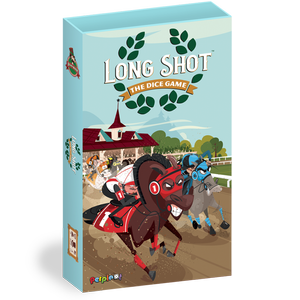
Long Shot: The Dice Game (for casual groups)
If your group plays Catan as a social occasion rather than a serious strategy game — you like the randomness of the dice and the relaxed betting — Long Shot is a lighter alternative that works at up to 8 players with no downtime.
Everyone bets on a horse race. The same dice roll affects all 8 players simultaneously. No individual turns. No waiting. The gambling and the shared reaction to every roll creates the same social energy as Catan's trading phase, without the complexity.
Lighter, faster, 8 players. Same social energy without the strategy overhead.
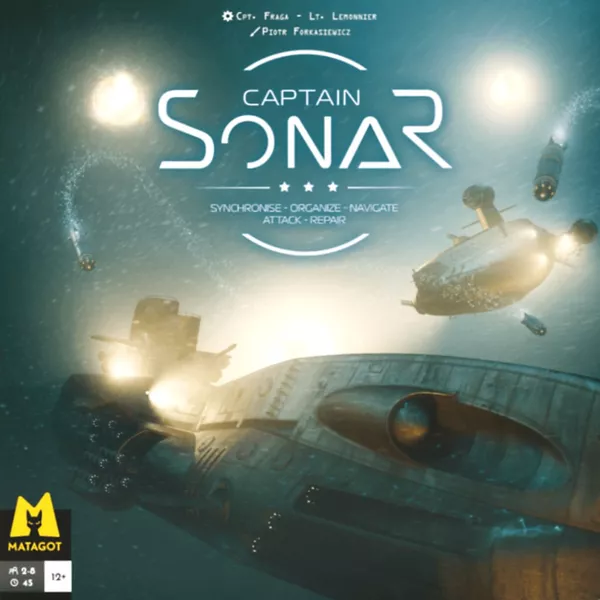
Captain Sonar (for competitive groups)
This is a sharp left turn from Catan's trading model, but if what your group loves about Catan is the competition, the map control, and the resource tension — Captain Sonar delivers all of that as a real-time team game.
Two submarine crews hunt each other. The Captain manages movement and map control. The Engineer manages resources (the sub's systems). The tension of resource management (can we afford to fire the torpedo?) combined with the spatial strategy (where are they?) creates a completely different game that hits the same competitive instincts.
Requires exactly 6 or 8 players.
Competitive tension, map control, resource management. Requires exactly 6 or 8.
A note on the Catan extension
If you specifically want Catan and have 5 or 6 players, the official Catan 5-6 Player Extension is the simplest answer. It extends the game you already own and know.
The problem is that it makes the game longer. A 6-player Catan can run 3 hours. If that's not a concern, the extension is the easiest path.
For groups that regularly play at 6 or more and want the game to stay under 90 minutes, the alternatives above are the better choice.
If this helped, you might also want to read our guides on best board games for large groups, games similar to Codenames, best games for 8 players.
Reviewed by TableTop Trends Editorial Team
Board Game Specialists & Group Dynamics Researchers
Tested and evaluated across real group game nights. We specialize in group playability, player count scaling, rule clarity, and downtime reduction for gatherings of 2 to 12+ players.
Not sure which one to pick?
Answer a few quick questions and get a direct recommendation for your group.
Find the right gameLooking for Board Games & Game Night Recommendations?
Explore our group game finder, strategy guides, and game reviews.
🎲 Games in this guide
Explore Curated Collections
Best Board Games for 6–8 Players
Most board games quietly fall apart above 4 players. Turns drag, half the table checks out, and someone ends up on their phone. These are the ones that actually hold up at 6, 7, and 8 — games where more people means more energy, not more waiting.
Best Games for Serious Game Nights
Your group has played Codenames enough. These are games where decisions matter, bluffs have consequences, and paying attention is rewarded. Heavier and more demanding than party games, and more satisfying because of it.
Keep Browsing — Related Guides
Hand-picked recommendations for your next game night setup.
Best Board Games for 12+ Players (Double-Digit Groups)
When a dozen or more people show up for game night, standard turn orders collapse into chaos. Here's how to host double-digit groups without splitting the room.
Best Christmas Board Games for the Whole Family
Christmas game nights include grandparents, kids, competitive uncles, and people who think board games are boring. These are the games that survive that combination.
Best Board Games for Large Groups
Large groups need different games from regular game nights. Here's what actually works when you have 6 or more people and why most popular games quietly fail at this count.
Best Board Games for 10 Players
Most games break at 10. These are the ones built for it — or clever enough to handle it without slowing down.
Need a personalized recommendation for your exact group?
Skip browsing and let our Game Finder select the 9.5/10 match for your player count and vibe.
🎯 Use 30-Second Game Finder