
Carcassonne vs Catan
Peaceful Medieval Tile Laying vs. High-Stakes Resource Settlement Race
Carcassonne
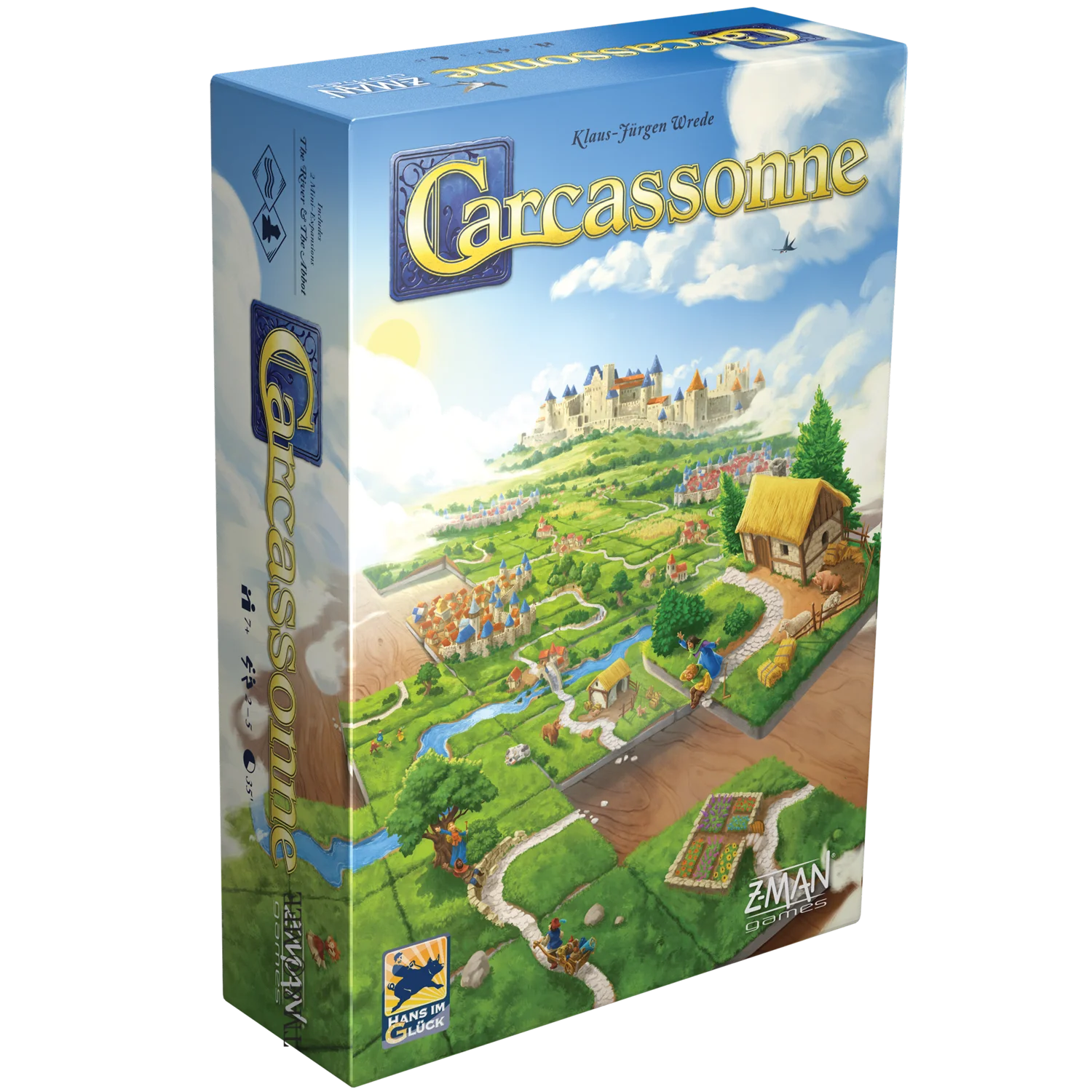
A classic medieval tile-placement game where players take turns drawing terrain tiles—featuring roads, cities, monasteries, and fields—and placing them onto an expanding board. Players can place meeples on these features to score points once completed. Managing your finite supply of meeples is crucial, as placed workers remain locked until their city, road, or monastery is fully built. Named after the famous medieval fortress in southern France, Carcassonne creates a unique landscape on the table during every session. The tile-placement mechanic is intuitive, yet the game offers tactical depth through feature sharing, where clever meeple placement allows players to hijack or split control of large scoring cities and fields. Plays seamlessly with 2 to 5 players in about 30 to 45 minutes. With zero initial setup time and endless map variations, Carcassonne is a timeless modern classic that belongs on every board game shelf.
Catan
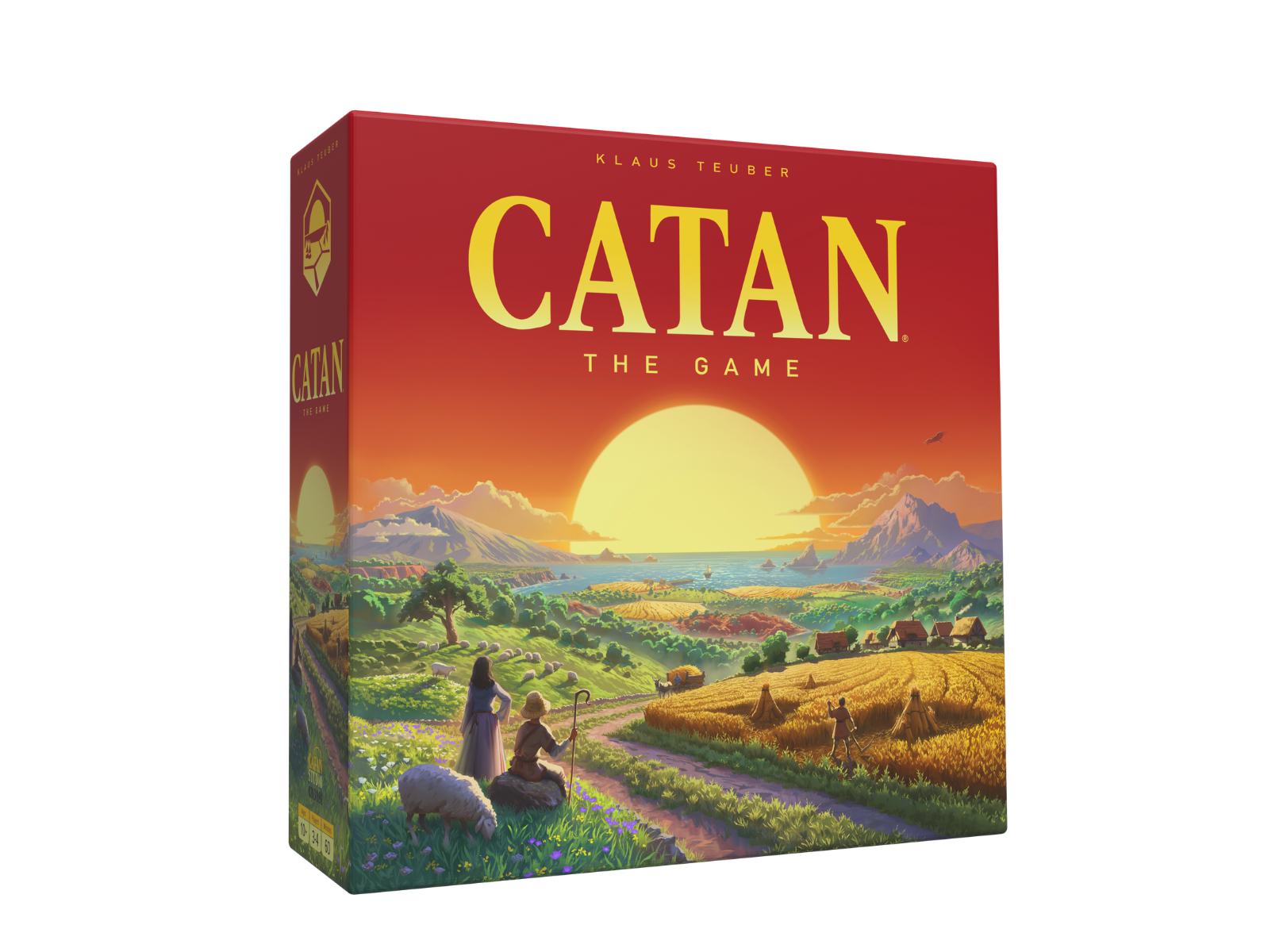
The classic island exploration game where players trade brick, wood, wool, grain, and ore to build roads, settlements, and cities. On each turn, dice determine which hexes produce resources, forcing players to negotiate trades with opponents to overcome shortages. The modular board ensures each game presents a unique land layout, while development cards and longest-road bonuses provide tactical twists. Catan has earned its status as the quintessential gateway board game because it introduces fundamental gaming concepts—resource management, spatial control, and trading—in an approachable package. The game relies heavily on social negotiation; players who can strike fair trades and talk opponents into deals often fare much better than those playing in isolation. Rounds move briskly as players roll dice, collect resources, and negotiate. With 3 to 4 players (expandable to 6 with expansions), games last about 60 to 90 minutes. It remains an ideal choice for family game nights and introducing newcomers to modern tabletop games.
Head-to-Head Specification Matrix
Direct breakdown of player counts, complexity, and mechanics.
| Metric | Carcassonne | Catan |
|---|---|---|
| Rating | 7.4 / 10 | 7.1 / 10 |
| Complexity Weight | 1.9 / 5.0 | 2.3 / 5.0 |
| Player Range | 2–5 players | 3–4 players |
| Play Time | 30–45 minutes | 60–120 minutes |
| Primary Categories | Medieval, Territory Building | Negotiation, Strategy, Territory Building |
| Mechanics | Tile Placement, Area Majority / Influence, Map Addition | Trading, Dice Rolling, Modular Board, Network and Route Building |
| Publisher | Hans im Glück | KOSMOS |
| Year Published | 2000 | 1995 |
The Verdict: Which Should You Buy?
Carcassonne and Catan represent the foundation of modern Euro gaming. Catan relies on rolling dice, hoarding bricks and sheep, and driving hard bargains with your friends to build roads and settlements. Carcassonne offers an elegant, meditative experience of drawing a landscape tile each turn, extending roads and medieval cities, and deciding whether to commit one of your limited meeples. If you crave intense interaction, trading, and territory expansion, play Catan. If you prefer low-stress puzzle building, modular maps, and seamless 2-player scaling, play Carcassonne.
Carcassonne plays smoothly at 2 players, requires no trading, and creates a unique medieval map every game.
Catan's trading economy and robber mechanic make it a constant social conversation at the table.
Key Differences Explained
Player Count FlexibilityFactor #1
Luck MechanismFactor #2
Turn SimplicityFactor #3
Direct ConflictFactor #4
Pros & Cons Comparison
Carcassonne
- +Zero setup time and intuitive tile-matching rules make it effortless to teach.
- +Deep tactical play emerges as players share cities or steal completed roads from opponents.
- +Evolves dynamically every game into a unique, visually striking map.
- −End-game field scoring can be confusing for first-time players.
- −Late-game tile draws are purely luck-dependent if you are waiting for a specific tile configuration.
Catan
- +Simple core rules that are easy for new gamers to pick up.
- +Active trading keeps all players involved even when it is not their turn.
- +Modular board layout ensures high replayability across different setups.
- −Unfavorable initial settlement placements can leave a player choked for resources early.
- −Dice rolls can create streaks of bad luck where your hexes never produce.
Reviewed by TableTop Trends Editorial Team
Board Game Specialists & Group Dynamics Researchers
Tested and evaluated across real group game nights. We specialize in group playability, player count scaling, rule clarity, and downtime reduction for gatherings of 2 to 12+ players.
Frequently Asked Questions
Which is easier to learn: Carcassonne or Catan?
Carcassonne has a lower complexity rating (1.9/5) compared to Catan (2.3/5), making it faster to teach and easier for beginners.
Can you play Carcassonne and Catan with 2 players?
Carcassonne supports 2–5 players, while Catan supports 3–4 players. Both games offer distinct experiences at 2 players depending on how direct or interactive you prefer the gameplay to be.
Which game plays faster?
Carcassonne typically plays in 30–45 minutes, while Catan averages 60–120 minutes.
Looking for Board Games & Game Night Recommendations?
Explore our group game finder, strategy guides, and game reviews.
Curated Collections Featuring These Games
Best Board Games for 6–8 Players
Most board games quietly fall apart above 4 players. Turns drag, half the table checks out, and someone ends up on their phone. These are the ones that actually hold up at 6, 7, and 8 — games where more people means more energy, not more waiting.
Best Games for Serious Game Nights
Your group has played Codenames enough. These are games where decisions matter, bluffs have consequences, and paying attention is rewarded. Heavier and more demanding than party games, and more satisfying because of it.