
Catan vs Ticket to Ride
Negotiation & Settlement Building vs. Secret Route Drafting
Catan
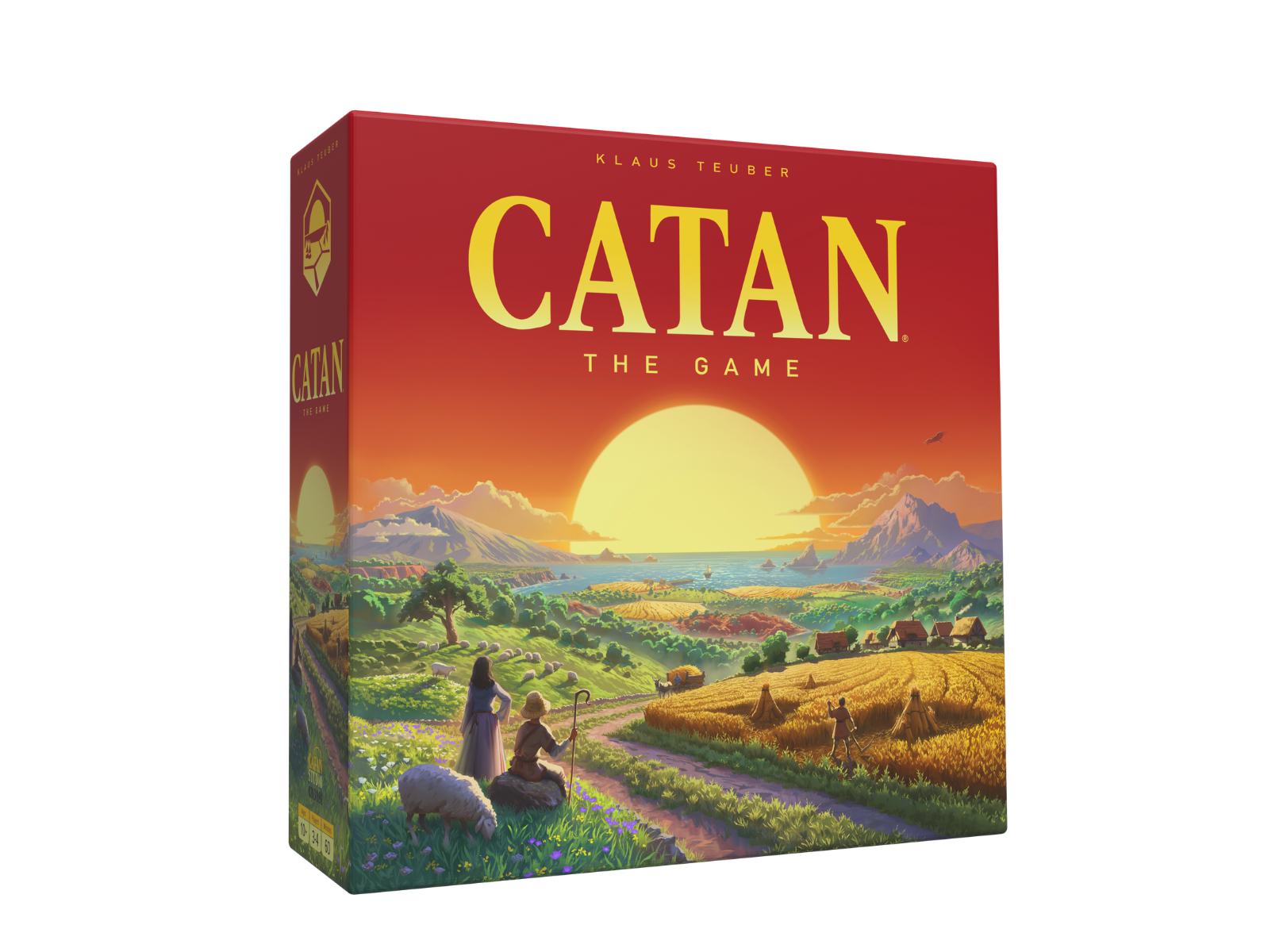
The classic island exploration game where players trade brick, wood, wool, grain, and ore to build roads, settlements, and cities. On each turn, dice determine which hexes produce resources, forcing players to negotiate trades with opponents to overcome shortages. The modular board ensures each game presents a unique land layout, while development cards and longest-road bonuses provide tactical twists. Catan has earned its status as the quintessential gateway board game because it introduces fundamental gaming concepts—resource management, spatial control, and trading—in an approachable package. The game relies heavily on social negotiation; players who can strike fair trades and talk opponents into deals often fare much better than those playing in isolation. Rounds move briskly as players roll dice, collect resources, and negotiate. With 3 to 4 players (expandable to 6 with expansions), games last about 60 to 90 minutes. It remains an ideal choice for family game nights and introducing newcomers to modern tabletop games.
Ticket to Ride
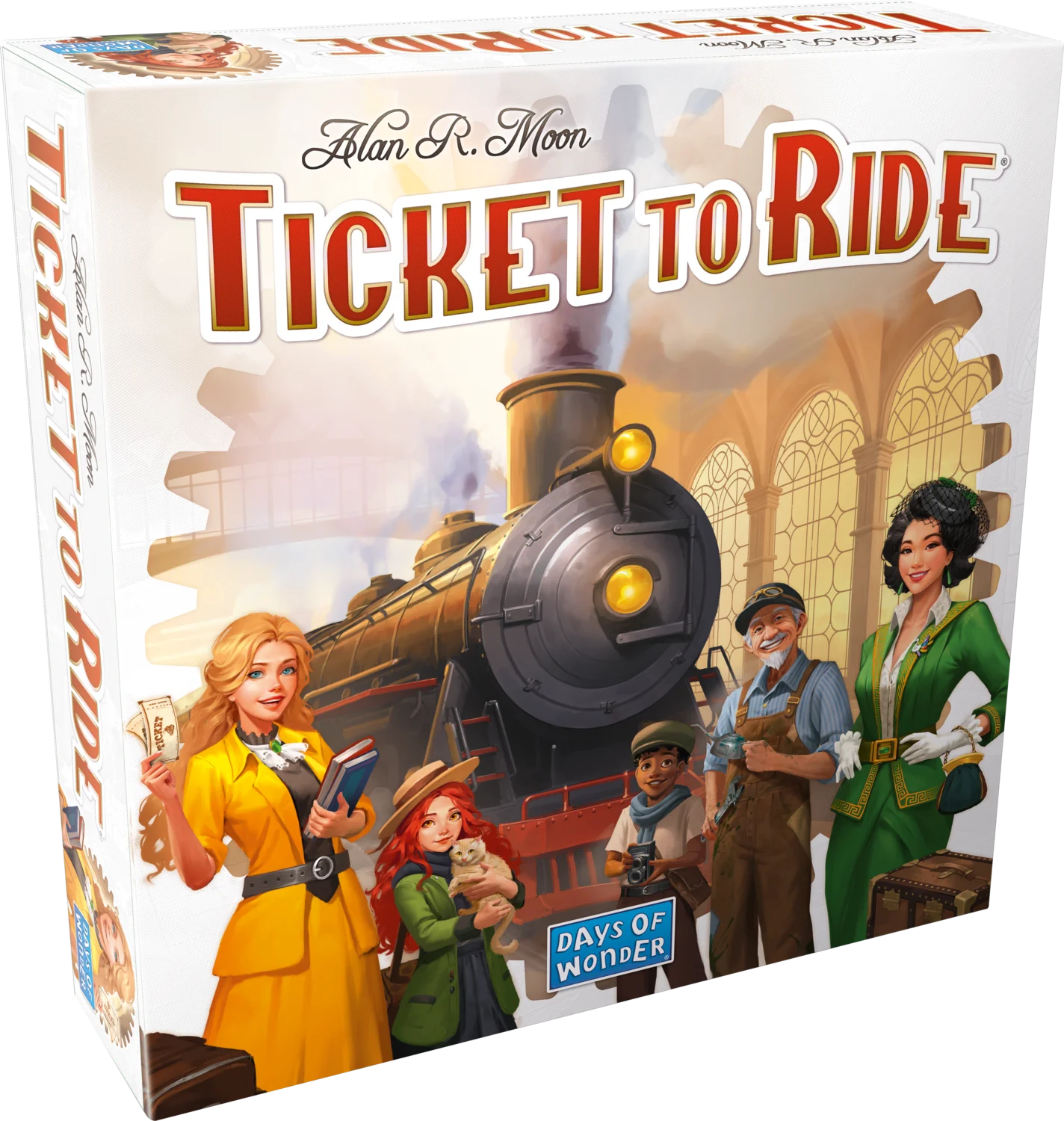
A cross-country train adventure where players collect matching color train cards to claim railway routes across North America. Secret destination tickets award bonus points for connecting distant cities, but uncompleted routes deduct points at the end of the game. The tension balances grabbing contested bottleneck routes quickly versus accumulating larger card hands to claim high-scoring long routes. Ticket to Ride is widely considered one of the best family and gateway board games ever designed. The rules take under 5 minutes to explain: on your turn, you either draw train cards, claim a route by playing matching cards, or draw additional destination tickets. The board fills up quickly with vibrant plastic train cars, creating clear visual progression. Plays smoothly with 2 to 5 players in 30 to 60 minutes. The game delivers a perfect balance of light strategy, spatial planning, and gentle push-your-luck tension that satisfies casual groups and experienced players alike.
Head-to-Head Specification Matrix
Direct breakdown of player counts, complexity, and mechanics.
| Metric | Catan | Ticket to Ride |
|---|---|---|
| Rating | 7.1 / 10 | 7.4 / 10 |
| Complexity Weight | 2.3 / 5.0 | 1.8 / 5.0 |
| Player Range | 3–4 players | 2–5 players |
| Play Time | 60–120 minutes | 30–60 minutes |
| Primary Categories | Negotiation, Strategy, Territory Building | Trains, Strategy, Family |
| Mechanics | Trading, Dice Rolling, Modular Board, Network and Route Building | Card Drafting, Hand Management, Network and Route Building, Set Collection |
| Publisher | KOSMOS | Days of Wonder |
| Year Published | 1995 | 2004 |
The Verdict: Which Should You Buy?
Catan is the definitive social board game where trading, diplomacy, and the roll of the dice drive every victory. Ticket to Ride is smoother, quieter, and more accessible, focusing on card drafting, spatial route-blocking, and satisfying tactile train placement. If you want lively table banter and negotiation, choose Catan. If you want relaxing strategy with lower conflict and zero downtime, choose Ticket to Ride.
Catan shines through player-to-player trade negotiations and the thrill of dice rolls, making every game emotionally charged.
Ticket to Ride can be taught in 3 minutes, plays briskly without kingmaking or blocked trades, and works better at 2 players.
Key Differences Explained
Player InteractionFactor #1
RNG & Luck FactorFactor #2
Complexity & TeachFactor #3
2-Player ExperienceFactor #4
Pros & Cons Comparison
Catan
- +Simple core rules that are easy for new gamers to pick up.
- +Active trading keeps all players involved even when it is not their turn.
- +Modular board layout ensures high replayability across different setups.
- −Unfavorable initial settlement placements can leave a player choked for resources early.
- −Dice rolls can create streaks of bad luck where your hexes never produce.
Ticket to Ride
- +Exceptionally smooth card-drafting gameplay that can be taught in 3 minutes.
- +Tense balance between claiming short routes early and risking longer high-value routes.
- +Visually satisfying board with colorful plastic train pieces that appeal to all ages.
- −Can feel slightly competitive or cutthroat when players claim routes another player desperately needs.
- −Drawing impossible destination tickets near the end of the game can feel frustrating.
Reviewed by TableTop Trends Editorial Team
Board Game Specialists & Group Dynamics Researchers
Tested and evaluated across real group game nights. We specialize in group playability, player count scaling, rule clarity, and downtime reduction for gatherings of 2 to 12+ players.
Frequently Asked Questions
Which is easier to learn: Catan or Ticket to Ride?
Ticket to Ride is significantly easier to learn. Its rules take under 3 minutes to teach: on your turn you either draw train cards, claim a route by discarding matching sets, or draw new destination tickets. Catan involves building costs, settlement placement rules, development cards, and continuous trading negotiations.
Can you play Catan with 2 players?
Official base Catan is designed for 3 to 4 players because the trading economy breaks down with only two players. While official 2-player variants exist in expansions, Ticket to Ride plays much more naturally at 2 players straight out of the box.
Which game plays faster?
Ticket to Ride typically finishes in 45 to 60 minutes. Catan usually takes 60 to 90 minutes, and can stretch past 2 hours if players take lengthy turns negotiating trades or if key numbers are rolled infrequently.
Looking for Board Games & Game Night Recommendations?
Explore our group game finder, strategy guides, and game reviews.
Curated Collections Featuring These Games
Best Board Games for 6–8 Players
Most board games quietly fall apart above 4 players. Turns drag, half the table checks out, and someone ends up on their phone. These are the ones that actually hold up at 6, 7, and 8 — games where more people means more energy, not more waiting.
Best Games for Serious Game Nights
Your group has played Codenames enough. These are games where decisions matter, bluffs have consequences, and paying attention is rewarded. Heavier and more demanding than party games, and more satisfying because of it.