
7 Wonders vs 7 Wonders Duel
Simultaneous 7-Player Civilization Drafting vs. Cutthroat 2-Player Pyramids
7 Wonders
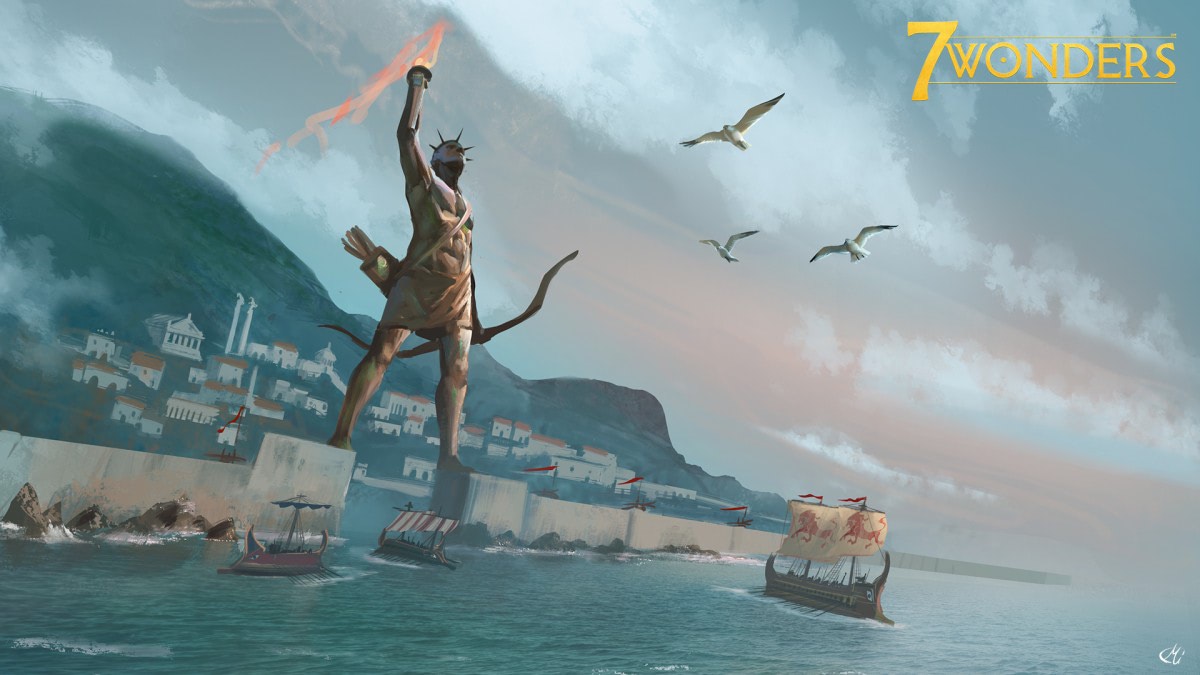
A card-drafting civilisation game where everyone picks cards simultaneously. You're dealt a hand, pick one card to play, and pass the rest to your neighbour. Then you all reveal at the same time. Repeat until the hand is empty. Do this three times (three "ages") and count up your points. Cards are resources, military, sciences, guilds, and civic buildings. Resources let you build better cards later. Military compares you to your direct neighbours — you only fight the person to your left and right, not the whole table. Science scoring is a set-collection puzzle that rewards specialisation. The reason 7 Wonders has lasted since 2010 is the timing. A 7-player game takes the same 30-35 minutes as a 3-player game, because everyone plays at the same time. There's no waiting. No downtime. No turns that drag because someone's calculating. Each player also has a unique Wonder board with a staged construction track that gives bonuses as you build it. These are asymmetric enough to nudge strategy without overwhelming new players. It's the go-to "proper" strategy game for groups that are too large for most strategy games. The rules take about 10 minutes to teach, the iconography makes sense after one age, and the tactical depth is enough to reward experienced players without punishing newcomers.
7 Wonders Duel
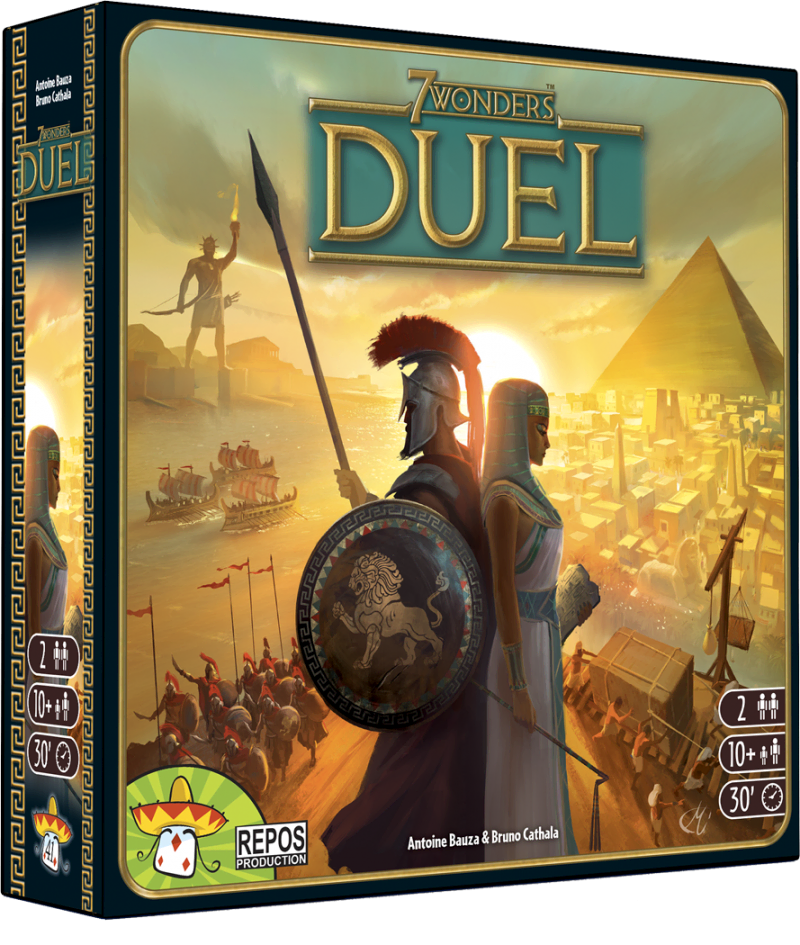
The definitive 2-player head-to-head adaptation of 7 Wonders. Players draft cards from an overlapping pyramid layout across three historical ages. To win, players can achieve scientific supremacy by collecting six distinct science symbols, military supremacy by pushing the conflict pawn into the opponent's capital, or high civilian points when Age III ends. 7 Wonders Duel distills the civilization drafting of the original 7 Wonders into an intense two-player duel. The drafting mechanics are clever: taking a card from the pyramid can uncover face-down cards beneath, potentially handing key resources or military cards to your opponent. Plays in a swift 30 minutes. With multiple paths to immediate victory and strategic Wonder construction, 7 Wonders Duel is widely regarded as one of the finest 2-player games ever made.
Head-to-Head Specification Matrix
Direct breakdown of player counts, complexity, and mechanics.
| Metric | 7 Wonders | 7 Wonders Duel |
|---|---|---|
| Rating | — / 10 | 8.1 / 10 |
| Complexity Weight | 2.3 / 5.0 | 2.2 / 5.0 |
| Player Range | 3–7 players | 2–2 players |
| Play Time | 30–45 minutes | 30 minutes |
| Primary Categories | Strategy, Civilisation, Card Drafting | Ancient, Card Game, Civilization |
| Mechanics | Card Drafting, Simultaneous Selection, Set Collection, Resource Management | Card Drafting, Set Collection, Tug of War, Variable Layered Drafting |
| Publisher | Repos Production | Repos Production |
| Year Published | 2010 | 2015 |
The Verdict: Which Should You Buy?
7 Wonders revolutionized simultaneous card drafting for up to 7 players with zero turn downtime. 7 Wonders Duel took that same ancient civilization theme and rebuilt it from the ground up exclusively for two players using an overlapping card pyramid and sudden-death military/scientific victory conditions. If you regularly host 4 to 7 players, 7 Wonders is an absolute staple. If you are playing with exactly 2 players, 7 Wonders Duel is widely considered one of the best 2-player board games ever created.
Draft-and-pass mechanics mean a 7-player game plays just as fast as a 3-player game.
The face-up/face-down card pyramid forces agonizing decisions: taking a card might uncover the exact resource your opponent needs.
Key Differences Explained
Player CountFactor #1
Drafting FormatFactor #2
Victory ConditionsFactor #3
PacingFactor #4
Pros & Cons Comparison
7 Wonders
- +A 7-player game takes the same time as a 3-player game. Nothing else in this weight class can say that.
- +Teach once, play forever. The rules click after one game and never need re-explaining.
- +Enough strategic variety across wonders and card combos to stay interesting long-term.
- −Military scoring can feel punishing if your neighbours both go heavy into it and you didn't.
- −Science scoring is confusing the first time. Expect to explain it twice.
- −Player interaction is indirect. If you want table talk, this isn't the game for it.
7 Wonders Duel
- +Tense draft mechanics where removing a card uncovers choices for your opponent.
- +Three distinct victory conditions (Military, Science, Points) force constant tactical adaptation.
- +Plays in a brisk 30 minutes with high replay value.
- −Can feel unforgiving if one player misses a key science or military draft opportunity.
- −Strictly 2-player only.
Reviewed by TableTop Trends Editorial Team
Board Game Specialists & Group Dynamics Researchers
Tested and evaluated across real group game nights. We specialize in group playability, player count scaling, rule clarity, and downtime reduction for gatherings of 2 to 12+ players.
Frequently Asked Questions
Which is easier to learn: 7 Wonders or 7 Wonders Duel?
7 Wonders Duel has a lower complexity rating (2.2/5) compared to 7 Wonders (2.3/5), making it more beginner-friendly.
Can you play 7 Wonders and 7 Wonders Duel with 2 players?
7 Wonders supports 3–7 players, while 7 Wonders Duel supports 2–2 players. Both games offer distinct experiences at 2 players depending on how direct or interactive you prefer the gameplay to be.
Which game plays faster?
7 Wonders typically plays in 30–45 minutes, while 7 Wonders Duel averages 30 minutes.
Looking for Board Games & Game Night Recommendations?
Explore our group game finder, strategy guides, and game reviews.
Curated Collections Featuring These Games
Best Board Games for 6–8 Players
Most board games quietly fall apart above 4 players. Turns drag, half the table checks out, and someone ends up on their phone. These are the ones that actually hold up at 6, 7, and 8 — games where more people means more energy, not more waiting.
Best Games for Serious Game Nights
Your group has played Codenames enough. These are games where decisions matter, bluffs have consequences, and paying attention is rewarded. Heavier and more demanding than party games, and more satisfying because of it.