
Best Board Games for 9 Players
Nine players is an awkward count that most games don't support. Here are the ones that actually handle it without falling apart.
- Best OverallSidereal Confluence(4-9 players)
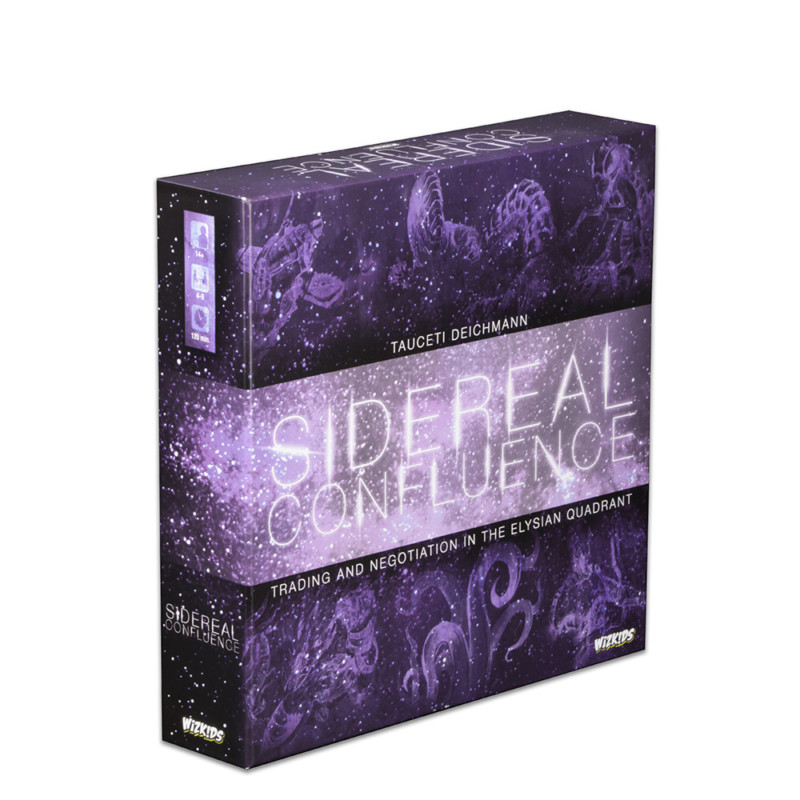
Each player controls one of nine alien races, each with a completely different economy. Your race has converter cards that turn input resources into output resources — but you probably can't produce the inputs you need. So you trade. Trading happens simultaneously and in real time. There are no turns during the trade phase. Everyone is negotiating at once. "I'll give you three white cubes for two green." "I need a colony ship — who has one?" "I'll swap you my small converter for your large one and throw in two cubes." Deals can be anything. Any resource, any promise. After trading, everyone simultaneously runs their converters, produces new resources, and scores points. Then a new set of technologies becomes available through a shared bidding system. Repeat for six rounds. The asymmetry is deep. The Kt'Zr'Kt'Rtl (yes, that's a name) have a biological economy that literally grows. The Faderan have intellectual technologies that create resources from nothing but need other races' outputs. The Yengii are good at pure trading but produce little on their own. Each race needs different things from different races. This is a heavy game. The teach takes 30-40 minutes. First-time players will be confused for the first two rounds. But the trading is so inherently social — it's literally just making deals with people — that most groups find the energy even through the learning curve. Plays 4-9. The 9-player game is the full experience — every race at the table, maximum trade options, maximum noise. Games run about 2 hours. It's one of the very few heavy strategy games that actually gets better with more players.
- Best for StrategyHerd Mentality(4-20 players)
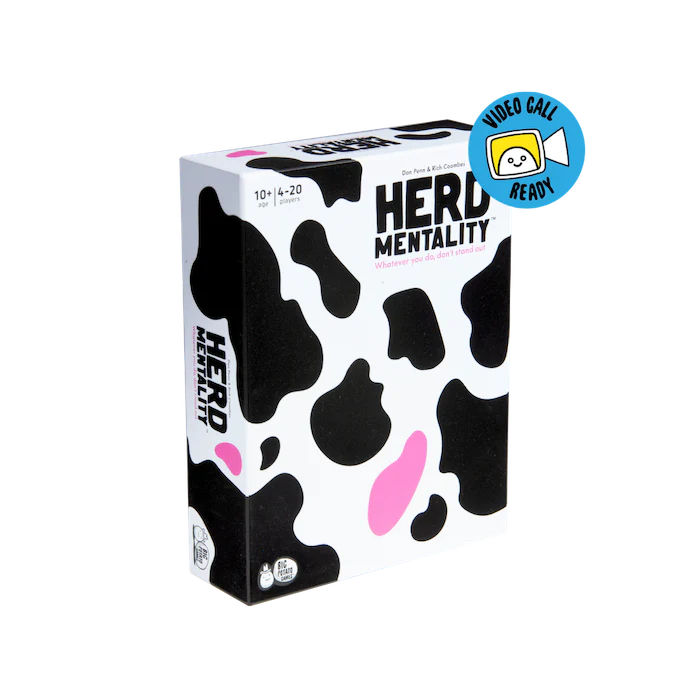
A question card is read out — something like "Name a fruit" or "Name something you'd find in a teenager's bedroom". Everyone secretly writes their answer. Then all answers are revealed simultaneously. If your answer matches the majority, you score. If you wrote something unique, you don't score. If you wrote the only unique answer, you get the Pink Cow — a rubber cow token that blocks you from scoring until someone else takes it from you. That's the whole game. You're trying to think like the group thinks. Not the cleverest answer. Not the funniest answer. The most average, predictable, boring answer. Which sounds simple until you realise that everyone else is also trying to be average, and second-guessing what "average" means gets messy fast. "Name a fruit." You think Apple. But does everyone think Apple? Or is everyone thinking that everyone will think Apple, so they'll write Banana instead? By the time you've spiralled through three layers of meta-thinking, you write Orange and hope for the best. The Pink Cow is the perfect punishment mechanic. It's physical, visible, and silly. The person holding it is always trying to get rid of it. The threat of getting it keeps people playing conservatively. Plays 4-20 with no real upper limit. The game takes 20 minutes and can stop at any point. Question quality varies — some cards produce boring unanimous answers, others split the group in unexpected ways. You can also make up your own questions, which older groups often prefer.
- Great for BeginnersCartographers(1-100 players)
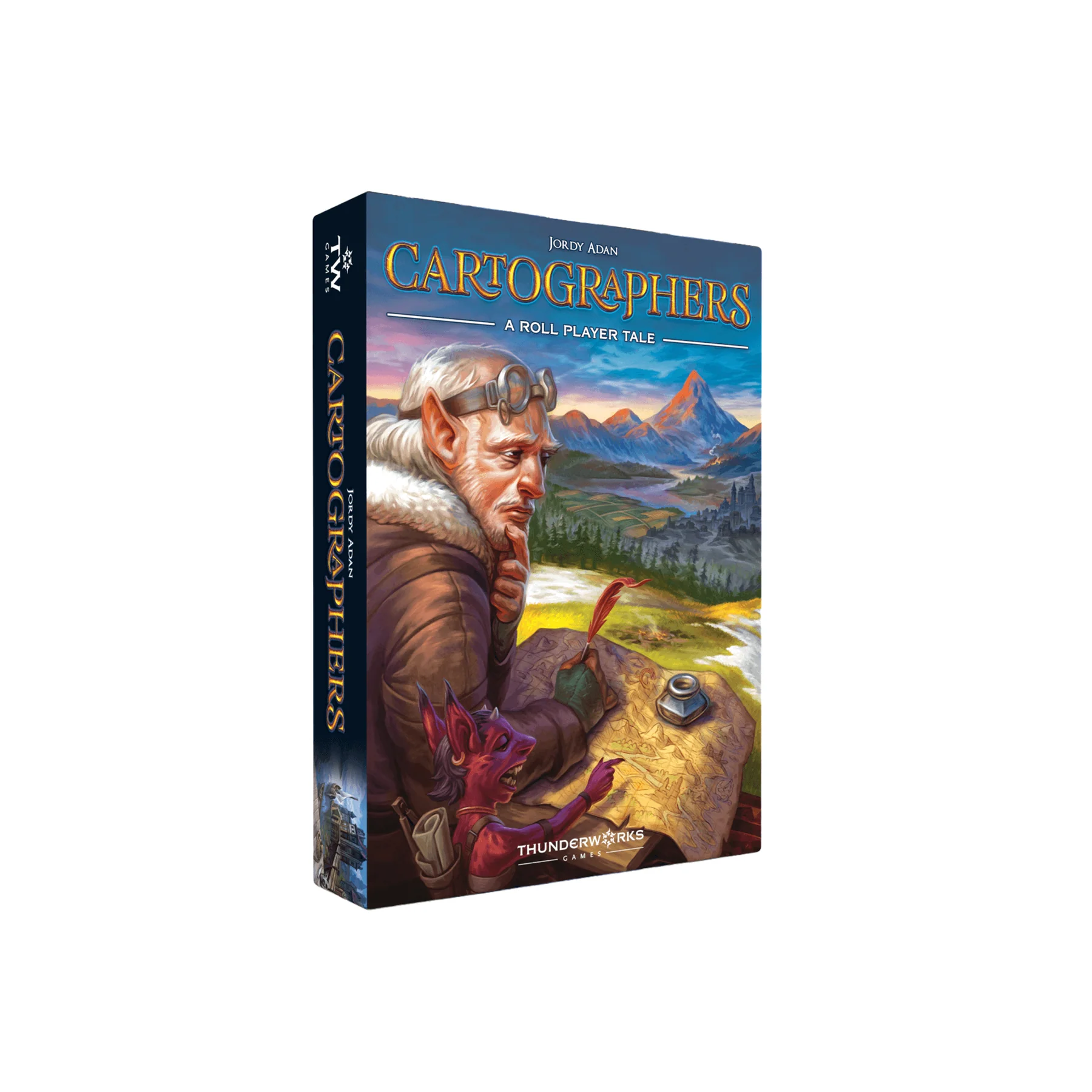
A flip-and-write game where everyone draws the same Tetris-like shapes onto their own map grid. Each card tells you which shape and which terrain type (forest, village, farm, water) to draw. You pick where it goes on your grid. Scoring rotates across four seasons, with two of the four scoring cards active at a time. So in Spring you might score for "largest forest cluster" and "number of villages on the edge". In Summer, one of those cards rotates out and a new one comes in. This keeps you adjusting your strategy throughout the game. The twist is the Ambush cards. When one is drawn, you pass your map to your neighbour and they draw a monster shape on it. Monsters score negative points in areas that aren't filled — so a well-placed monster can ruin a carefully planned section of your map. This added interaction is the main difference from Welcome To. You can't just optimise in isolation. Someone might deliberately wreck the scoring zone you've been building toward, and you can do the same to them. Games run about 30-40 minutes regardless of player count, since everyone draws simultaneously. Works from 1 to 100 players. The solo mode is solid — you're competing against your own score — and the large-group experience is essentially the same game with more laughing about monster placements. The fantasy theme (you're mapping the kingdom of Nalos for the queen) is light but gives the drawing more personality than filling in abstract boxes. There are several map pack expansions that add new scoring goals and board layouts.
Best Board Games for 9 Players
Nine players is genuinely awkward. Eight is a natural split (4v4). Ten you can run two tables of 5. But 9 divides oddly, doesn't fit any standard team structure, and most games that claim to support it just become slower and more miserable at that count.
The options that work at 9 are a smaller category than most people expect. Here's what's actually worth playing.
Sidereal Confluence
Sidereal Confluence is specifically designed for up to 9 players, and it's one of the very few heavy strategy games that gets better with more people. Each player controls a completely different alien economy. You have converters that turn input resources into outputs, but you don't have the inputs you need. So you trade.
The trading phase is real time and simultaneous. Nine players stand around the table negotiating deals, swapping resources, and making promises. There are no turns during the trade phase. The more players, the more trade options, the more interesting the deals. A 9-player game takes about 2 hours and leaves everyone satisfied.
Designed for 9 players. Gets better with more people.
Blood on the Clocktower
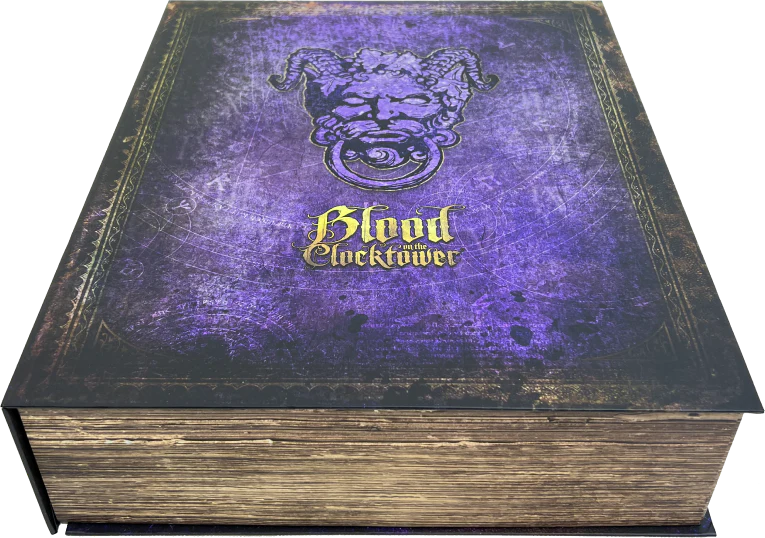
Blood on the Clocktower plays 5 to 20. The 9-player game is the start of the mid-range — enough players to make the deduction genuinely difficult, but still manageable for the Storyteller.
At 9, the role distribution gives you around 6 Townsfolk, 1 Outsider, 1 Minion, and the Demon. Dead players still participate fully, which solves the player elimination problem that ruins other social deduction games at this count.
It needs a Storyteller who knows the rules well, and the full game runs 60 to 90 minutes. But there's nothing else like it.
Handles 9 well. Dead players stay in the game.
Wavelength
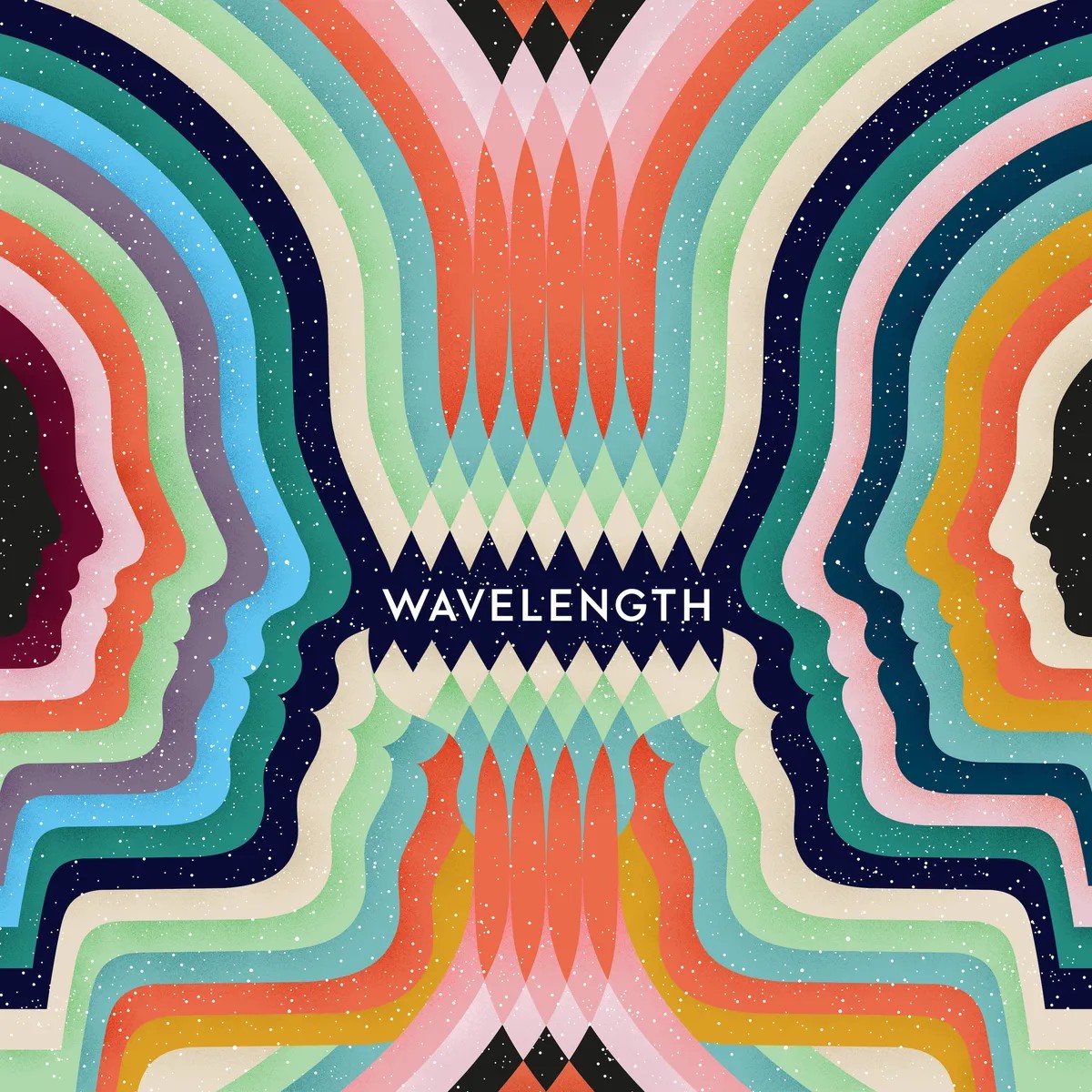
Wavelength has no meaningful upper limit. At 9 players you can run teams of 4 and 5, which is fine. The mechanic is conversation. One team gives a clue, the other debates where it sits on a spectrum.
The odd number doesn't matter because Wavelength doesn't need even splits. You can play it with lopsided teams, rotating players, or anyone sitting in and out. The game just keeps working.
Flexible team splits. Works at 9 with no adjustments.
Welcome To...
Welcome To scales to any number because everyone plays simultaneously from the same three cards. At 9, you have 9 people filling in their own suburb maps at the same time. There is no waiting. No turns. No downtime.
The game takes 25 to 30 minutes whether there are 4 players or 40. At 9, you can run it as a quiet counterpoint to something loud, or as the game when people are tired and want something low-stakes.
Scales to any number. Exactly the same game at 9 as at 4.
Cartographers
Cartographers works the same way as Welcome To but adds monster cards. When an Ambush card is drawn, you pass your map to the player next to you and they draw a monster on your carefully planned map.
At 9, passing maps around the circle creates a longer chain of monster placements, which generates more pain and more schadenfreude when someone's perfect scoring zone gets wrecked.
Same infinite scaling as Welcome To, plus vicious monster mechanics.
Herd Mentality
A question card is read. Everyone writes an answer. Reveal simultaneously. If your answer matches the majority, you score. If you wrote the only unique answer, you get the Pink Cow.
With 9 players, the group dynamic gets harder to read. What does the most average person in a room of 9 write for "Name a type of cheese"? You'd think you know, and then 4 people write Cheddar, 3 write Brie, and 2 write Gouda, and nobody scores.
No upper limit. Nine players makes it harder to read the group, which makes it funnier.
Monikers
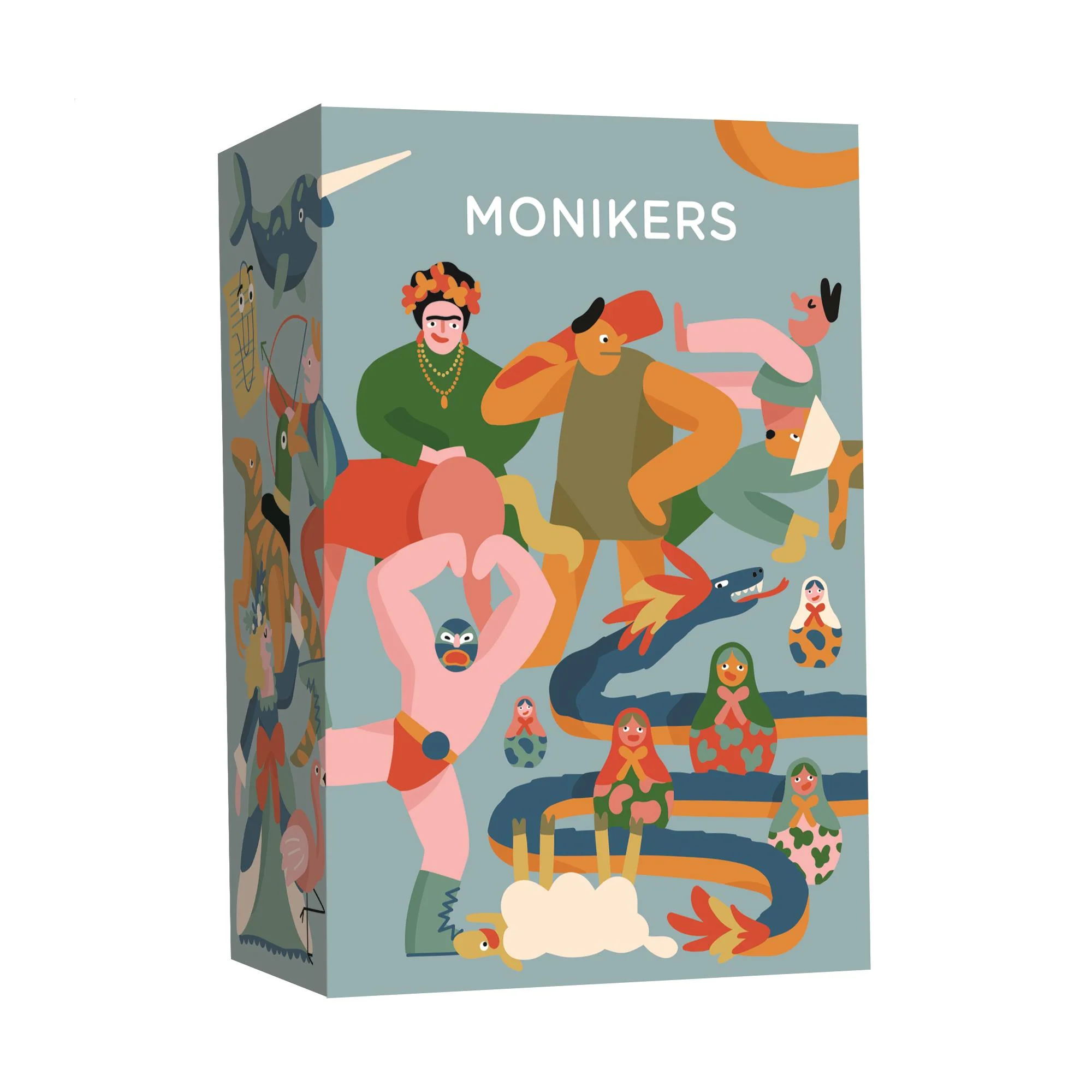
Monikers handles any group size in teams. At 9, you can run two teams of 4 and 5, or three teams of 3 for a more competitive setup. The three-round structure works regardless of how you split it.
Round three (charades) with large teams gets very loud and very funny. Someone mimes three seconds of something incomprehensible and their team of 5 people starts shouting over each other.
Any team structure. Loud and funny at 9 regardless of how you split.
The Resistance: Avalon
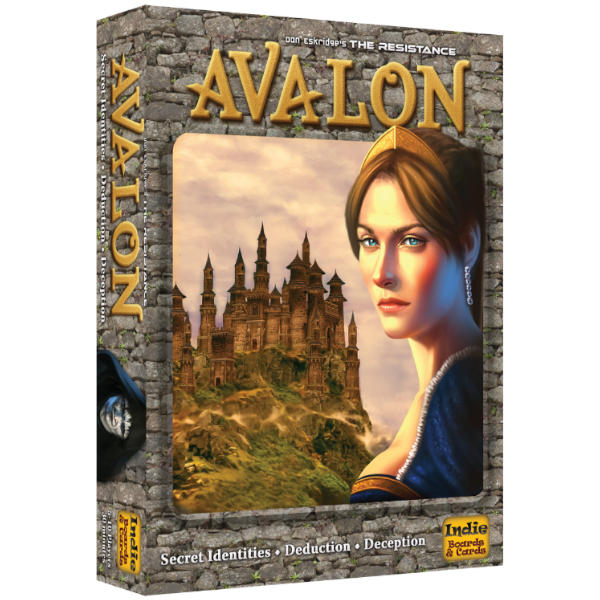
Avalon's rulebook specifically lists 9 players as a supported count. At 9, the role distribution is 6 loyal vs 3 evil, which creates enough noise to give the evil team real cover.
Mission sizes and number of missions are calibrated in the rulebook for 9. The voting phase with 9 people arguing about proposed teams is one of the noisiest, most entertaining things you can do at a game table.
Explicitly supported at 9. Role distribution is calibrated for this count.
The practical approach
If you regularly play at 9, build your collection around games with no fixed player limit (Welcome To, Cartographers, Herd Mentality, Wavelength) plus one or two games with high upper limits (Sidereal Confluence, Blood on the Clocktower, Monikers). That combination handles the count in any situation.
Avoid games that cap at 8. They cap at 8 for a reason.
If this helped, you might also want to read our guides on best board games for large groups, best games for 8 players, best games for 10 players.
Reviewed by TableTop Trends Editorial Team
Board Game Specialists & Group Dynamics Researchers
Tested and evaluated across real group game nights. We specialize in group playability, player count scaling, rule clarity, and downtime reduction for gatherings of 2 to 12+ players.
Not sure which one to pick?
Answer a few quick questions and get a direct recommendation for your group.
Find the right gameLooking for Board Games & Game Night Recommendations?
Explore our group game finder, strategy guides, and game reviews.
🎲 Games in this guide

Explore Curated Collections
Keep Browsing — Related Guides
Hand-picked recommendations for your next game night setup.
Best Board Games for 10 Players
Most games break at 10. These are the ones built for it — or clever enough to handle it without slowing down.
Best Board Games for 8 Players
Eight players is the breakdown point for most board games. Here are the top games designed specifically for 8 people without turn-wait misery.
Best Board Games for Exactly 7 Players
Seven players is a notoriously awkward count. Most games top out at 6 and most party games feel thin at 7. Here are the ones that actually work.
10 Great Party Board Games for 6–8 Players
You have seven people sitting around your table. Three of them love strategy, four think board games take four hours. Here are ten games that keep everyone engaged without rulebook headaches.
Need a personalized recommendation for your exact group?
Skip browsing and let our Game Finder select the 9.5/10 match for your player count and vibe.
🎯 Use 30-Second Game Finder