
Best Strategy Board Games for Large Groups
Party games are great, but sometimes a group wants actual depth. Here are the strategy games that don't fall apart above four players.
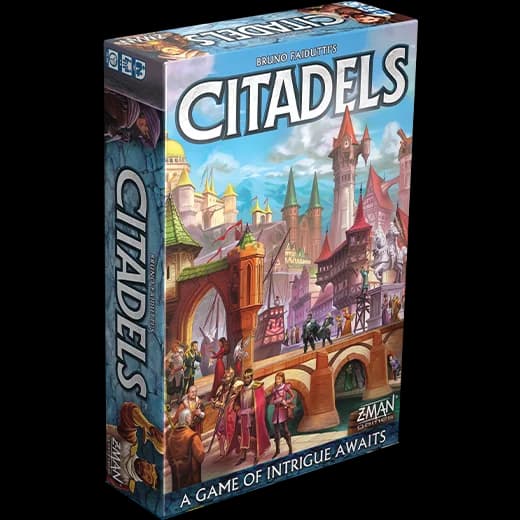
- Best OverallCitadels(2-8 players)
Each round, a set of character cards is passed around the table and each player secretly picks one. Characters have abilities: the Assassin kills a character (not a player — the player who picked that character loses their turn). The Thief steals gold from a character. The Magician swaps cards. The King goes first next round. After everyone has picked, characters are called in order. When yours is called, you take your turn: collect gold or draw cards, then optionally build a district card. Districts cost gold and contribute to your city. First player to build 8 districts triggers the endgame. The game lives in the draft. You're reading what characters other people are likely to pick and choosing accordingly. "Maria needs gold, so she'll probably take the Merchant. I should Assassinate the Merchant." But maybe Maria anticipated that and took the Architect instead. With 2-4 players, it's a tight, information-rich puzzle. With 6-8, the draft is longer and more chaotic — you can't predict as well, so it swings more. The expanded character set (included in the 2016 revised edition) adds 9 alternate characters that can swap in, which keeps the game fresh. Districts come in five colours, and there are bonus points for having all five represented in your city. Some purple districts have unique powers — the Observatory, the Laboratory, the Smithy — that give ongoing advantages. Games run 30-60 minutes depending on player count. It's one of the few strategy games that genuinely works at 7-8 players, though it slows down noticeably above 6. The box is small, the price is low, and there's more depth here than the simple components suggest.
- Best for StrategySidereal Confluence(4-9 players)
Each player controls one of nine alien races, each with a completely different economy. Your race has converter cards that turn input resources into output resources — but you probably can't produce the inputs you need. So you trade. Trading happens simultaneously and in real time. There are no turns during the trade phase. Everyone is negotiating at once. "I'll give you three white cubes for two green." "I need a colony ship — who has one?" "I'll swap you my small converter for your large one and throw in two cubes." Deals can be anything. Any resource, any promise. After trading, everyone simultaneously runs their converters, produces new resources, and scores points. Then a new set of technologies becomes available through a shared bidding system. Repeat for six rounds. The asymmetry is deep. The Kt'Zr'Kt'Rtl (yes, that's a name) have a biological economy that literally grows. The Faderan have intellectual technologies that create resources from nothing but need other races' outputs. The Yengii are good at pure trading but produce little on their own. Each race needs different things from different races. This is a heavy game. The teach takes 30-40 minutes. First-time players will be confused for the first two rounds. But the trading is so inherently social — it's literally just making deals with people — that most groups find the energy even through the learning curve. Plays 4-9. The 9-player game is the full experience — every race at the table, maximum trade options, maximum noise. Games run about 2 hours. It's one of the very few heavy strategy games that actually gets better with more players.
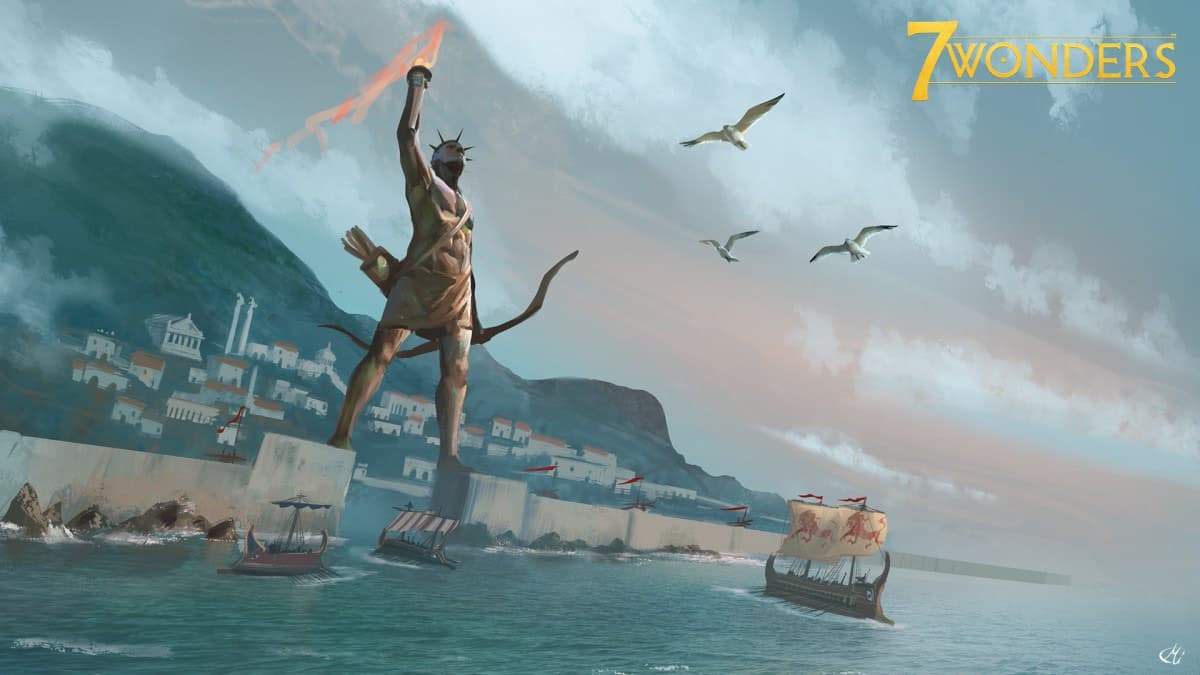
- Great for Beginners7 Wonders(3-7 players)
A card-drafting civilisation game where everyone picks cards simultaneously. You're dealt a hand, pick one card to play, and pass the rest to your neighbour. Then you all reveal at the same time. Repeat until the hand is empty. Do this three times (three "ages") and count up your points. Cards are resources, military, sciences, guilds, and civic buildings. Resources let you build better cards later. Military compares you to your direct neighbours — you only fight the person to your left and right, not the whole table. Science scoring is a set-collection puzzle that rewards specialisation. The reason 7 Wonders has lasted since 2010 is the timing. A 7-player game takes the same 30-35 minutes as a 3-player game, because everyone plays at the same time. There's no waiting. No downtime. No turns that drag because someone's calculating. Each player also has a unique Wonder board with a staged construction track that gives bonuses as you build it. These are asymmetric enough to nudge strategy without overwhelming new players. It's the go-to "proper" strategy game for groups that are too large for most strategy games. The rules take about 10 minutes to teach, the iconography makes sense after one age, and the tactical depth is enough to reward experienced players without punishing newcomers.
Best Strategy Board Games for Large Groups
You have seven people at the table, they're all serious gamers, and someone suggests Codenames. The table groans. Party games are great, but sometimes a group wants to actually build an engine, manage an economy, or execute a complex bluff.
The problem is that most heavy strategy games collapse above four players. A six-player game of Terraforming Mars or Scythe takes hours, and the downtime between turns allows people to check their emails, go to the bathroom, and read a novel before they get to act again.
If you want strategic depth and high player counts, you need games built around simultaneous drafting, real-time negotiation, or heavily structured phases. Here are the best strategy games for big groups.
7 Wonders (3 to 7 Players)
The definitive high-player-count strategy game. You draft cards to build an ancient civilisation, managing resources, science, and military strength over three ages.
The genius of 7 Wonders is that every single player selects a card from their hand and reveals it at the exact same moment, passing the remaining cards to the person next to them. There are no individual turns. A 7-player game delivers deep, satisfying strategy in exactly 35 minutes. It is the gold standard.
Sidereal Confluence (4 to 9 Players)
If your group wants heavy strategy and doesn't mind noise, this game is remarkable. Each player controls a completely different alien economy. You have machines that turn cubes into ships, but you don't have the cubes you need. So you trade.
The trading phase is real time and simultaneous. Nine players stand around a table making deals, passing resources, and promising future favours. It is a deeply complex economic engine builder wrapped in the loudest negotiation game you've ever played. A 9-player game takes about two hours and leaves everyone exhausted but satisfied.
Captain Sonar (6 to 8 Players)
You are the crew of a nuclear submarine hunting the enemy sub on the other side of a set of screens dividing the table. You need exactly eight players, four on each team: Captain, First Mate, Engineer, and Radio Operator.
It is a real-time game of hidden movement and resource management. The Captain calls directions, the Engineer manages breaking systems, the First Mate charges weapons, and the Radio Operator tracks the enemy's movements. It requires intense teamwork and sharp communication. It handles eight people well by giving each of them a high-stress mechanical job.
Citadels (2 to 8 Players)
A classic card game that mixes city-building with a vicious role-selection draft. Each round, a deck of characters is passed around the table. Do you take the Architect to build more districts, or the Assassin to murder whoever you think is holding the Architect?
With 6 to 8 players, the draft becomes a deep psychological puzzle. The downtime is slightly higher than 7 Wonders, but because the role selection directly impacts who gets assassinated or robbed, you're forced to pay attention to what everyone else is doing at all times.
Reviewed by TableTop Trends Editorial Team
Board Game Specialists & Group Dynamics Researchers
Tested and evaluated across real group game nights. We specialize in group playability, player count scaling, rule clarity, and downtime reduction for gatherings of 2 to 12+ players.
Not sure which one to pick?
Answer a few quick questions and get a direct recommendation for your group.
Find the right gameLooking for Board Games & Game Night Recommendations?
Explore our group game finder, strategy guides, and game reviews.
🎲 Games in this guide


Keep Browsing — Related Guides
Hand-picked recommendations for your next game night setup.
How to Host a Game Night for 10+ People
Above 8 players, most games buckle. Here's exactly how to run a double-digit game night without losing half the room to their phones.
10 Great Party Board Games for 6–8 Players
You have seven people sitting around your table. Three of them love strategy, four think board games take four hours. Here are ten games that keep everyone engaged without rulebook headaches.
Best Cooperative Board Games: From Gateway to Heavy Strategy
Prefer working together instead of fighting? Discover the top cooperative board games where players win or lose as a team.
Best 2-Player Strategy Board Games for Couples & Duels
Tired of games that feel shoehorned at 2 players? Here are top-rated strategy games designed specifically for head-to-head duels and couple game nights.
Need a personalized recommendation for your exact group?
Skip browsing and let our Game Finder select the 9.5/10 match for your player count and vibe.
🎯 Use 30-Second Game Finder