
Best Board Games for Large Groups
Large groups need different games from regular game nights. Here's what actually works when you have 6 or more people and why most popular games quietly fail at this count.
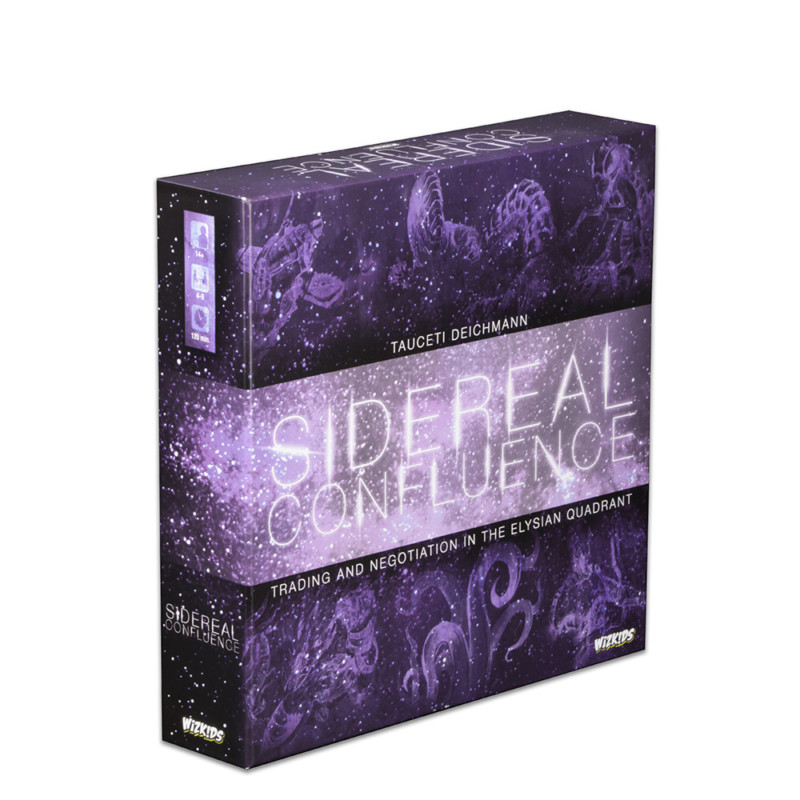
- Best OverallSidereal Confluence(4-9 players)
Each player controls one of nine alien races, each with a completely different economy. Your race has converter cards that turn input resources into output resources — but you probably can't produce the inputs you need. So you trade. Trading happens simultaneously and in real time. There are no turns during the trade phase. Everyone is negotiating at once. "I'll give you three white cubes for two green." "I need a colony ship — who has one?" "I'll swap you my small converter for your large one and throw in two cubes." Deals can be anything. Any resource, any promise. After trading, everyone simultaneously runs their converters, produces new resources, and scores points. Then a new set of technologies becomes available through a shared bidding system. Repeat for six rounds. The asymmetry is deep. The Kt'Zr'Kt'Rtl (yes, that's a name) have a biological economy that literally grows. The Faderan have intellectual technologies that create resources from nothing but need other races' outputs. The Yengii are good at pure trading but produce little on their own. Each race needs different things from different races. This is a heavy game. The teach takes 30-40 minutes. First-time players will be confused for the first two rounds. But the trading is so inherently social — it's literally just making deals with people — that most groups find the energy even through the learning curve. Plays 4-9. The 9-player game is the full experience — every race at the table, maximum trade options, maximum noise. Games run about 2 hours. It's one of the very few heavy strategy games that actually gets better with more players.
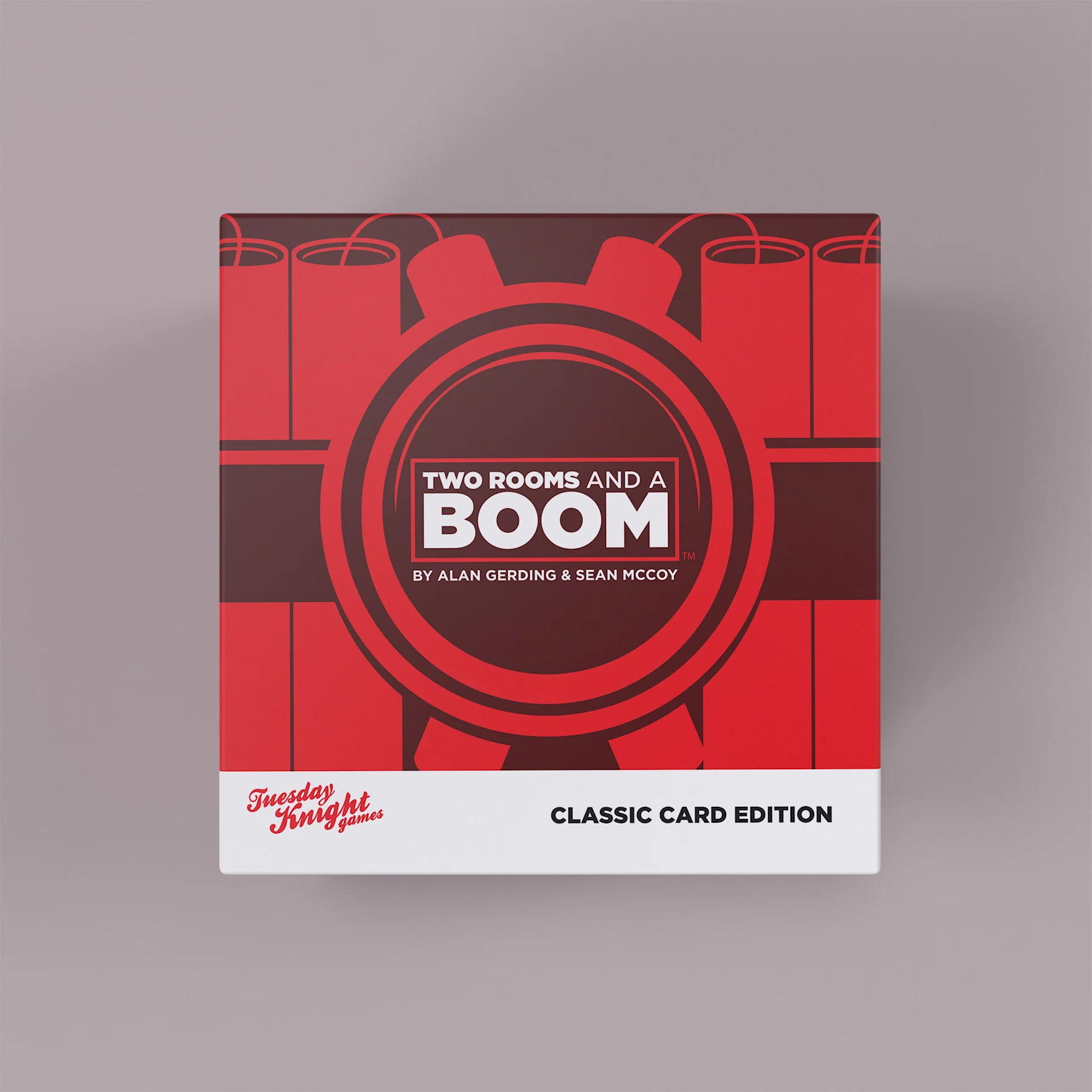
- Best for StrategyTwo Rooms and a Boom(6-30 players)
Split the group into two physical rooms (or two sides of a large room). Team Blue has a hidden President. Team Red has a hidden Bomber. If the Bomber and President are in the same room when the timer runs out, Red wins. If they're in different rooms, Blue wins. Each timed round (the game lasts three rounds, getting shorter each time), the leaders of each room select "hostages" to trade to the other room. This is the whole game: negotiation, bluffing, and hostage selection. Should you reveal your role to the room leader? Can you trust the leader? Is the person the other room sent over actually defecting, or are they a plant? Extra role cards add abilities — the Spy can swap teams, the Gambler picks a side and wins with them, the Doctor can protect people, the Engineer can defuse the bomb. With more players, more role cards get added, which creates increasingly chaotic and strategic games. It's a social game in the truest sense. You're walking around, having private conversations, forming alliances, and trying to deduce who's on which team. There's no board, no cards on a table — just people talking in rooms. Plays 6-30. Below 10, it's tense and personal. Above 15, it becomes a large-scale social experiment where misinformation spreads like wildfire. The game is strictly timed at 15 minutes total. You always know when it ends. Setup is the biggest barrier. You need two rooms, a moderator, and time to distribute and explain roles. It's best at events, conventions, or house parties rather than casual game nights.
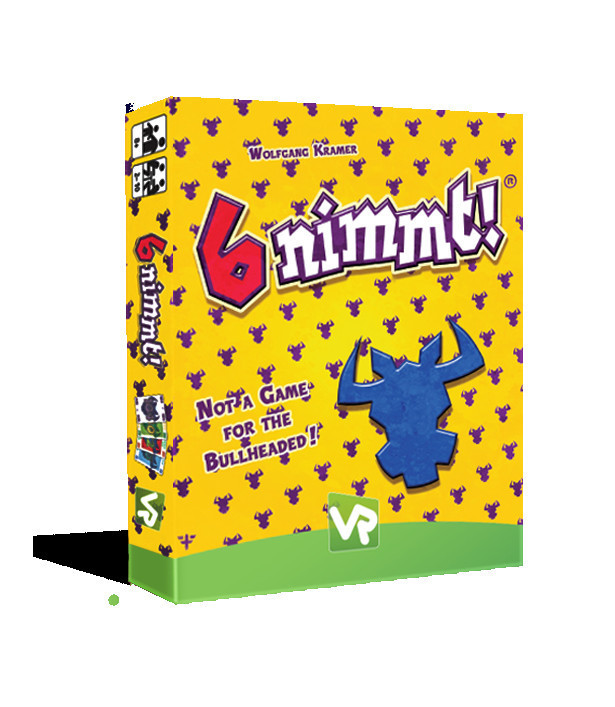
- Great for Beginners6 nimmt!(2-10 players)
Everyone simultaneously picks a card from their hand and reveals it. Then, in ascending order, each card gets placed at the end of one of four rows on the table. Cards must go in the row where the last card is closest to (but lower than) the played card. If your card becomes the sixth in a row, you take the first five cards (and their penalty points). If your card is lower than every row's last card, you take the row of your choice. The penalty comes from bull heads printed on each card — most cards have 1, but some have 2, 3, 5, or even 7. Low total bull heads wins. The strategy is about reading the rows and predicting what others will play. With 4 players, you can often calculate the safe options. With 10 players, it's closer to chaos — multiple people play similar numbers and rows fill up unpredictably. It's been in print since 1994. The rules fit on a single card. A game takes 20-30 minutes. The components are just 104 numbered cards. It costs almost nothing and fits in a pocket. Plays 2-10. The sweet spot is 5-6 where there's enough unpredictability to be exciting but enough control to reward smart play. At 8-10, it becomes a loud, reactive experience where groaning at bad reveals is half the fun.
Best Board Games for Large Groups
When the RSVPs come in and you realise you've got 8 people coming over, you can't just pull out whatever's on your shelf. Most popular board games — the ones people know and love — were designed for 3 to 5 players. Go above that and turns drag, people check out, and the game stops being fun.
Large groups need games designed around one of these approaches:
- Everyone acts at the same time (simultaneous play)
- The game is a team sport where everyone is always talking
- Physical movement where the crowd itself is the mechanic
Here are the best large-group board games across every occasion.
For any large group: start here
Wavelength
The best all-around large-group game. Split into two teams. One player knows where a target sits on a spectrum (between "Hot" and "Cold", between "Overrated" and "Underrated"). They give one clue. Their team debates and places the dial.
There are no turns in the traditional sense. The other team is watching and gets bonus points for correctly predicting where the dial lands. Everyone is always engaged.
Works from 4 to 12 or more. Teams can be uneven. New people can join mid-game. Nothing breaks.
The best starting point for any large group. Scales with zero adjustment.
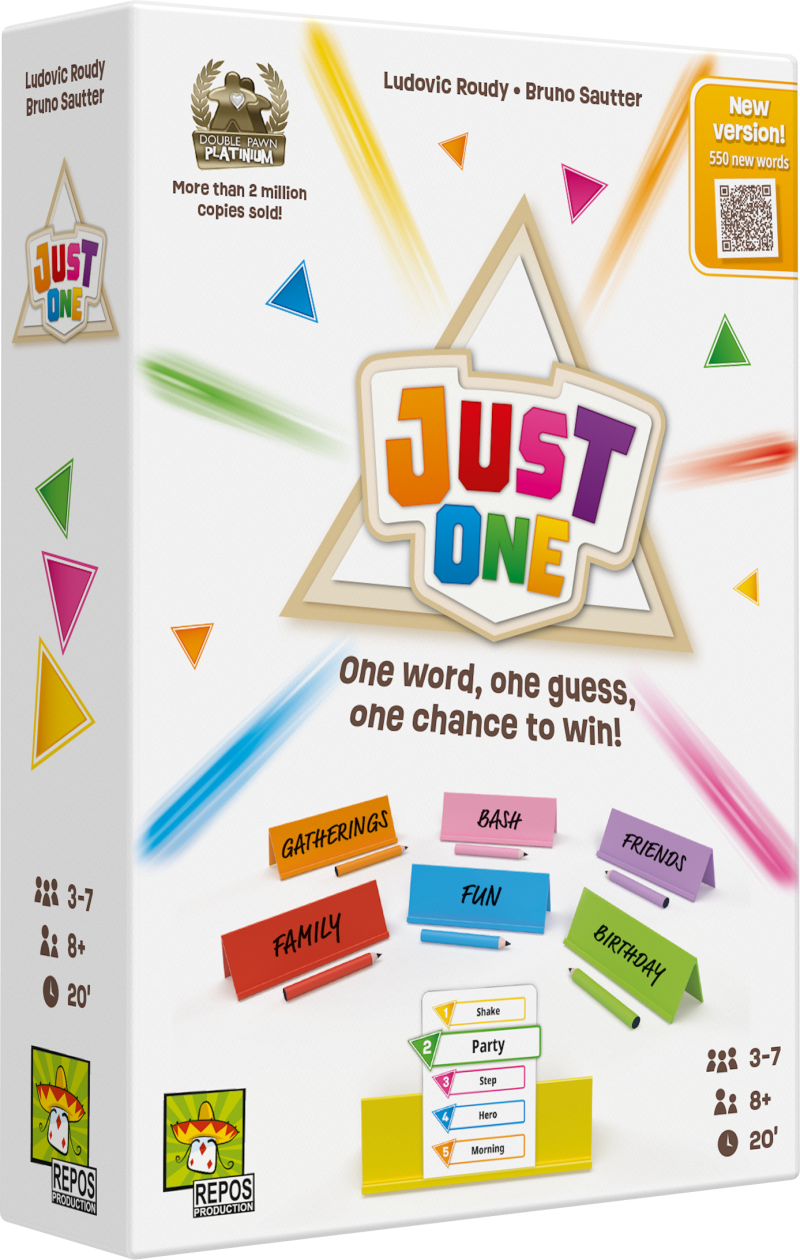
Just One
Cooperative and completely simple. The guesser closes their eyes. A word card goes up. Everyone writes a one-word clue. Duplicate clues are cancelled before the guesser opens their eyes.
With 7 people all trying to come up with unique clues for the word "Cheese", nobody gets to use "Yellow", "Swiss", or "Mouse". The strange clues that survive are what make it fun.
Works up to 7 officially. Most groups push it to 8 or 9 and it only gets funnier.
Cooperative, zero-barrier, works for any group including non-gamers.
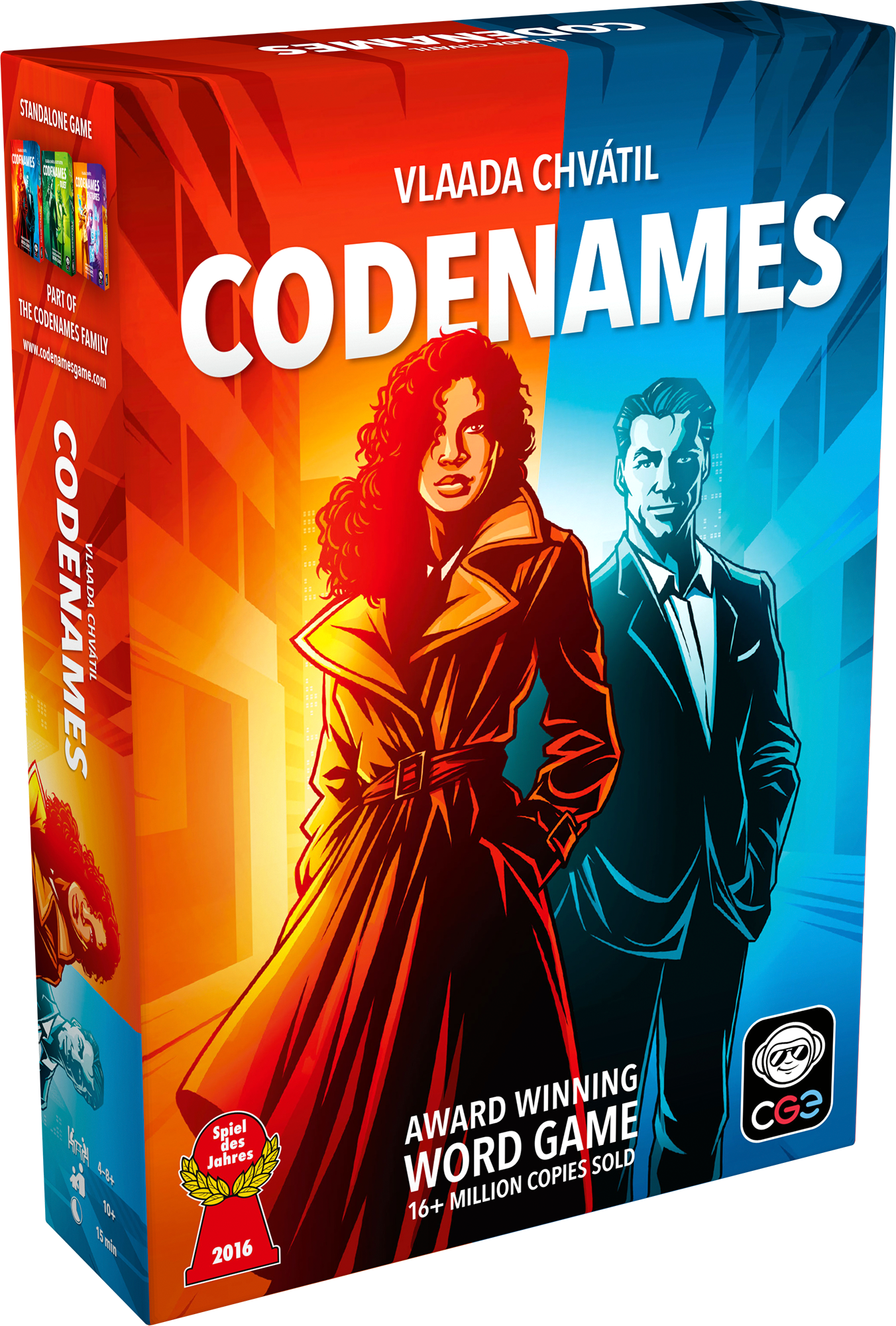
Codenames
The default large-group recommendation for good reason. Two teams, two spymasters. The game splits naturally at any even count. Both teams play every round with no waiting.
At 8 (4v4), the team debates are at their most entertaining. The spymaster watches 4 people talk themselves out of the right answer and has to stay silent.
Works at any size. 4v4 is one of the best configurations.
For serious groups: strategy at large counts
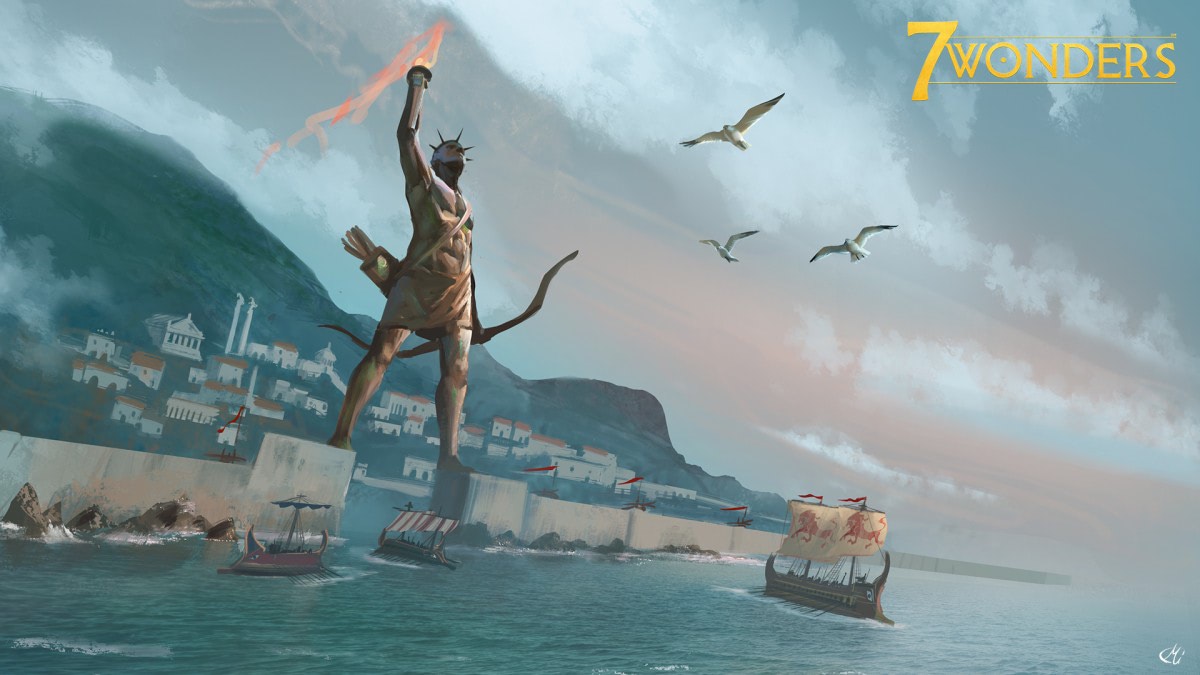
7 Wonders
The benchmark for large-group strategy. Everyone picks and plays cards simultaneously over three ages. A 7-player game takes the same 35 minutes as a 3-player game. No downtime. Deep enough to satisfy experienced gamers, clear enough to teach in 10 minutes.
The benchmark for large-group strategy. 35 minutes at any player count.
Captain Sonar
Requires exactly 6 or 8 players, but when you have them, it's the most intense large-group game you can play. Two submarine crews hunt each other in real time. Every person has a job. Nobody is ever idle.
The most intense large-group experience. Requires 6 or 8 players.
Sidereal Confluence
For groups of 4 to 9 who want something heavy. Every player runs a different alien economy and trades resources in a real-time simultaneous phase. Nine players standing around the table making deals creates a noise level and energy that nothing else matches.
Deep strategy with simultaneous trading. Gets better with more players.
For social deduction: suspicion and bluffing
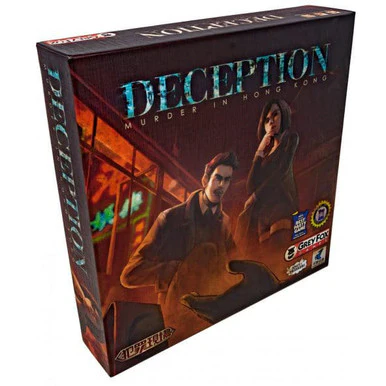
Deception: Murder in Hong Kong
The best social deduction game for 6 to 12 players. One forensic scientist, one murderer, the rest are investigators. Physical clue tiles give everyone something to point at. Rounds run 20 minutes.
Best social deduction at 6 to 12. Physical clues keep everyone engaged.
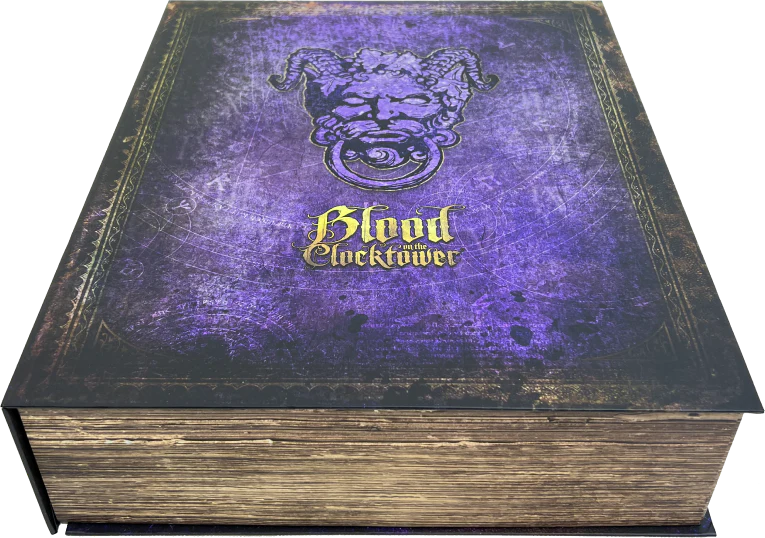
Blood on the Clocktower
The best large-group social deduction game that exists. Dead players stay in the game. A Storyteller manages the experience in real time. Works from 5 to 20.
The current peak of large-group social deduction. 60 to 90 minutes.
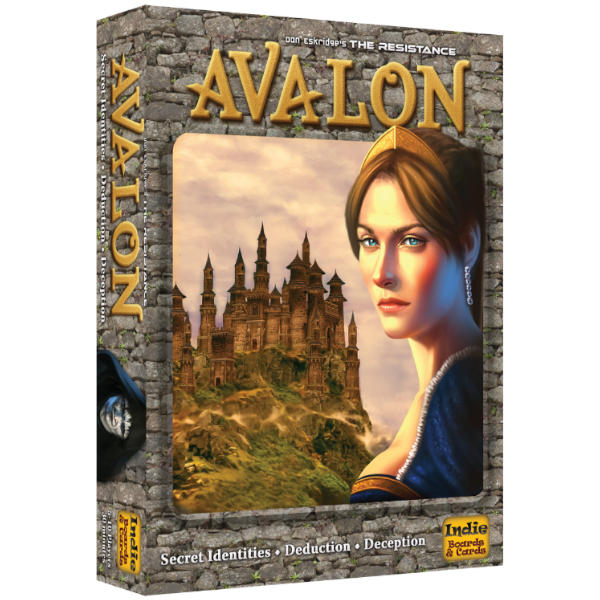
The Resistance: Avalon
Fast, tense, and works at 5 to 10 players. Mission proposals and voting are the mechanic, and with 8 or more people arguing about proposed teams, the paranoia builds quickly.
Fast social deduction for 5 to 10. Rematch always happens.
For scale: games that work at 10, 15, or more
Welcome To...
Scales to unlimited players through simultaneous play. Everyone fills in their own map from the same three cards flipped in the centre. 25 minutes whether you have 4 or 40.
No upper limit. Same game at 40 players as at 4.
Two Rooms and a Boom
Designed for 10 to 30 players. Uses physical space as the mechanic. Two teams, two rooms, 15 minutes. The only game where having 20 people is better than having 10.
Designed for 10 to 30. Actually gets better with more people.
6 Nimmt!
Supports up to 10 players with a tiny card deck. Simultaneous card play. Fast, chaotic, and cheap. One of the best-value large-group games available.
Up to 10 players. Tiny box, simultaneous play, 20 minutes.
For non-gamers and mixed groups
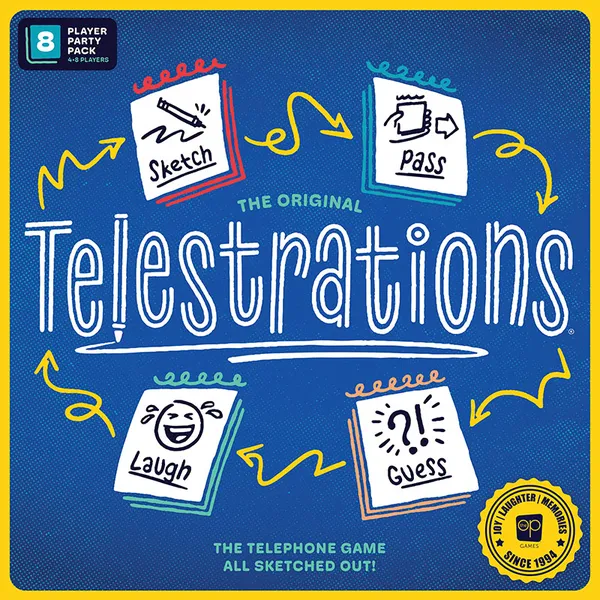
Telestrations
No explanation needed, no rules to forget, no way to feel stupid. You draw, pass the book, the next person guesses. By round 4 the original word is unrecognisable. Works up to 8 in the standard edition, 12 in the party version.
Zero barrier. Bad drawing makes it funnier. Works for any mixed group.
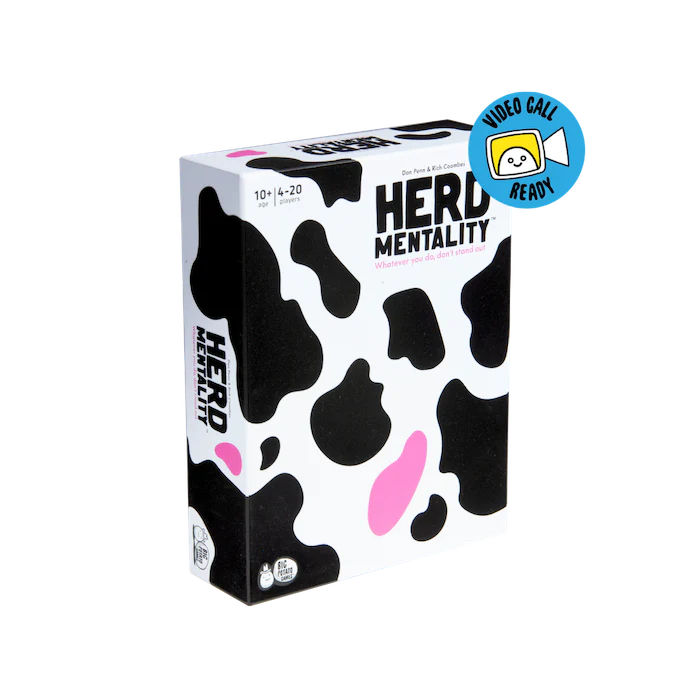
Herd Mentality
Write the most average answer to a simple question. If you're the only one who wrote something different, you get the Pink Cow. No strategy knowledge required. Works at any count from 4 to 20.
No upper limit. Works for any group including non-gamers.
What to avoid
Any game with long individual turns. At 8 people, a 3-minute turn means 21 minutes between your turns. Avoid worker placement, auction games, and anything where downtime scales with player count.
If someone in the group suggests Monopoly, politely explain that Monopoly at 8 people will take 4 hours and everyone will hate each other by round 3. Bring Codenames instead.
If this helped, you might also want to read our guides on best games for exactly 8 players, best games for 10 or more players, Christmas family board games.
Reviewed by TableTop Trends Editorial Team
Board Game Specialists & Group Dynamics Researchers
Tested and evaluated across real group game nights. We specialize in group playability, player count scaling, rule clarity, and downtime reduction for gatherings of 2 to 12+ players.
Not sure which one to pick?
Answer a few quick questions and get a direct recommendation for your group.
Find the right gameLooking for Board Games & Game Night Recommendations?
Explore our group game finder, strategy guides, and game reviews.
🎲 Games in this guide



Explore Curated Collections
Party Board Games for Large Groups
Party games fall apart when the rules explanation takes longer than the first round. These don't. You can teach any of them in under two minutes, and most groups are laughing before the first round is over.
Perfect Icebreaker Games for New Friends
First time playing with this group? Half the people don't know each other? You need games that create conversation without forcing it, where being wrong is funny instead of embarrassing, and where nobody feels like they're being tested.
Keep Browsing — Related Guides
Hand-picked recommendations for your next game night setup.
Best Board Games for 12+ Players (Double-Digit Groups)
When a dozen or more people show up for game night, standard turn orders collapse into chaos. Here's how to host double-digit groups without splitting the room.
Best Board Games for Exactly 6 Players
Six people sitting around a dining table is one of the trickiest player counts in board gaming. Here are eight games engineered to scale smoothly without long turn waits.
Best Christmas Board Games for the Whole Family
Christmas game nights include grandparents, kids, competitive uncles, and people who think board games are boring. These are the games that survive that combination.
Best Board Games for 8 Players
Eight players is the breakdown point for most board games. Here are the top games designed specifically for 8 people without turn-wait misery.
Need a personalized recommendation for your exact group?
Skip browsing and let our Game Finder select the 9.5/10 match for your player count and vibe.
🎯 Use 30-Second Game Finder