
10 Great Party Board Games for 6–8 Players
You have seven people sitting around your table. Three of them love strategy, four think board games take four hours. Here are ten games that keep everyone engaged without rulebook headaches.
- Best OverallHerd Mentality(4-20 players)
A question card is read out — something like "Name a fruit" or "Name something you'd find in a teenager's bedroom". Everyone secretly writes their answer. Then all answers are revealed simultaneously. If your answer matches the majority, you score. If you wrote something unique, you don't score. If you wrote the only unique answer, you get the Pink Cow — a rubber cow token that blocks you from scoring until someone else takes it from you. That's the whole game. You're trying to think like the group thinks. Not the cleverest answer. Not the funniest answer. The most average, predictable, boring answer. Which sounds simple until you realise that everyone else is also trying to be average, and second-guessing what "average" means gets messy fast. "Name a fruit." You think Apple. But does everyone think Apple? Or is everyone thinking that everyone will think Apple, so they'll write Banana instead? By the time you've spiralled through three layers of meta-thinking, you write Orange and hope for the best. The Pink Cow is the perfect punishment mechanic. It's physical, visible, and silly. The person holding it is always trying to get rid of it. The threat of getting it keeps people playing conservatively. Plays 4-20 with no real upper limit. The game takes 20 minutes and can stop at any point. Question quality varies — some cards produce boring unanimous answers, others split the group in unexpected ways. You can also make up your own questions, which older groups often prefer.
- Best for StrategyMonikers(4-16 players)
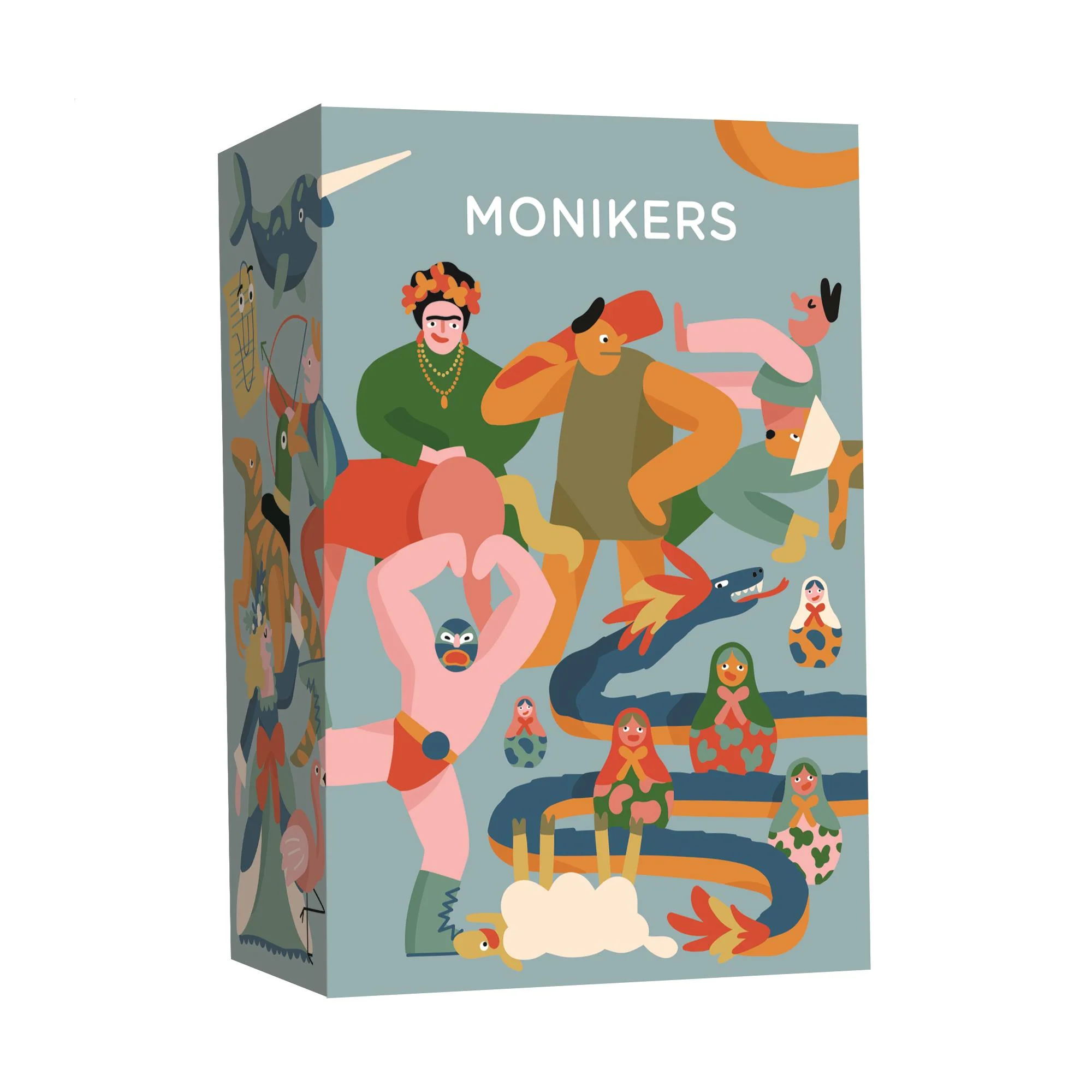
A party game played over three rounds with the same set of name cards. In round one, you can say anything you want to get your team to guess the name (like Taboo without restrictions). In round two, you can only say one word. In round three, you can only act it out silently. The key mechanic: you use the same cards all three rounds. So by round three, your team has heard every name at least once. The game shifts from "describe a thing you might not know" to "act out a shared inside joke that only exists because of the last 15 minutes". Round three is where the game peaks. Someone mimes three seconds of something incomprehensible, and their team yells the answer instantly because of a joke from round one. The table is in hysterics. It works because the group has built a private vocabulary over the course of the game. Before playing, everyone drafts the card pool. Each player gets dealt cards and keeps the ones they like, discarding the rest. This means nobody gets stuck with a name they've never heard of — which is a small design choice that fixes a major problem with similar games. Plays 4-16+ in teams. The more people, the louder it gets. There's no upper limit if you're happy splitting into larger teams. It works well as an evening centrepiece — games run 30-45 minutes and usually get an immediate "again".
- Great for BeginnersTelestrations(4-8 players)
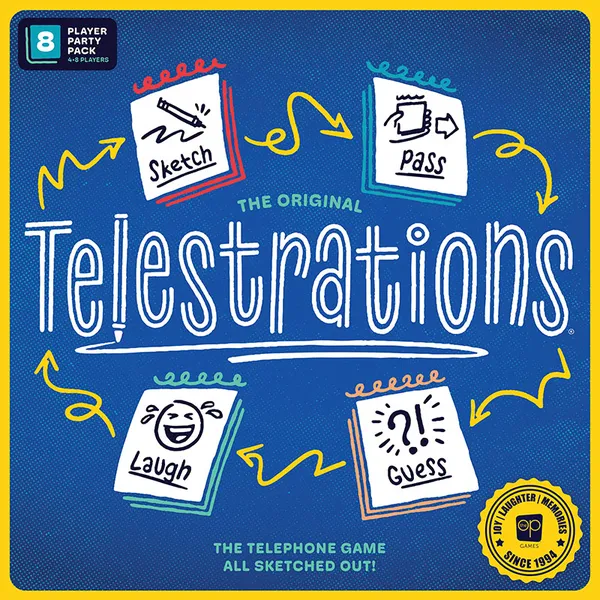
Think of the game Telephone, but with drawing. Each player starts with a word or phrase. You sketch it in a flip book, pass it on, and the next person guesses what you drew. Then the next person draws that guess. And so on around the table. By the time your book comes back to you, the original word has usually been mangled beyond recognition. "Birthday Cake" became "Hat" became "Sombrero" became "Mexico" became... a stick figure next to a cactus. Then everyone flips through and laughs at where it went wrong. There's no real scoring. The game is the reveal. You're not trying to draw well — you're just trying to be understood. Bad artists actually make the game funnier because their drawings are the ones that derail the chain. It works with 4-8 players (the bigger box does 12). The sweet spot is 6-8, where chains are long enough for proper drift. Each round takes about 5-10 minutes, and most groups play 2-3 rounds before moving on to something else. It's one of the few games that genuinely works with any age and any experience level. Kids, grandparents, people who hate board games — everyone can participate and everyone laughs.
10 Great Party Board Games for 6–8 Players
You have seven people sitting around your living room table. Three of them play heavy strategy games on weekends. Four of them think board games mean a painful four-hour slog through Monopoly rules nobody remembers.
Your job as host is simple: get something onto the table in under three minutes that keeps everyone talking, laughing, and involved.
Here are ten party games that actually work for 6 to 8 players—no agonizing 20-minute turn waits, no player elimination, and no filler.
1. Wavelength
The best part of Wavelength isn't scoring points. It's the instant arguments that break out. One player acts as the psychic and sees where a secret target sits on a spectrum between two opposing ideas (like Hot ↔ Cold or Underrated ↔ Overrated). They give a single clue, and the rest of the table debates where to place the physical dial.
You'll spend ten minutes listening to your friends passionately argue over whether cold leftover pizza is "Hot" or "Cold" on a comfort food scale. It needs zero rules setup, and anyone who walks into the room late can join mid-round without breaking the game.
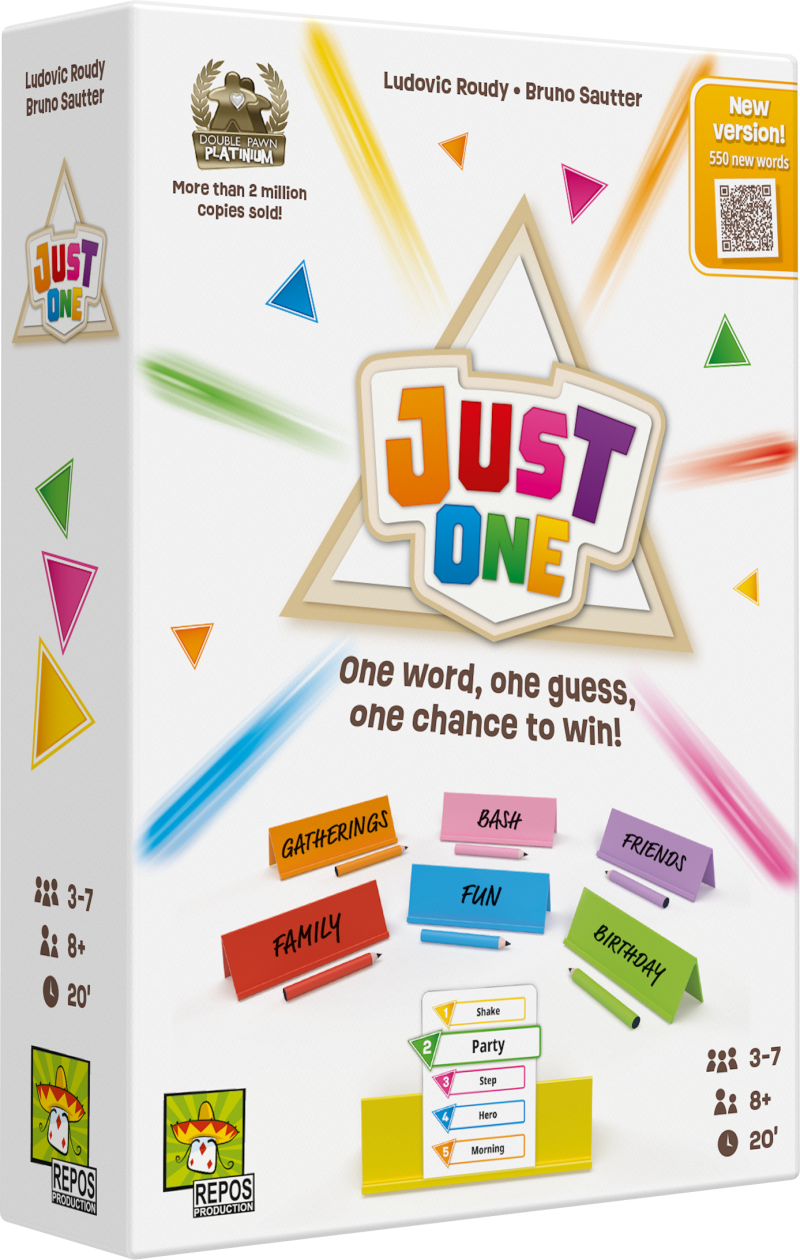
2. Just One
A cooperative word game that works because of one rule: duplicate clues get cancelled.
If the guesser needs to figure out "Apple", and three players secretly write "Fruit" on their easels, all three of those clues get erased before the guesser opens their eyes. You spend the whole game trying to think of the second-most obvious connection, leading to weird, hilarious clues that somehow still work. It is the ultimate "just one more round" game for mixed groups.
3. Deception: Murder in Hong Kong
Social deduction games usually fail when quiet players get talked over by loudest voices at the table. Deception fixes this completely.
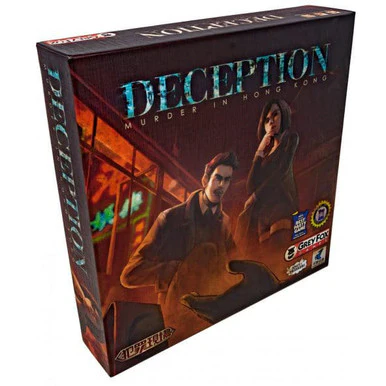
One player is the silent Forensic Scientist placing marker clips on scene tiles, while one investigator is secretly the murderer. Because clues and murder weapons sit out in plain sight on the table as physical cards, quiet players have concrete evidence to point at when accusing someone. Rounds take 15 minutes, and nobody gets eliminated.
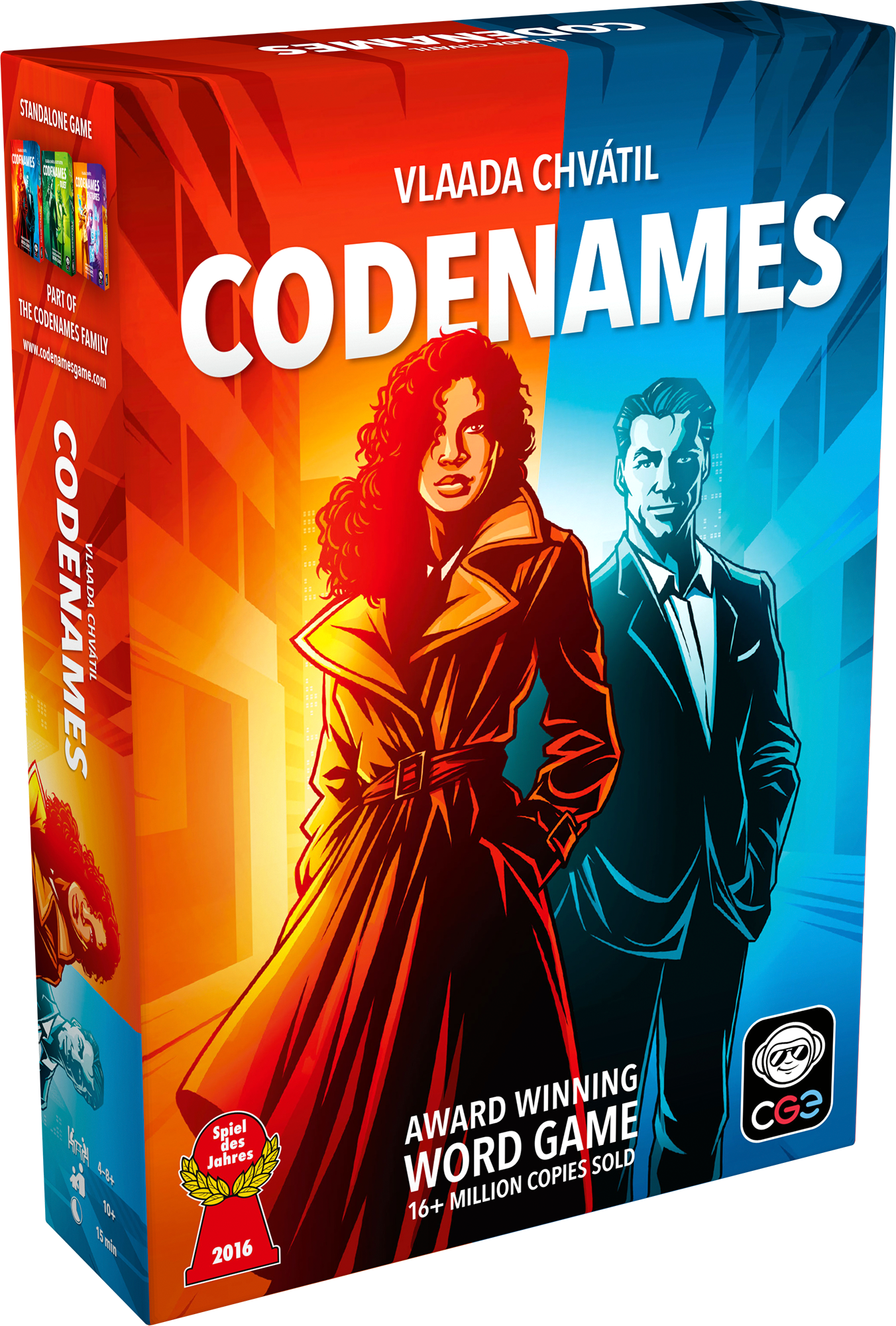
4. Codenames
Two team spymasters look at a grid of 25 word cards. They give a single word clue and a number—like "Ocean, 3"—trying to get their team to touch the correct cards without hitting the fatal Assassin word.
The real magic of Codenames lives in the excruciating silence of the spymaster watching their team talk themselves out of the obvious answer and into a catastrophic mistake. It scales effortlessly from 4 to 8 players.
5. Telestrations
Telephone meets drawing. You get a word, draw it in a dry-erase booklet, pass it to your right, and the next person guesses what you drew in words. Then the next person draws that guess.
By the time your book travels through eight players, "Darth Vader" has somehow mutated into "A Sad Penguin on a Bicycle." Nobody cares about keeping score—the entire room is flipping through booklets laughing at where things went wrong.
6. Monikers
A three-round party game using the exact same deck of cards across all three rounds.
- Round 1: Say anything you want to describe the card.
- Round 2: Say only one word.
- Round 3: Pure charades with no sound.
Because you reuse the same cards, the game builds a private language of inside jokes over the course of 30 minutes. A bizarre gesture in round three gets immediate cheers because everyone remembers the botched description from round one.
7. The Chameleon
Everyone at the table knows the secret word except one person—the Chameleon, who holds a blank card.
Going around the circle, everyone says a single word related to the secret topic. You need to give a clue subtle enough that the Chameleon can't guess the word, but clear enough that your friends don't think you are the liar. Rounds take 3 minutes, so if you get caught early, the next game starts immediately.
8. Herd Mentality
You are asked a simple question like "Name a pink food." You aren't trying to write the smartest answer—you are trying to write the answer you think the majority of the room will pick.
If your answer matches the main group, you score. If you're the odd one out, you get stuck holding a squishy Pink Cow token and can't score until someone else makes a weird pick. It turns simple word association into hilarious meta-thinking.
9. Spyfall
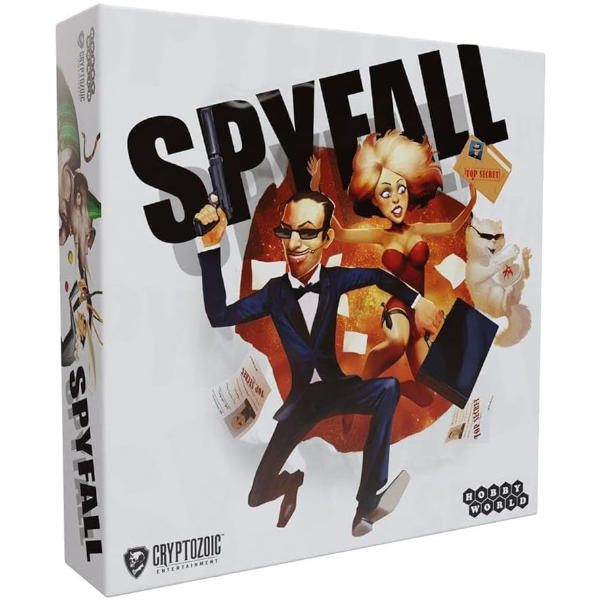
Everyone receives a card showing the same location (like a Bank, Submarine, or Pirate Ship)—except the Spy, who gets no location info. Players take turns asking each other conversational questions to identify the Spy, while the Spy tries to bluff and figure out where they are before the 8-minute timer runs out.
10. 6 nimmt!
A fast German card game for up to 10 players. Everyone picks a card from their hand secretly and reveals simultaneously. Cards get placed into four rows in ascending order. If your card becomes the 6th card in a row, you take the previous 5 cards as penalty points.
With 6 to 8 players, the math gets chaotic. You'll watch someone proudly play a "safe" card only to get slammed with a stack of bullhead penalty points.
Host Tip for 6–8 Players
If you have 8 people coming over, don't force a heavy 2-hour board game unless everyone explicitly requested it. Start with a 15-minute filler like Just One or 6 nimmt! to break the ice before moving to team games like Wavelength or Codenames.
Reviewed by TableTop Trends Editorial Team
Board Game Specialists & Group Dynamics Researchers
Tested and evaluated across real group game nights. We specialize in group playability, player count scaling, rule clarity, and downtime reduction for gatherings of 2 to 12+ players.
Not sure which one to pick?
Answer a few quick questions and get a direct recommendation for your group.
Find the right gameLooking for Board Games & Game Night Recommendations?
Explore our group game finder, strategy guides, and game reviews.
🎲 Games in this guide



Featured in Curated Collections
Keep Browsing — Related Guides
Hand-picked recommendations for your next game night setup.
Best Board Games for 12+ Players (Double-Digit Groups)
When a dozen or more people show up for game night, standard turn orders collapse into chaos. Here's how to host double-digit groups without splitting the room.
Best Christmas Board Games for the Whole Family
Christmas game nights include grandparents, kids, competitive uncles, and people who think board games are boring. These are the games that survive that combination.
Best Board Games for Large Groups
Large groups need different games from regular game nights. Here's what actually works when you have 6 or more people and why most popular games quietly fail at this count.
Best Board Games for 10 Players
Most games break at 10. These are the ones built for it — or clever enough to handle it without slowing down.
Need a personalized recommendation for your exact group?
Skip browsing and let our Game Finder select the 9.5/10 match for your player count and vibe.
🎯 Use 30-Second Game Finder