The Pandemonium Institute • 2022
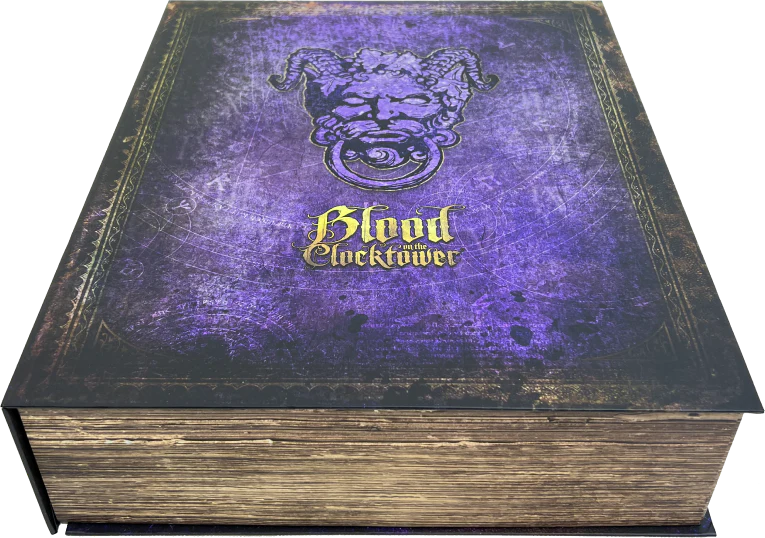
A social deduction game run by a Storyteller, designed for 5-20 players. Each player gets a character token with a unique ability — some are good Townsfolk, some are evil Minions, and one is the Demon trying to kill the town. During the night phase, the Storyteller taps players on the shoulder to use their abilities: the Empath learns how many of their neighbours are evil, the Ravenkeeper gets to check one player when they die, the Poisoner secretly invalidates someone's information. During the day, the town talks, accuses, and votes to execute someone. What separates it from Werewolf: dead players still participate. They can talk, argue, and vote (once). This single rule change fixes the biggest complaint about social deduction — nobody sits out for 45 minutes. The Storyteller isn't neutral. They tweak the game in real time, deciding how abilities interact and keeping things interesting. A good Storyteller makes the game feel like a story arc with rising tension. A bad Storyteller makes it feel arbitrary. There are three difficulty tiers of character scripts. Trouble Brewing is for new groups. Sects & Violets adds poisoned information and confusion. Bad Moon Rising is about damage prevention and healing. Each plays very differently. It's an event game, not a filler. Expect 60-90 minutes per game, plus 15 minutes of setup and explanation. But with the right group, it's the best large-group deduction game that exists.
Board Game Specialists & Group Dynamics Researchers
Tested and evaluated across real group game nights. We specialize in group playability, player count scaling, rule clarity, and downtime reduction for gatherings of 2 to 12+ players.
Explore our group game finder, strategy guides, and game reviews.
Answer a few quick questions and get a direct recommendation.
Find the right gameGames with similar group dynamics, time commitment, and player counts.
When a dozen or more people show up for game night, standard turn orders collapse into chaos. Here's how to host double-digit groups without splitting the room.
Large groups need different games from regular game nights. Here's what actually works when you have 6 or more people and why most popular games quietly fail at this count.
Most games break at 10. These are the ones built for it — or clever enough to handle it without slowing down.
Nine players is an awkward count that most games don't support. Here are the ones that actually handle it without falling apart.
Cooperative games have a scaling problem: most max out at 4 players and get chaotic above that. Here are the ones that hold up when your whole group is on the same team.
Above 8 players, most games buckle. Here's exactly how to run a double-digit game night without losing half the room to their phones.
Ditch Mafia and Werewolf. These modern social deduction games keep dead players involved, prevent shouting matches, and scale up to 15+ players without falling apart.