
Secret Hitler vs The Resistance: Avalon
Fast-Paced Policy Enactment vs. Pure Pure Social Deduction & Logic
Secret Hitler
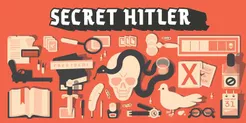
Players are secretly assigned as Liberals or Fascists. The Fascists know each other. The Liberals don't know who anyone is. One Fascist is secretly Hitler. Each round, a President is nominated and they pick a Chancellor. Everyone votes on the government. If it passes, the President draws three policy tiles, discards one, and passes two to the Chancellor, who enacts one. Policies go on either the Liberal or Fascist track. Liberals win by passing five Liberal policies. Fascists win by passing six Fascist policies or by electing Hitler as Chancellor after three Fascist policies are already on the board. The policy deck has more Fascist tiles than Liberal ones, so even legitimate governments sometimes have to pass Fascist policies. This is where the game gets interesting. When a Fascist policy is enacted, the President and Chancellor both claim they had no choice. "I drew three Fascist tiles." "Did you? Or did you discard the Liberal one?" The table erupts. As the Fascist track fills up, the President gains executive powers — investigating, executing, or peek at tiles. These powers create hard information that smart players can use to corner liars. It's mechanically tighter than most social deduction games. The policy deck creates a shared data trail that the table can analyse. This means experienced players have more tools than just gut feelings. Plays 5-10. Sweet spot is 7-8 where the Fascist team is big enough to coordinate but small enough to be hard to find. Games run 30-45 minutes. The theme is attention-grabbing and intentionally provocative — check that your group's comfortable with it first.
The Resistance: Avalon
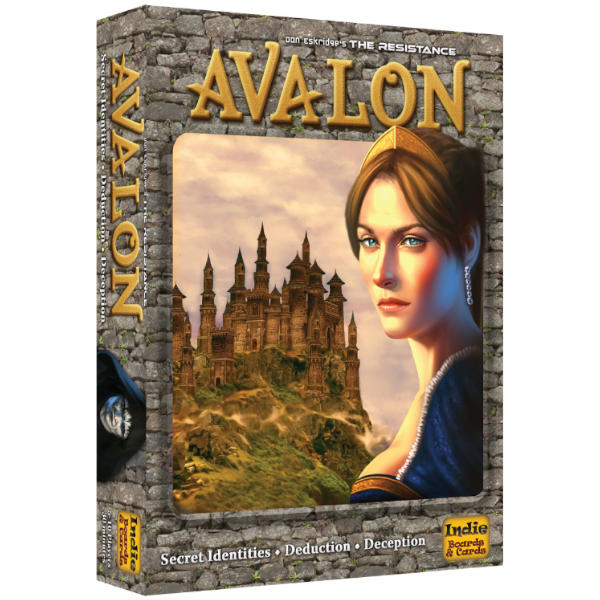
Hidden-role deduction set in Arthurian legend. At the start, everyone secretly finds out if they're loyal to Arthur or a Minion of Mordred. Then you play five missions. Each round, a team leader proposes a group to go on the mission. Everyone votes to approve or reject the team. If approved, the team secretly plays success or fail cards. The loyal players always play success. The Minions can play fail to sabotage missions. Three successful missions and the good side wins. Three failed missions and evil wins. The meat of the game is the team selection and the voting. Who proposed whom, who approved what team, who was on the mission that failed — every decision is information, and the table is constantly arguing about it. Avalon adds special roles on top of the base Resistance: Merlin knows who the evil players are but has to be subtle about sharing that information. Because if the good team wins, the Minions get one final shot — they can assassinate Merlin and steal the victory. Percival knows who Merlin is and tries to protect them. Morgana pretends to be Merlin to confuse Percival. This extra layer makes Avalon feel much sharper than the basic Resistance. The endgame assassination attempt means the good team can't just follow Merlin's lead blindly — doing so paints a target. Plays 5-10. The 5-player game is tight and logical. The 7-8 player game is louder and more chaotic. Both are good. Rounds take 30 minutes and almost always result in someone demanding a rematch.
Head-to-Head Specification Matrix
Direct breakdown of player counts, complexity, and mechanics.
| Metric | Secret Hitler | The Resistance: Avalon |
|---|---|---|
| Rating | — / 10 | — / 10 |
| Complexity Weight | 1.7 / 5.0 | 1.9 / 5.0 |
| Player Range | 5–10 players | 5–10 players |
| Play Time | 45 minutes | 30–60 minutes |
| Primary Categories | Social Deduction, Political | Social Deduction, Strategy |
| Mechanics | Hidden Roles, Voting, Policy Drafting, Bluffing | Hidden Roles, Team Building, Voting, Bluffing |
| Publisher | Goat Wolf & Cabbage | Indie Boards & Cards |
| Year Published | 2016 | 2012 |
The Verdict: Which Should You Buy?
Secret Hitler and The Resistance: Avalon represent the pinnacle of social deduction and hidden role gaming. In Secret Hitler, liberals and fascists elect Presidents and Chancellors who draw policy cards from a random deck, giving traitors the perfect alibi ('I was only dealt fascist policies!'). In Avalon, King Arthur's loyal knights vote on quest teams with zero RNG: if a mission fails, a traitor was guaranteed to be on that team. Choose Secret Hitler for rowdy accusations, card-draw scapegoating, and presidential powers; choose Avalon for pure deductive logic, Merlin mind games, and chess-like loyalty tracking.
The random policy deck gives evil players a built-in defense, reducing the anxiety of lying directly.
The interaction between Merlin, the Assassin, and Percival creates a high-stakes cat-and-mouse puzzle where every vote contains information.
Key Differences Explained
Luck & Plausible DeniabilityFactor #1
Player EliminationFactor #2
Special RolesFactor #3
Components & ProductionFactor #4
Pros & Cons Comparison
Secret Hitler
- +The government formation mechanic forces real decisions that reveal loyalty better than just talking.
- +5 to 10 players all work well. The game adjusts its role ratio to match.
- +Dramatic moments happen naturally. Someone passing a fascist policy and claiming they had no choice is always a scene.
- −The theme puts some groups off. Know your audience.
- −Experienced players can dominate tables of newcomers. It's a skill-heavy game disguised as a party game.
- −Games can stall if nobody wants to take risks in the middle rounds.
The Resistance: Avalon
- +The team-selection mechanic is one of the best in the genre. Watching who picks whom tells you everything.
- +Merlin plus Assassin roles add a whole extra layer of endgame tension.
- +Plays in 30 minutes and immediately makes you want to play again.
- −At exactly 5 players, the evil team only has 2 people. Experienced groups can figure them out quickly.
- −First-time players who land on the evil team often give themselves away immediately.
- −Can get heated. Know your group before playing.
Reviewed by TableTop Trends Editorial Team
Board Game Specialists & Group Dynamics Researchers
Tested and evaluated across real group game nights. We specialize in group playability, player count scaling, rule clarity, and downtime reduction for gatherings of 2 to 12+ players.
Frequently Asked Questions
Which is easier to learn: Secret Hitler or The Resistance: Avalon?
Secret Hitler has a lower complexity rating (1.7/5) compared to The Resistance: Avalon (1.9/5), making it faster to teach and easier for beginners.
Can you play Secret Hitler and The Resistance: Avalon with 2 players?
Secret Hitler supports 5–10 players, while The Resistance: Avalon supports 5–10 players. Both games offer distinct experiences at 2 players depending on how direct or interactive you prefer the gameplay to be.
Which game plays faster?
Secret Hitler typically plays in 45 minutes, while The Resistance: Avalon averages 30–60 minutes.
Looking for Board Games & Game Night Recommendations?
Explore our group game finder, strategy guides, and game reviews.
Curated Collections Featuring These Games
Best Board Games for 10+ Players
Double-digit groups are a different problem entirely. Most games that claim to play 10 actually drag miserably at that count. These games are built for crowds — either through simultaneous play, physical movement, or mechanics that genuinely improve with more people.
Best Games for Serious Game Nights
Your group has played Codenames enough. These are games where decisions matter, bluffs have consequences, and paying attention is rewarded. Heavier and more demanding than party games, and more satisfying because of it.
Best Board Games for 6–8 Players
Most board games quietly fall apart above 4 players. Turns drag, half the table checks out, and someone ends up on their phone. These are the ones that actually hold up at 6, 7, and 8 — games where more people means more energy, not more waiting.